
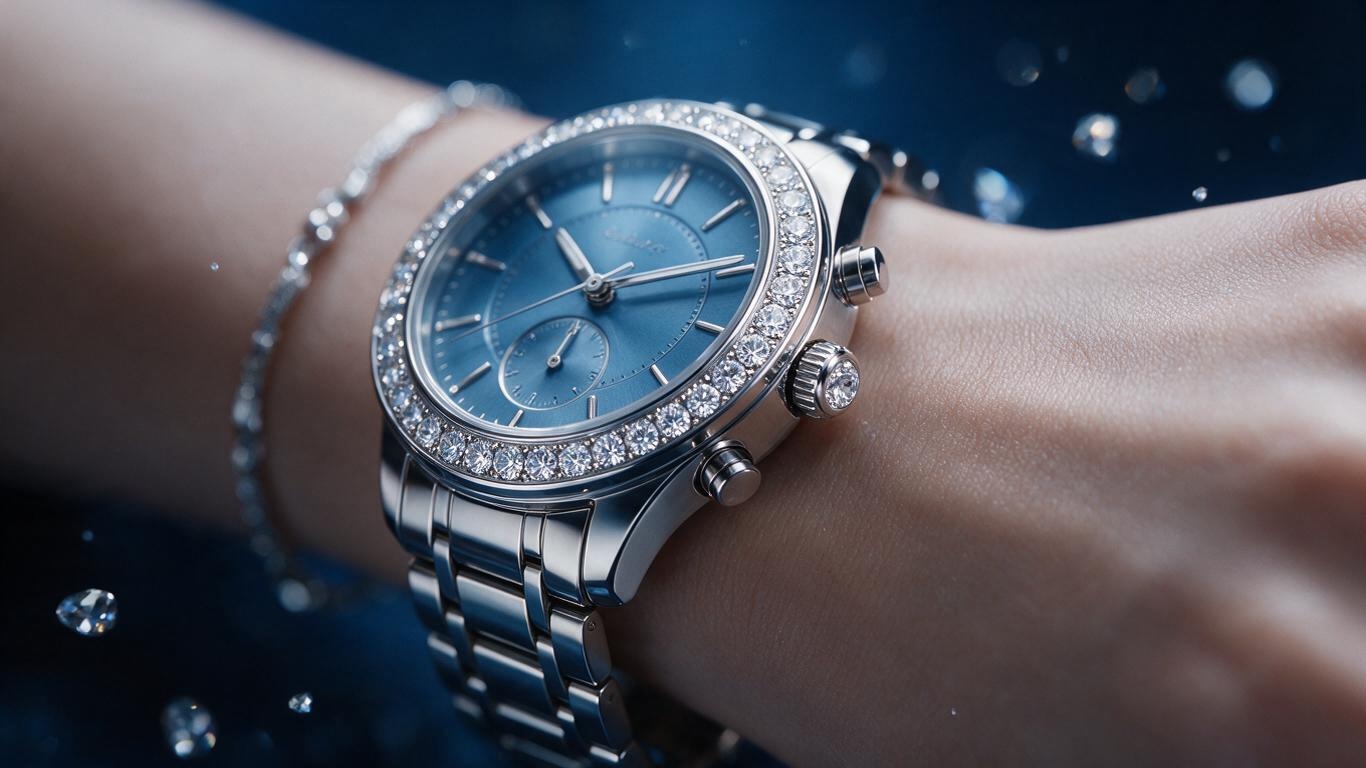
At 2 a.m., the operations manager of a light luxury jewelry brand was staring at the dashboard - the main image video CTR was 0.8%, and the cart add rate was under 1%. The product was beautifully made, but the video just couldn't convey that premium feel. This isn't an isolated incident. Fashion accessories have a common problem in e-commerce: they look great in person but cheap on screen.
We encounter many clients like this. Clothing, watches, jewelry - they all struggle with the same issue. Live-action videos are limited by lighting, set, and camera work, and the expressiveness of materials is greatly reduced. High-reflective materials like gold, silver, jewelry, and leather can look like market stall goods if the lighting is slightly off.
That's where AI+3D product animation comes in. It's not just scanning a physical object into 3D; it's a full digital pipeline from modeling, materials, lighting, to animation. Let's break down a real case: how a 30-second animated bracelet video boosted the client's main image CTR from 1.2% to 3.8% and nearly doubled conversion.
Client Requirement: Premium Feel, Not Plastic
The client is a domestic brand specializing in 925 silver with zirconium, priced between 300-600 RMB. Their previous videos were outsourced, using a white acrylic turntable with LED lights. The results were mediocre and had a for lack of a better word, cheap look. They wanted that high-end advertising aesthetic - clear metal brushing, zirconium sparkle, and ideally some dynamic movement.
Why not shoot live-action again? Cost. A 4-second turntable shot could cost thousands of yuan for studio rental, models, and lighting, with no guarantee of perfection. With 3D animation, once the model is built, you can endlessly adjust angles, lighting, and motion at almost zero marginal cost.
Production Breakdown: The AI+3D Toolkit
Step one is modeling. We used AI to assist with metal texture and chain link generation, then refined manually. Chains are repetitive geometry - AI excels at this, generating a base topology in minutes and saving nearly a full day of manual modeling.
Step two is materials and lighting, the key to premium feel. Metals use a PBR workflow with carefully tuned roughness, metalness, and normal maps. For lighting, we used three-point lighting plus HDRI environment, and a special eye light to make the zirconium sparkle. To give each chain link depth, we also added subsurface scattering to simulate a subtle internal glow.
Step three is animation. We didn't do complex mechanical motion; just the bracelet rising from a jewelry box, slowly rotating, with a few floating dust particles. Simple but with the right rhythm, it feels expensive. Rendering was done on cloud, at 4K resolution with about 40 seconds per frame, completing the 30-second spot in 3 days.
Results: The Numbers Talk
Within a week of going live, the client reported: main image CTR rose from 1.2% to 3.8%, cart add rate increased by 62%, and collection rate doubled. Unexpectedly, the return/refund rate dropped significantly - because the video's details were more realistic than the static images, customers received products that matched or exceeded expectations.
Many worry that 3D animation might feel fake. On the contrary, when rendering quality is high enough, consumers perceive the brand as more professional. As we discussed in our home furniture animation case, 3D rendering offers a controllable way to present an idealized reality, not a lie.
Final Takeaways
If you sell fashion accessories, here are a few tips. First, don't jump into a full 3D pipeline for every product; start with one hero SKU. Second, if your budget is tight, prioritize materials and lighting over complex animations. Third, when evaluating suppliers, ask to see their past metal and jewelry projects - that's the true test of capability.
Of course, AI+3D isn't perfect for everyone. If your product is a basic, price-driven item, live-action might be more practical. But if you're building a brand and targeting the mid-to-high-end market, this is a move worth making.
Curious to test the waters? Check out how we approached beauty product animation - the logic is similar to accessories.