
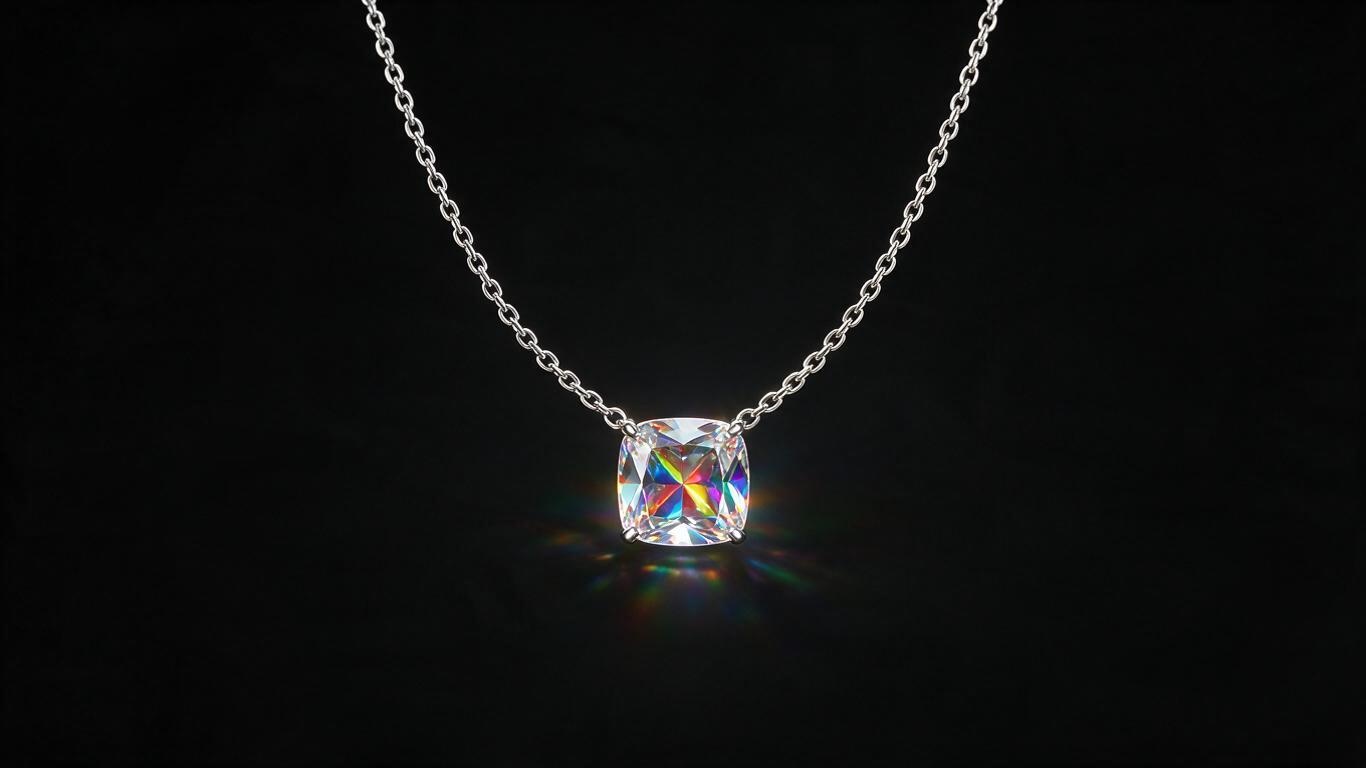
At 1 a.m., a girl is scrolling through short videos. On screen, a necklace slowly rotates, the fire of a zircon sparkling like stars against a black background. She subconsciously pauses, zooms in on the details, and taps the product link. Three days later, that 1,499-yuan necklace sells more than 600 units. This isn't a fake viral script—it's a real story from one of our light-luxury accessory clients.
The brand specializes in silver jewelry and zircon, positioned as young, light luxury, with a price range of 500 to 2,000 yuan. Previously, they used flat-lay images and model photos. But silver is tricky—it reflects easily, causing overexposure in live shots and often losing the metallic texture. Their e-commerce click-through rate was stuck around 2%, conversion under 0.8%. They approached traditional video teams, who quoted 80,000 yuan per video, still shooting physical products, and any material change required rebuilding the set. Eventually, they came to us to try the AI+3D route.
The first thing we did wasn't rushing to model—it was "disassembling the product." We broke the necklace into three parts: the chain, the pendant, and the zircon setting. Every component was measured with calipers, down to the thickness of the chain links and the angle of the prongs. Then we built a 1:1 model. Here's where material rendering gets interesting—silver's biggest challenge is its highlights: it needs mirror-like reflection without blowing out to white. We set the metal roughness to 0.12, layered the reflection twice, and combined HDRI ambient light to simulate the soft glow of a jewelry store display. For the zircon, we used a refractive index of 2.417 and cut 57 facets so each face produces its own highlight during rotation. That step alone took three full days, but the result, as the client said, "looked like it was shot on velvet."
For the animation, we didn't just spin the necklace. We crafted a 45-second story: the pendant drops from above, swings gently, then freezes while the camera moves to the side to reveal the prong setting. The scene cuts to a ring, slowly rotating 365 degrees. Finally, an Asian model appears wearing earrings—black hair, subtle eye movement, light sweeping across her cheek. This "small but beautiful" motion tells the wearing story instead of a stiff showcase. This approach, by the way, is completely different from our food & beverage 3D animation, where the goal is appetite; for jewelry, it's about the desire to wear it.
Two weeks after launch, the numbers came in: click-through rate jumped from 2.1% to 4.7%, conversion rose from 0.8% to 2.9%, and average time spent on the product page increased by 40%. Even better, the return rate dropped by 15%—because the 3D animation showed every detail clearly, buyers received the product feeling it matched the video, with no disappointment. The brand originally planned to make just one video; after seeing the data, they handed us all 20 new summer SKUs.
So why are jewelry-type products particularly suited for AI+3D animation? Unlike apparel, which relies on models to convey the vibe, or FMCG, which drives impulse purchases through price, high-ticket items need customers to "see clearly and buy with confidence." 3D animation can infinitely enlarge details, control lighting, maintain consistency, and allow quick style changes later without reshooting. If you also want to boost brand premium with product animation, maybe start with a single SKU and try it.


