
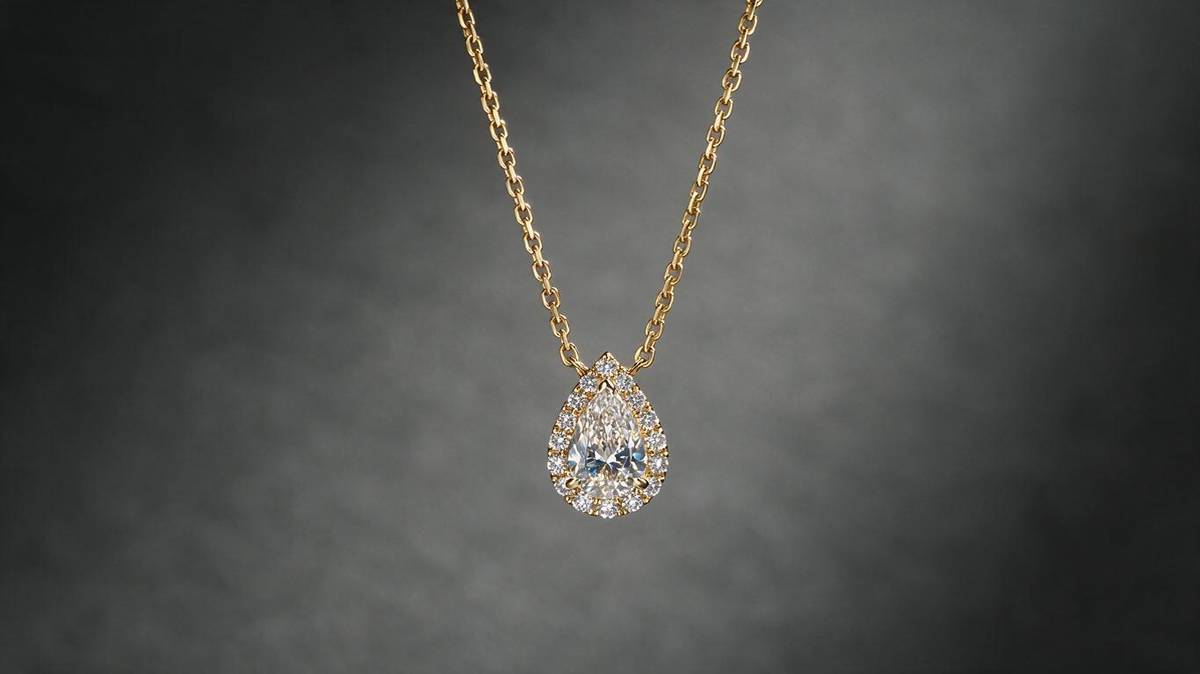
At 11 p.m., a young woman was scrolling through short videos when she suddenly paused. A silver necklace was rotating slowly on a dark background, every facet of its links shimmering like liquid metal. She watched it three times, tapped the link, and placed an order on the spot. That's not a TV drama; it's the real feedback we got three days after launching the AI+3D product animation for Rivière, a domestic jewelry brand inspired by French minimalism. The founder came to us with a straightforward pain point: the offline boutique could sell 800,000 yuan a month, while the online store barely reached 100,000.
The issue wasn't price — it was that online display completely failed to convey the texture. Materials like silver, mirror-polish, and brushed surfaces tend to look cheap under ordinary photography, even resembling stainless steel cutlery. What's the root cause? Traditional studio lighting can hardly control reflections on metal, because metallic luster is realized through environmental reflections. Once the shooting environment is messy, the product gets covered with chaotic reflections and the texture collapses. In 3D rendering, however, metal materials are simulated in a digital environment where every reflection path can be precisely controlled, allowing the surface to present an ideal luster.
So we decided to use AI+3D technology to produce a 40-second product animation for Rivière's core lines — necklaces, bracelets, and rings. The goal wasn't to simply spin the product around, but to make it 'breathe'. In the animation, the necklace rises from a pile of fine sand, its links unroll one by one, and finally freeze on a mirrored surface. Throughout the whole sequence, light flows around the product, turning the metallic texture from a cheap reflection into an expressive glow.
On the production side, we used AI-assisted modeling and material generation, compressing what used to take 7 days of manual modeling into 3 days. We also used AI to generate environmental reflection maps, simulating morning and dusk light on Paris streets, allowing the product to 'travel' through digital space.
Two weeks after launch, the numbers came in: the completion rate of the main-image video jumped from 23% to 68%; the average dwell time on the store extended from less than 40 seconds to 1 minute 20 seconds; the add-to-cart rate rose 41%; and the average order value went from 198 yuan to 328 yuan. In addition, we cut a 15-second version for info-feed ads, which achieved a click-through rate 2.3x higher than static images, while the cost per click dropped by 18%.
You might wonder why 3D animation changes purchase decisions. In psychology, there's a concept called touch compensation — when online shopping removes tactile experience, consumers use vision to simulate touch. A 3D animation, with its silky motion and light changes, can trigger the brain's tactile memory of materials: seeing the flowing luster of metal, you feel its cold and smooth surface; seeing the delicate brushed texture, you feel the matte drag. That's what we call texture storytelling.
In fact, this approach isn't limited to jewelry. We've worked with brands in beauty, consumer electronics, and furniture, and all have proven that AI+3D animation can bridge the gap of online experience. Take our article How Beauty Brands Raise Premium Price with AI+3D Animation as a reference. But fashion accessories are a natural fit — because jewelry itself is a product of 'ambiance'. Consumers don't buy a piece of metal; they buy a projection of identity. Why make buyers imagine from a flat photo when a 3D animation can simply hand the ambiance to them?
Back to Rivière, they've now fixed AI+3D animation as a standard process for new product launches: modeling, material rendering, animation sequences, and multi-platform adaptation. In the past, a new SKU would take 20 days from prototyping to video; now it's compressed to within a week. This is how technology amplifies product power — not by replacing e-commerce, but by filling in its gaps. If you're in fashion accessories, or any category that relies on texture, ask yourself: when customers look through a screen, can they perceive that your product is worth the price? If the answer is not sure, AI+3D product animation might just be the key.


