
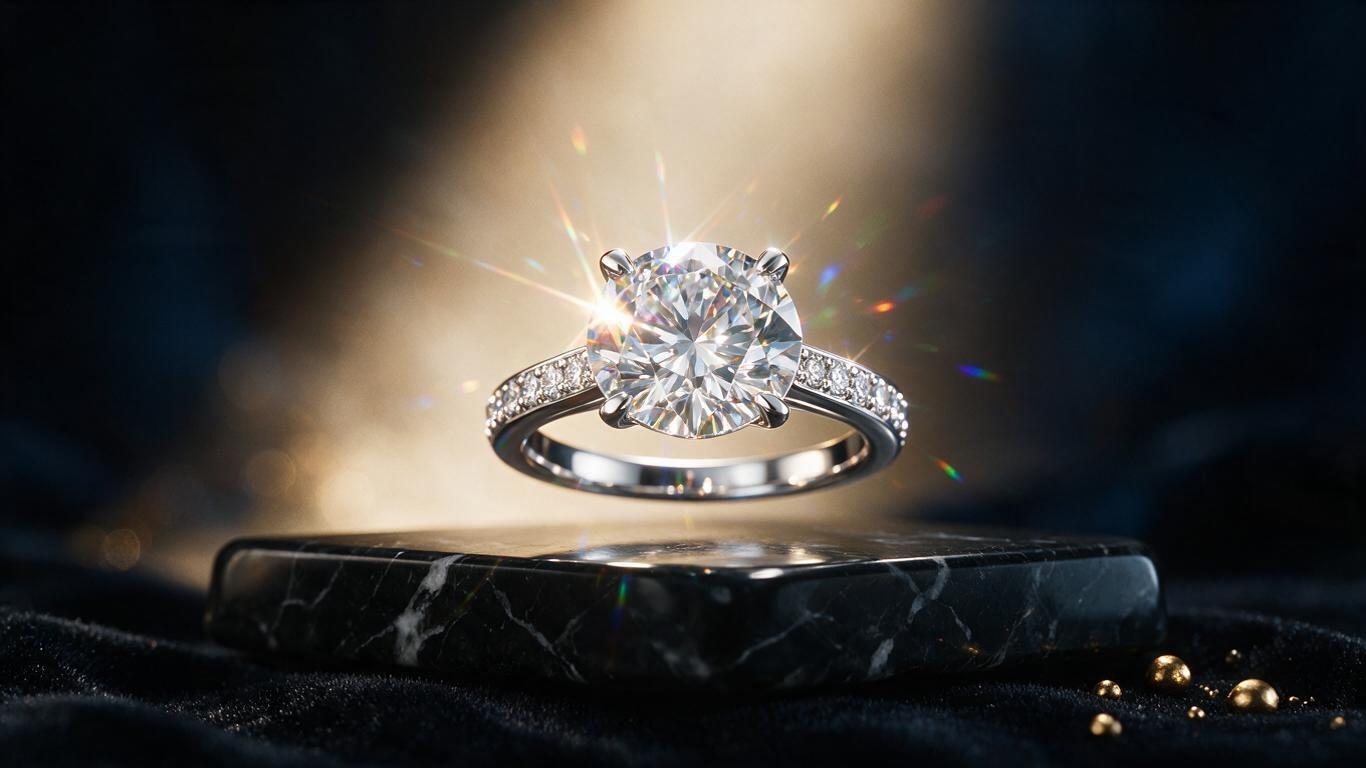
It's 1 AM. You're scrolling through your phone when a short video makes you stop—an emerald ring slowly rotates on black velvet, its facets catching a cold, sharp light that seems almost alive. You assume it's a new commercial from a luxury house. Then you check the comments: it's a product animation generated by AI+3D tools.
Two years ago, this would have required a studio, a photographer, and a full day of lighting. For the protagonist of this story—a light-luxury jewelry brand doing 2 million USD a year—photography had become a bottleneck. With over 200 SKUs and 30 new launches per month, traditional shoots were draining their budget. What's worse, any design change meant reshooting everything.
So they turned to AI+3D product animation. The brief was simple: look as real as a shoot, but come out much faster. We built 1:1 3D models and tuned metal reflection, roughness, and gemstone refraction parameters for each piece. Speaking of which, the lesson from our furniture case applies here too: material realism comes first. Without the right surface quality, no camera movement can save it.
Jewelry, however, adds a twist: "fire." If a diamond's refraction values are off, it looks like plastic. We used layered rendering to separate metal highlights, environment reflections, and internal refraction, then composited them with a subtle lens glow. Camera movement also matters. A ring should rotate slowly enough that every facet gets its moment in the light. For one 15-second clip, we spent two full days just on materials.
The payoff came quickly. Within a week, the client's click-through rate on Amazon and TikTok rose by about 40%, and add-to-cart jumped 60%. More surprisingly, bounce rate on their site dropped—users actually watched the full product story. The template system we built made multi-SKU output easy: swap the model, adjust a few values, batch render. Average cost per video was less than one-third of a traditional shoot.
AI+3D isn't here to kill live action. It's another tool in your box. For fashion accessories with frequent launches and many SKUs, the marginal cost keeps shrinking. If you're struggling with product visuals, consider moving your products into a 3D world where they can shine anytime, anywhere.


