
It's 11 p.m. and you're still scrolling for visual inspiration. On screen, a bone-china coffee cup rotates slowly, its glazed surface catching warm highlights. You assume a photographer pulled an all-nighter for this shot—until a comment reveals that the product doesn't even exist yet. That's 3D product animation.
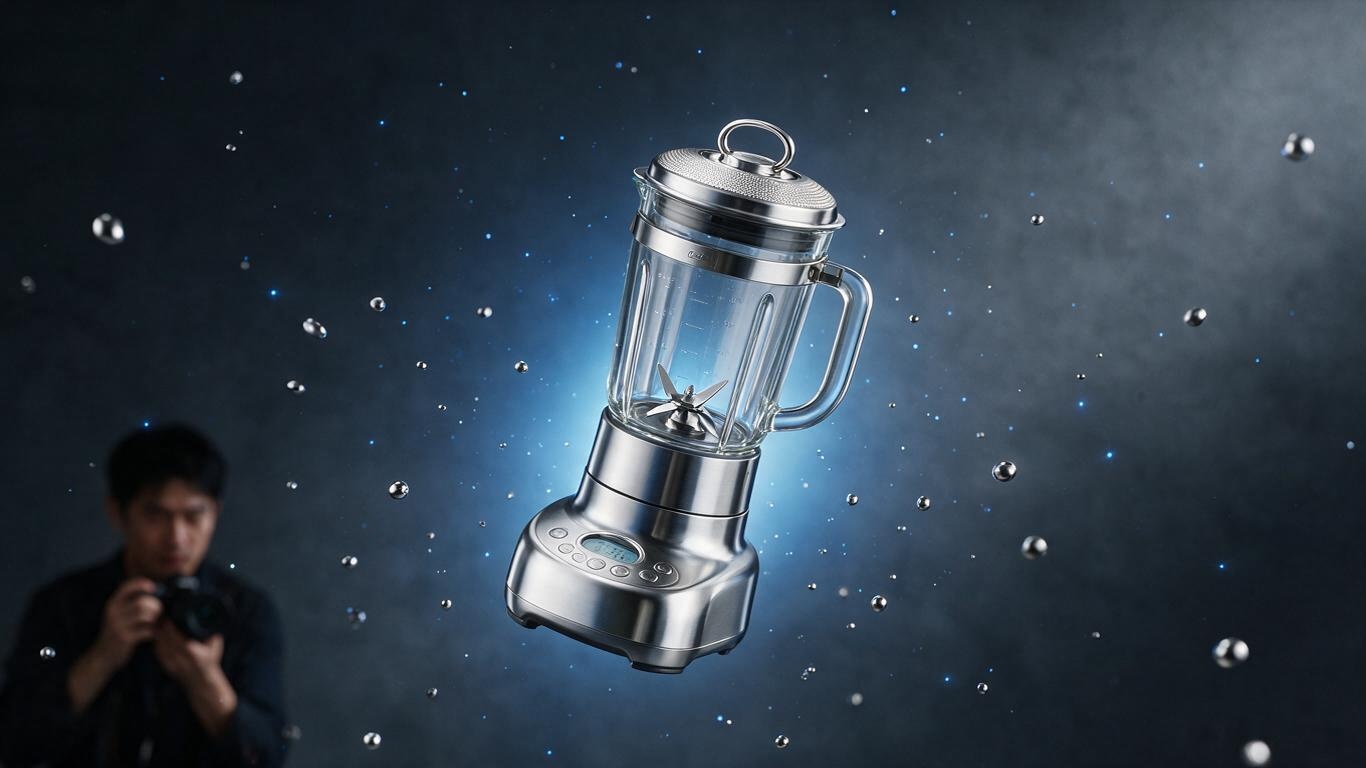
In simple terms, 3D product animation means building a product digitally—modeling, texturing, lighting, animating—then rendering it into a video. The biggest difference from live-action: you don't need a physical product. Just a digital model. So even if your product is still a concept, it can appear on screen in stunning detail.
How do you choose between 3D and live-action? Let's break down three factors: cost, flexibility, and turnaround. Live-action costs pile up with studio rentals, camera gear, props, and crew—anywhere from a few hundred to tens of thousands of dollars. 3D animation has an upfront modeling cost, but once the model exists, changing colors, angles, or creating variations is nearly free. And revisions don't require reshoots—just a re-render.
Flexibility? With live-action, showing the inside of your product means tearing it apart. With 3D, exploded views, cutaways, and X-ray perspectives are everyday moves. Water molecules evaporating, gears meshing, a shattered phone screen—any micro or macro view is achievable. That's why complex products like machinery and medical devices are natural fits for 3D animation.
Turnaround is where 3D really shines. E-commerce sellers often struggle with studio schedules: the product hasn't arrived, the light is bad, the date slips. 3D animation isn't bound by physics. Once the model and data are ready, the rest is just render time. Many of our clients combine AI-driven 3D modeling workflows with animation, going from product drawings to finished video in about a week. The 2026 e-commerce visual trends report also notes that motion is becoming table stakes.
Of course, 3D isn't a universal fix. If your selling point is literal texture—natural stone, hand-stitched leather—a high-end live-action shoot can be more convincing. The decision rule: show the "real" product with live-action; show the "ideal" product with 3D. Many brands do both: live-action as the base, with 3D adding shots that would be impossible to capture.
To sum up: 3D product animation doesn't replace live-action; it gives brands another option. It's ideal for pre-production, rapid iteration, or when live shoots are too costly or impossible. If you're torn, ask yourself: does your product have an "invisible angle" that deserves to be seen?


