
Introduction: Looking Back from Mid-2026
We're halfway through 2026. If the past five years of e-commerce visual evolution were "slow and gradual," then 2026 has completely shattered that pace.
A clear signal: In Q1 this year, Amazon opened 3D product display features to third-party sellers for testing; TikTok Shop launched full AI auto-generated product videos; Shopify's AI Studio lets DTC store owners generate product scene images with a single sentence.
The platforms are all doing the same thing — lowering the barrier to professional-quality product visuals.
What does this mean for cross-border sellers? The entry barrier is lower, but the competition bar is higher — because everyone is using AI. When the minimum quality floor is raised, what truly differentiates is strategy.
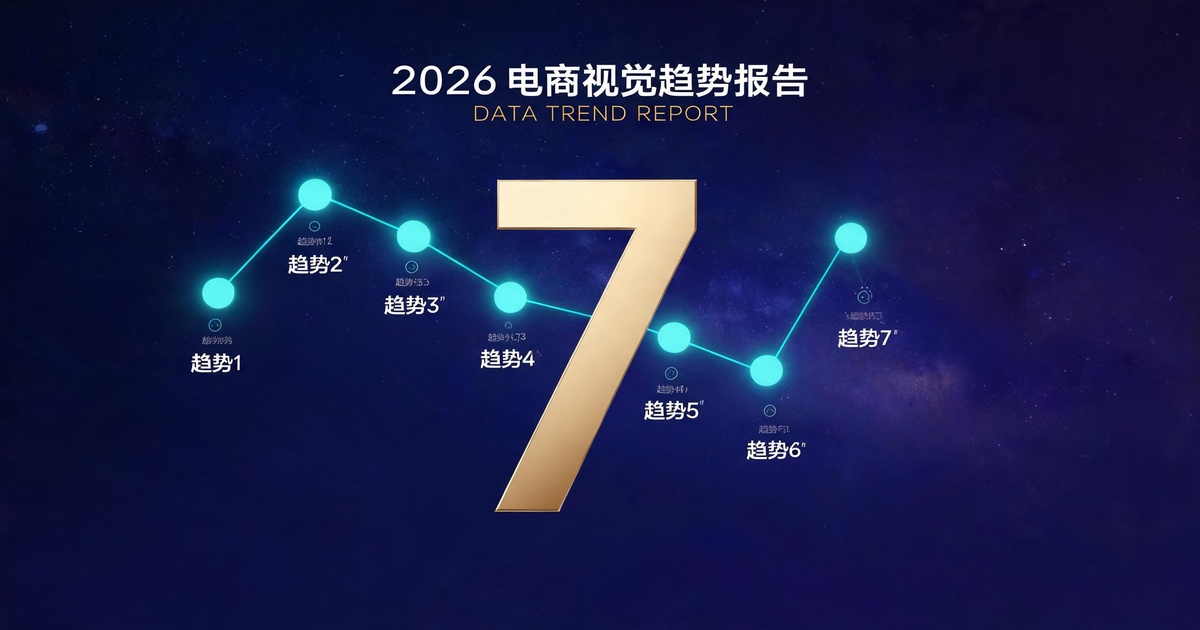
Based on industry data, platform public information, and ARTSKY Studio's first-hand observations from serving 200+ cross-border e-commerce clients, we've identified 7 key visual trends rewriting the rules in 2026.
Trend 1: AI-Powered Personalized Scene Generation
▲ 7 Key E-Commerce Visual Trends in 2026
In the past, a product typically had one main image set and one lifestyle image set. The reason was simple: shooting costs were too high. A professional lifestyle shoot cost thousands — impossible to do separately for each market.
AI generative tools have completely changed this equation.
The 2026 standard:
- One product, AI generates Nordic minimalist, Japanese-Korean warm, Middle Eastern luxury — multiple scene variants with one click
- Auto-adapt visual style for different sales seasons (Christmas, Black Friday, Back-to-School)
- Auto-output adapted versions for different platforms' sizes and aesthetic preferences
A pet supplies brand we served previously spent $1,200 shooting one set of lifestyle images (5 photos). Using AI+3D workflow, they generated 5 different market-specific visual sets in one hour at under 20% of the cost. Result: Japan site conversion up 47%, Europe up 32%.
Key insight: AI didn't replace the photographer — it gave brands the ability to deliver "different visuals for different audiences" for the first time.
Trend 2: 3D Interactive Displays — From Watching to Playing
One of 2026's biggest platform changes: Amazon opened 3D product display to third-party sellers. Users can now drag and rotate products on the Amazon product page — as naturally as picking up a product in a physical store.
This change is as significant as the introduction of main image videos years ago.
Why 3D interaction is more effective than video:
- Video is linear — passive viewing, rhythm controlled by the creator
- 3D interaction is non-linear — users explore actively, viewing any angle they want
- Neuroscience research shows active exploration deepens memory encoding: 3D interactive users remember product information 58% better than video viewers
Good news for sellers: AI is dramatically reducing 3D model production costs. Traditional 3D modeling cost $500-$2,000 per product. AI-assisted modeling now costs $100-$300, with timelines compressed from one week to one day.
Trend 3: Branded UGVC (User-Generated Visual Content)
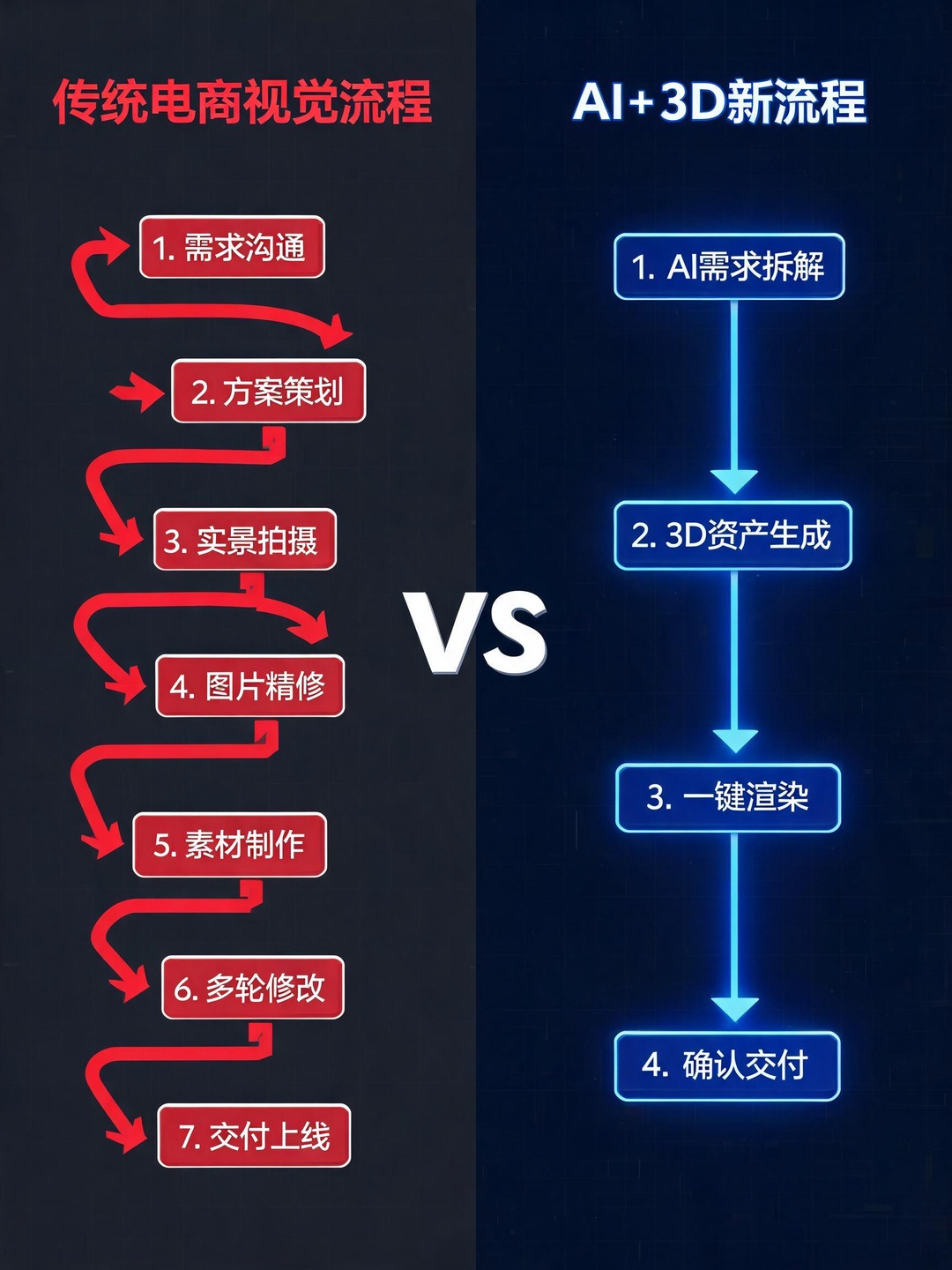
▲ AI+3D workflow: from one-size-fits-all to a thousand faces
UGC isn't new. But in 2026, it has evolved into UGVC (User-Generated Visual Content) — no longer just users' casual unboxing videos, but brand-orchestrated, professionally-enhanced visual content featuring real users.
Specific forms:
- Brands provide AI 3D product models and templates; users upload their own photos; AI generates "user + product" composite images
- Brands invite KOCs to use products, then use AI tools to refine user-shot footage into brand-grade visuals
- User-created content, AI-enhanced, is featured on product pages and social media
Trend 4: Social Search Visualization — Product Images as Traffic Gates
More young consumers are using TikTok, Instagram, and Pinterest as their first stop for product discovery. This changes the design logic of e-commerce visuals.
Traditional logic: User searches keyword → sees product listing → attracted by image → clicks in → buys.
2026 new logic: User scrolls social feed → stopped by product visual → screenshots/saves → searches → buys.
This means the first battlefield for product visuals is no longer the Amazon search thumbnail — it's the "hook" that flashes by in a social feed.
Trend 5: Video Content Fragmentation — "One Source, Many Outputs"
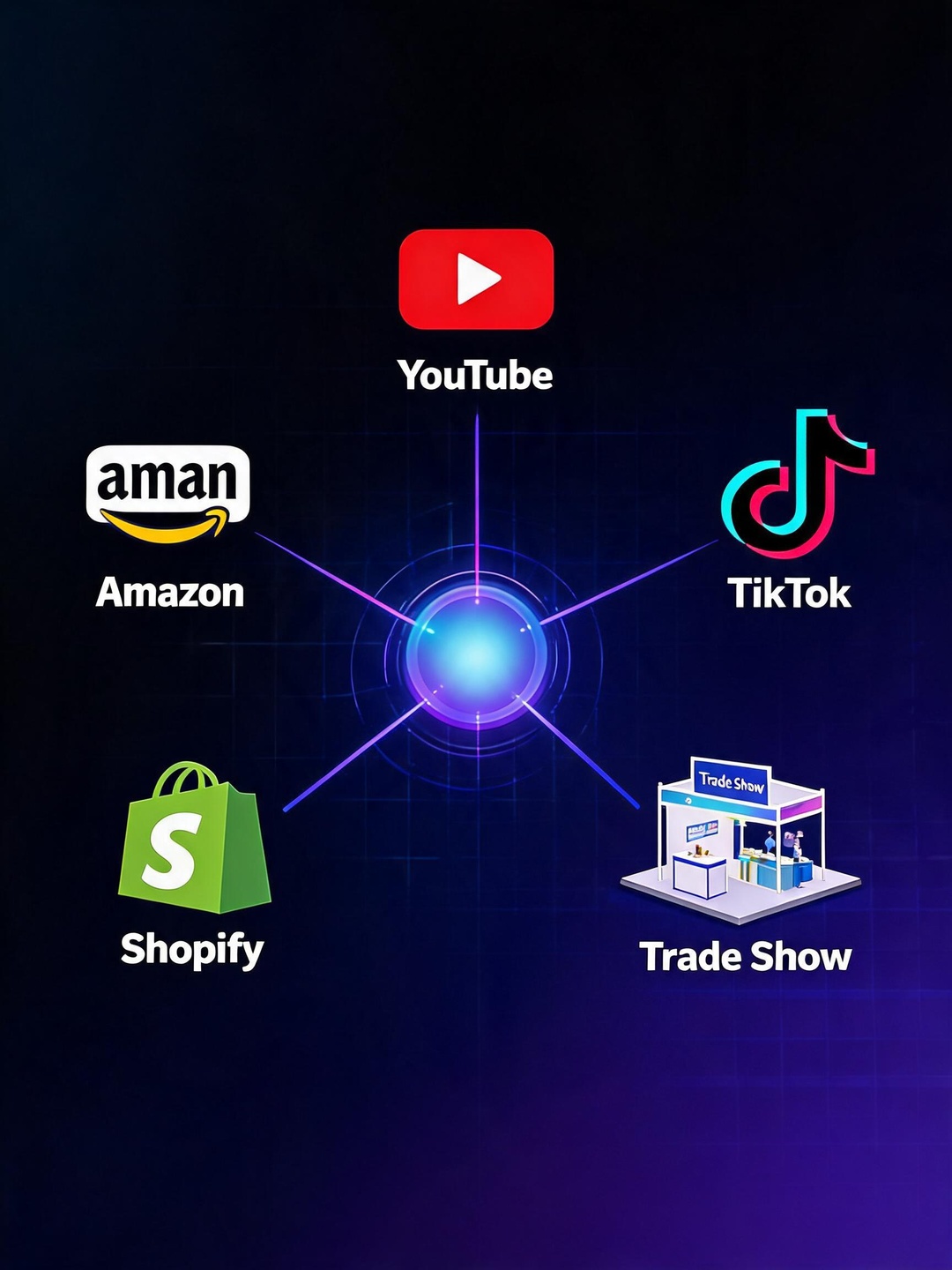
▲ Social search era: product images are traffic entry points
Cross-border sellers need content for more channels than ever: Amazon main video, TikTok shorts, Instagram Reels, Facebook ads, YouTube Shorts, DTC hero, trade show displays... Each channel demands different lengths, aspect ratios, and styles.
The 2026 solution: AI-powered "Master + Slice" model.
- Create one high-quality AI+3D product animation "master" (60 seconds)
- AI auto-splits into channel-adapted versions: 15s TikTok, 30s Amazon, vertical, square, horizontal
- AI adjusts editing pace and subtitle style based on each channel's trending content characteristics
Trend 6: Systematic Brand Visual Assets — From Single Hit to Visual Capital
In 2024-2025, most sellers operated in "single hot product" mode. In 2026, leading brands are building systematic visual asset systems.
What a visual asset system includes:
- Brand visual guidelines: unified lighting style, color system, typography
- 3D asset library: centralized management of all product 3D models
- Modular visual components: standardized product rotation, feature visualization animations, scene templates
- AI visual workflow: standardized pipeline from input → AI modeling → AI texturing → animation → multi-channel output
Trend 7: Democratization of AI+3D Workflows
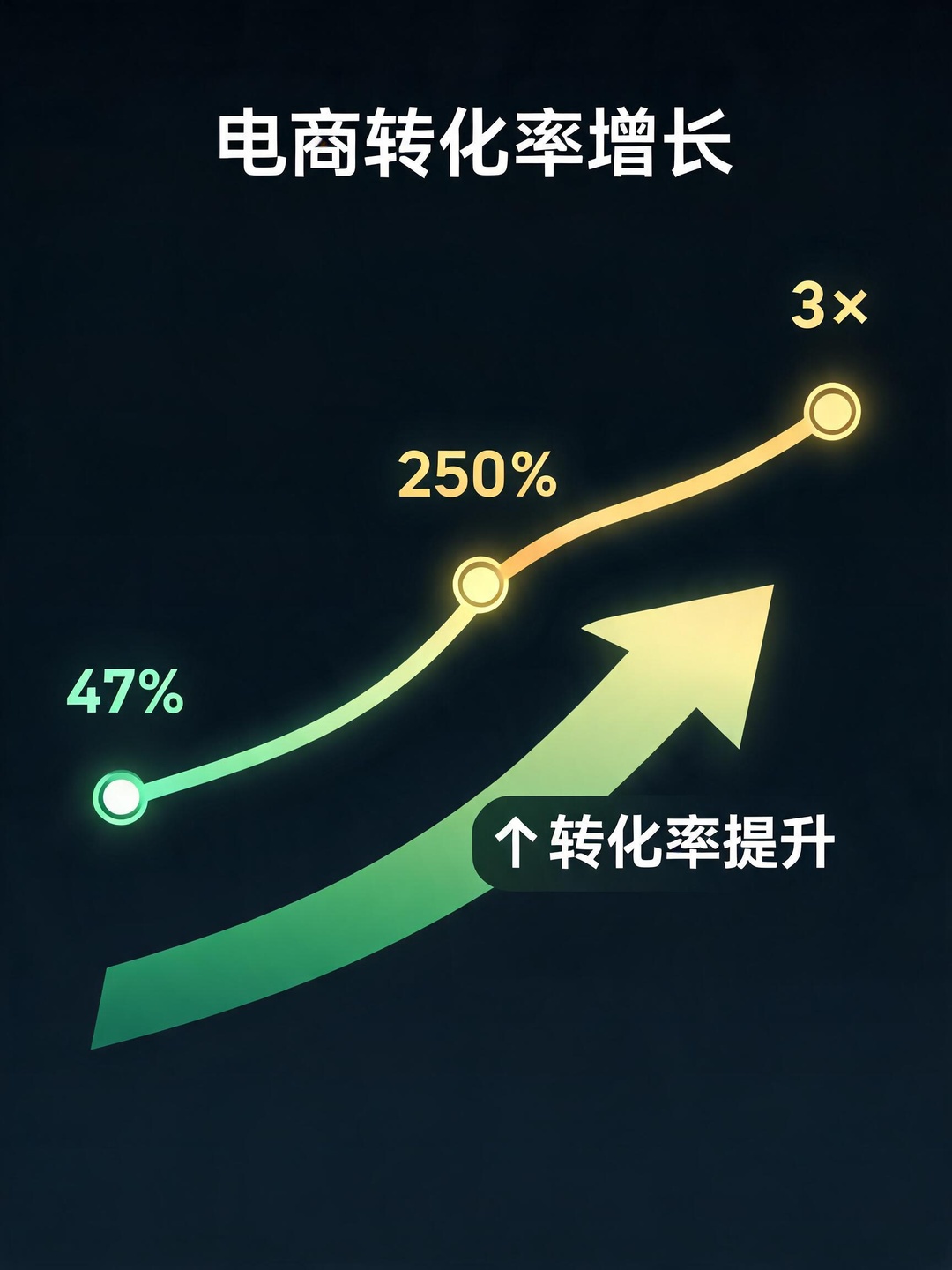
▲ Systematic 3D visual asset library: 2 weeks to 2 days
This trend comes last because it's the foundation for all others.
In 2025, AI+3D product animation was still a "new tool" — mainly adopted by large brands and forward-thinking sellers. In 2026, it's becoming democratized.
Signal indicators:
- Chinese AI video tools like Jimeng and Kling have millions of daily active users
- Shopify App Store's "AI Product Visuals" category grew 300% in six months
- Amazon third-party sellers using 3D/animated product displays grew from 12% (2024) to 38% (2026)
Action Checklist
- This week: Pick 1 core product, generate 2-3 market/scene variants using AI tools, test which drives highest CTR
- This month: Create AI+3D animation master for 3-5 core products, output multi-platform versions
- This quarter: Establish brand visual guidelines, build 3D asset library, implement "two-day turnaround" workflow
Final Thoughts
In 2026, e-commerce visuals are no longer about "does it look good." They are the result of market strategy + brand positioning + technical efficiency working together.
Before, you spent $2,000 on product images, your competitor spent $20,000 — the gap was obvious.
Now, you spend $2,000 on AI+3D visual assets, your competitor spends the same $2,000. The gap is no longer budget — it's understanding of trends and systemization of execution.
Visuals are the first face of your product in the e-commerce world. What does your face look like in 2026?
ARTSKY Studio
AI+3D Product Animation Specialists
Systematic Visual Asset Solutions for Global E-Commerce Brands