
Quick question: how many product videos have you actually watched all the way to the end in the past six months? Not scrolled past, not caught for half a second — watched through. If the answer is a little embarrassing, it explains the biggest shift in product animation trends for 2026: audiences have less patience for content that wastes their time and more appetite for content that gets to the point. A large share of that appetite is now served by AI 3D animation production, which has quietly moved from a nice-to-have for brands with big budgets to basic infrastructure — as standard as a product page or a support script.
Trend 1: From one hero film to a full asset matrix
The old logic was simple: shoot a two-minute hero film, run it on TV, park it on the website, done. Today the brief looks like a menu. One 60-second master cut, plus 12–15 vertical clips, nine motion thumbnails, three still sets, one exploded-view loop, and preferably a clean version for distributors. The same 3D asset gets sliced into different information layers — lifestyle and aesthetics for social feeds, the core pain point inside the first three seconds for short video, parameters and internal structure for trade shows and B2B buyers. That is what the short-video product showcase revolution looks like once it actually lands: not trimming a long film, but designing for fragments from day one.
Trend 2: 3D takes over the shots a camera cannot reach
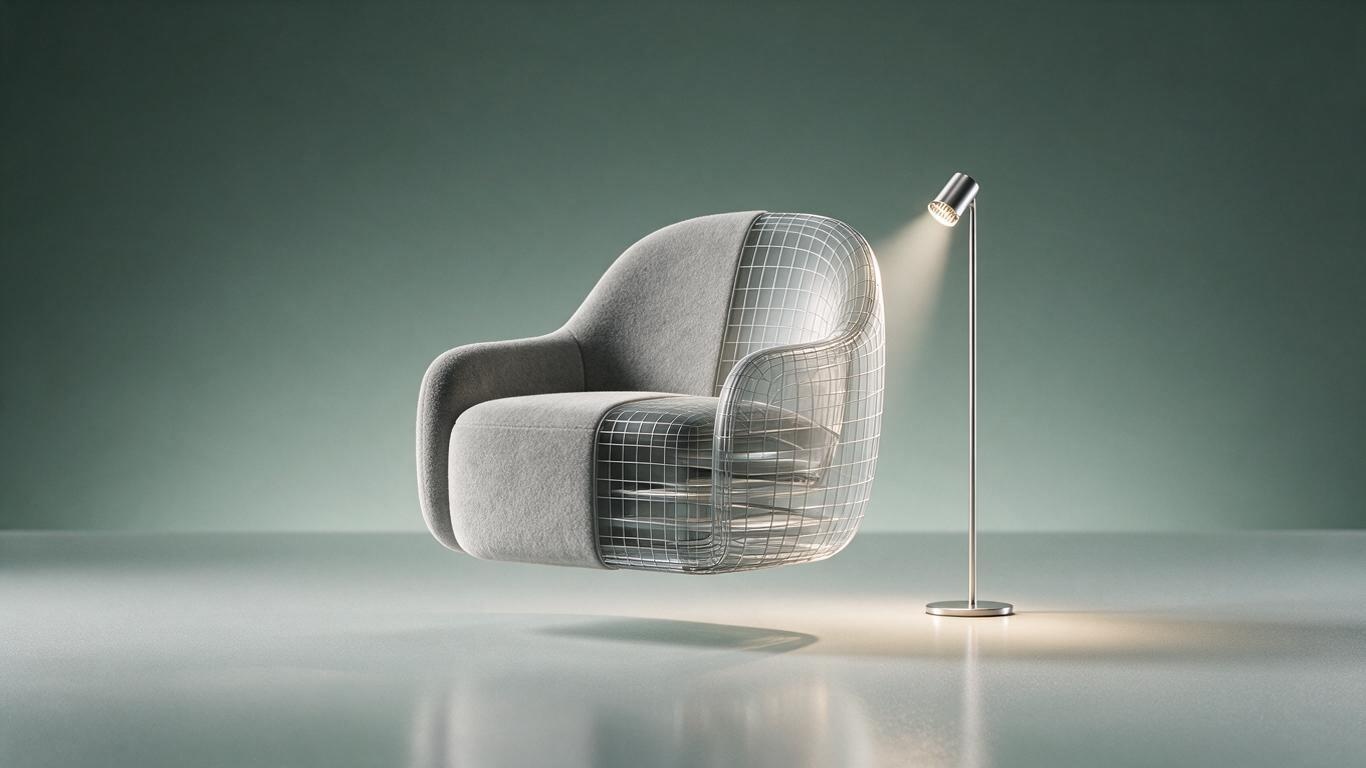
Airflow inside a device, how a cream actually flows, how gears mesh, how springs deform when someone sits down — live action either cannot capture these, or costs a fortune, or simply breaks physics. You cannot cut a sofa in half and still make it look presentable. 3D was built for this. And recent advances in AI-assisted modeling, material inference and motion generation have lowered the barrier again: prep work that used to take two weeks now often reaches the animation stage in a few days. For a closer look at the trade-offs, see our comparison of live action versus an AI+3D pipeline.
Trend 3: Parametric assets — model once, ship to many markets
One SKU in seven colors, three sizes and five languages means 7 × 3 × 5 = 105 separate shoots for live action. In 3D it means changing a parameter, swapping a texture, replacing a subtitle track. For cross-border brands this trend is nearly decisive: the same model gets tropical scenes for Southeast Asia, clean white backdrops for Germany, cooler lighting for the Nordics. Increasingly, brands treat 3D assets as long-term capital rather than a one-off service purchase — a production fee is a cost, an asset is compound interest.
Trend 4: Too perfect reads as fake — realism gets repriced
In 2024 and 2025, CG so clean it had not a speck of dust was shorthand for premium. By 2026, audiences are so saturated with AI imagery that perfection triggers suspicion instead of desire: is this even a real product? The leading answer is hybrid editing — 3D carries structure and function; live action carries texture, moisture, fiber, fingerprints and a hint of handheld motion. Some brands now deliberately keep the imperfections: a slight camera drift, a faint sign of use, a beam of natural light nobody bothered to remove. Our furniture projects reached that “you can almost feel it” stage precisely through this mix.
Trend 5: Transparency and platform compliance are now mandatory
Major platforms are tightening disclosure rules for AI-generated content, and the first reaction from marketers is fear: will the label hurt performance? What we actually see is that labeling matters far less than whether the content is useful. More interestingly, some brands have turned AI involvement into a selling point: no repeated studio shoots with live models, less material waste, ten revisions without additional footprint. In home, outdoor and baby categories, where trust and sustainability carry weight, that argument holds up.
Trend 6: The deliverable is no longer a video — it is a rulebook
Mature engagements rarely end with a handful of video files. Alongside the masters, teams hand over an asset standard: naming conventions, polygon budgets, UV and material parameters, lighting presets, a list of swappable modules, and a revision guide written for the brand’s own marketing team. With that in place, changing agencies next year, building an in-house version, or adding one more colorway does not start from zero. It is the least glamorous and most cost-saving trend of 2026.
Three practical recommendations
First, do not start with the full film. Produce a 15-second piece that explains a single selling point, put it in market, then decide whether to extend it. Second, buy the 3D model as an asset rather than renting it as a service — clarify source-file ownership and revision rules up front. Third, when shortlisting vendors, check whether they can translate your product into one plain sentence before you judge how pretty the render is. We broke down the evaluation criteria in how brands choose an AI+3D animation vendor. If you want to talk through which format suits your category, contact us — requirements first, production second.