
Last month I chatted with a Shenzhen-based Amazon seller who told me something striking: launching a new product without a product animation these days is almost unthinkable — a complete mindset shift from three years ago. In 2023, he could spend $100 on a simple unboxing video and push a product to bestseller. In 2026, competitors in the same category are releasing cinematic 3D product animations, often at a lower cost than his old real-life shoots.
This isn't an isolated case. Our Artsky Studio data shows that in H1 2026, demand from cross-border e-commerce clients surged 2.3x year-over-year, with over 70% of them commissioning AI+3D product animation for the first time. The market is hitting an inflection point — from experimental to essential.
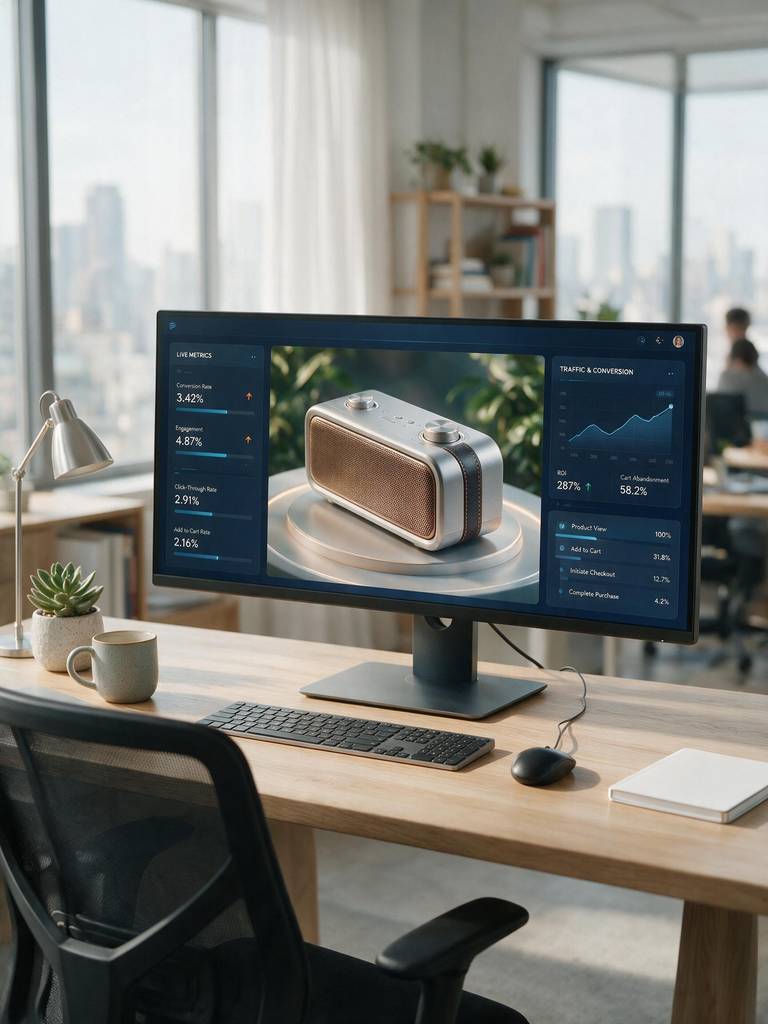
According to eMarketer's latest report, global e-commerce video ad spending is projected to reach $45 billion in 2026, with product animation content growing fastest at 38% annually. The driver is straightforward: algorithms on TikTok, Instagram Reels, Amazon, and Shopify all prioritize video. Static image click-through rates have fallen below 1.2%, while 3D product animations average 3.8% CTR, boosting conversion rates by 2-3x.
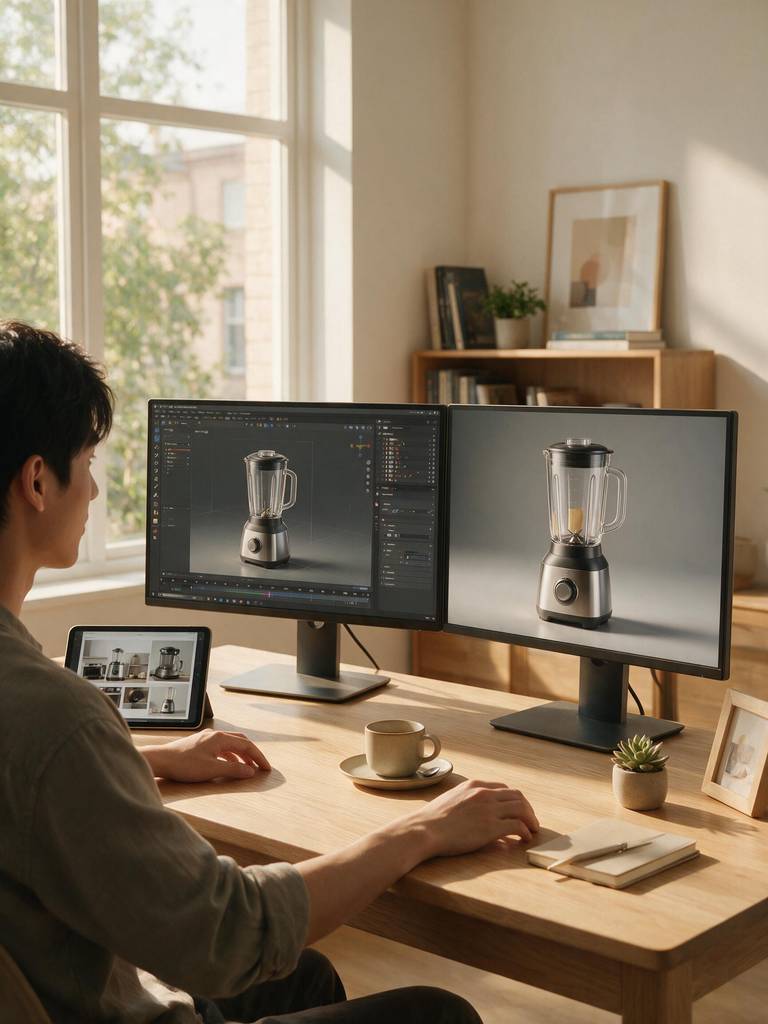
But the real catalyst is the leap in cost and speed. Take a smart standing desk brand we recently served. Previously, hiring a professional live-action team for a 30-second video cost $2,000-$4,500, with a 7-10 day turnaround and double the fee for reshoots. Using our AI+3D pipeline, the same spec animation costs $700-$1,200 and is delivered in 3 days on average, with the flexibility to change angles, materials, lighting, or even swap colors and scenes instantly. The client's operations director remarked: 'This looks more realistic than the real thing — and no scheduling headaches.'
Another underappreciated dimension is asset reusability. Live-action shoots produce one-off content with limited editing room; AI+3D source files are digital assets that can be infinitely repurposed. A single 3D model can output an Amazon main image video, a vertical 15-second TikTok clip, a 360° interactive display for a standalone store, and animated banner ads. This 'model once, distribute everywhere' model drives marginal cost per piece toward zero. A 3C brand we worked with earlier this year generated 18 product videos in different sizes and copy from one 3D model — total cost less than one traditional shoot. This case was also documented in our earlier report on 2026 E-commerce Visual Trends.
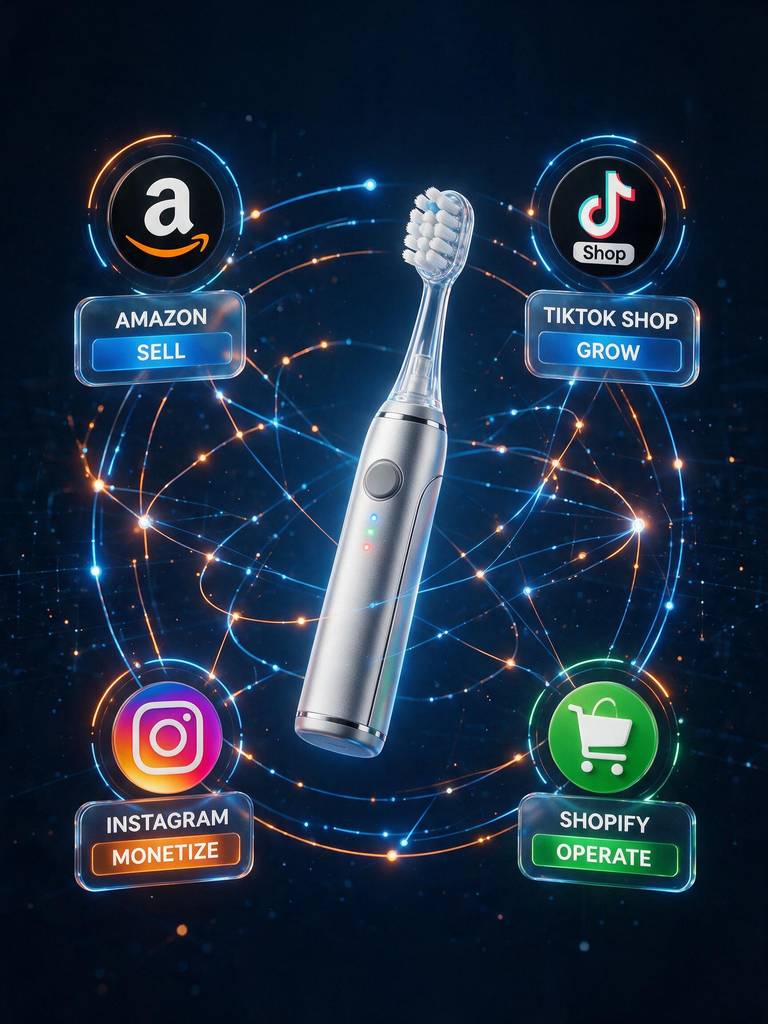
Of course, barriers remain. Many sellers assume they can simply buy an AI tool and generate professional results — only to end up with 'uncanny valley' renders or models that don't match the physical product. This is the classic pitfall: tools are easy, experience is not. Real professional AI+3D product animation isn't about software; it's about understanding materials, lighting, physics, and how to translate product benefits into visual storytelling. Take an electric toothbrush animation: if all you show is the brush head rotating, it's just another generic video. A great animation designs water flow, foam, light reflections — making viewers feel 'clean, soft, premium' in five seconds. That level of craft still needs human+AI collaboration, not just AI alone.
Looking ahead to H2 2026, we predict the visual benchmark for cross-border e-commerce will rise further. Two years ago, sellers asked 'Does product animation work?' Now they ask 'How can I do it better than competitors?' The window from optional to essential — we estimate 6-12 months remain. My advice to brands still on the fence: the current low prices are due to AI+3D capacity still expanding. Once supply-demand balances, prices will climb. Getting on this train now is investing in your visual competitiveness for the next 2-3 years.