
Product animation trends are moving from “nice to have” to “must have”
With two-thirds of 2026 behind us, we reviewed product video requests from 87 brand clients and found a clear signal: projects asking for “live-action only” dropped from 41% last year to 18%, while requests for “AI+3D” or “hybrid live-action + 3D” broke past 60% for the first time. Product animation trends are no longer a marketing experiment reserved for big brands. They are becoming standard equipment for e-commerce detail pages, launch events and overseas trade shows. If you are still using static images and voiceover to explain how a machine works, users will scroll away faster than you think.
Data from ad placements tells a similar story: for the same 15-second product video, the 3D animated version had an average completion rate 23% higher than live-action, with the biggest gaps in industrial equipment, home furniture and consumer electronics. The reason is simple — the core shift in product animation trends is turning “invisible structures, hard-to-explain principles and impossible camera angles” into visible pictures. Consumers do not need to understand motor RPM, but they do need to understand why a product is quieter. This article breaks down 8 shifts shaping product animation trends in 2026, based on our project data and public market information. Whether you are a brand, cross-border seller or marketing lead choosing a vendor, use these as a checklist for your content strategy.
Trends 1-2: From “show-off” to “explain clearly”, from single video to modular assets
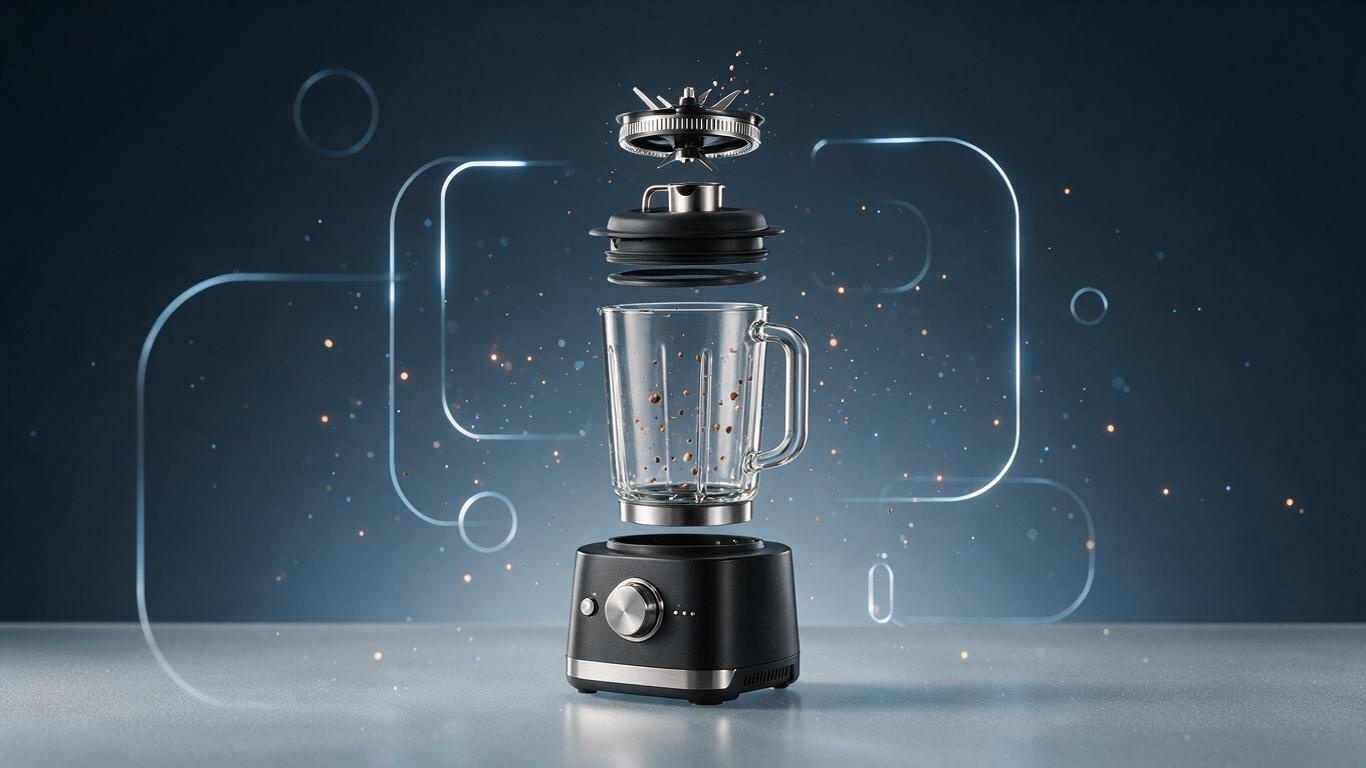
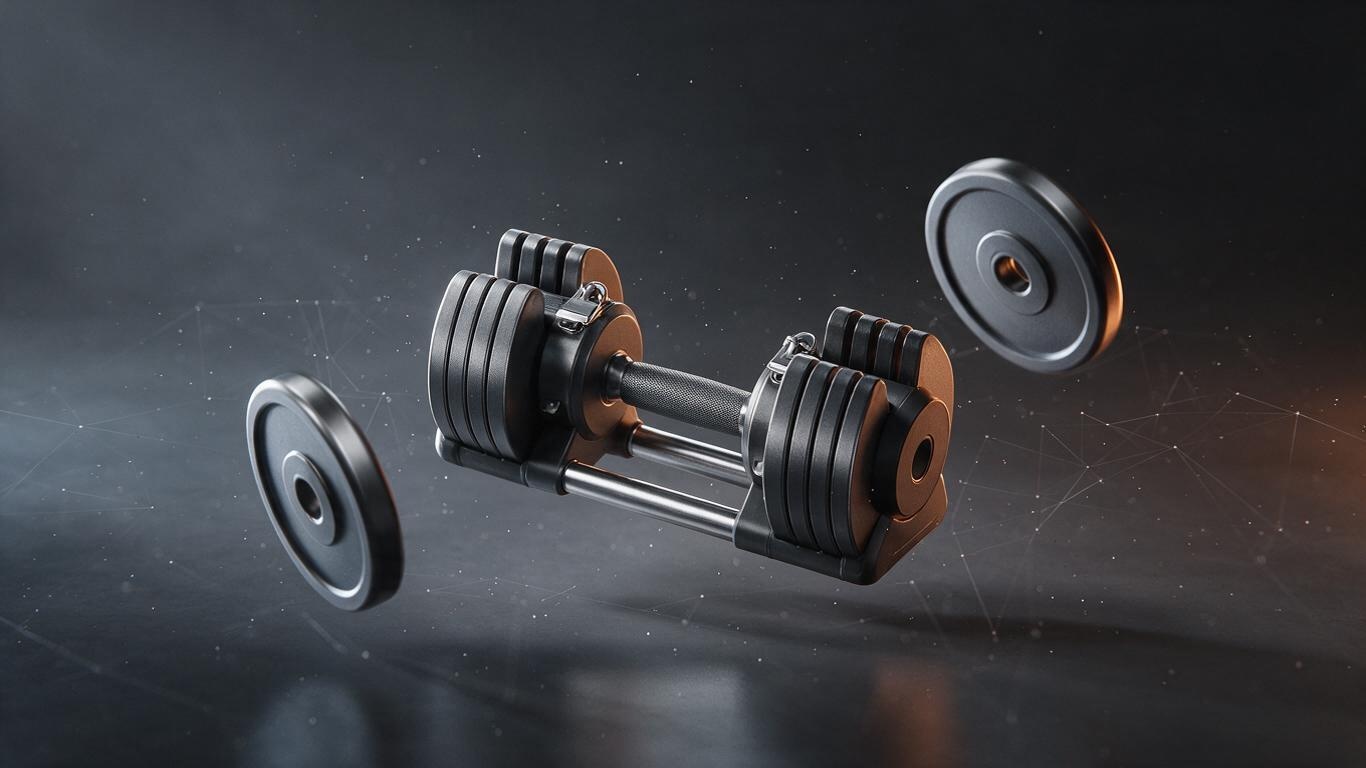
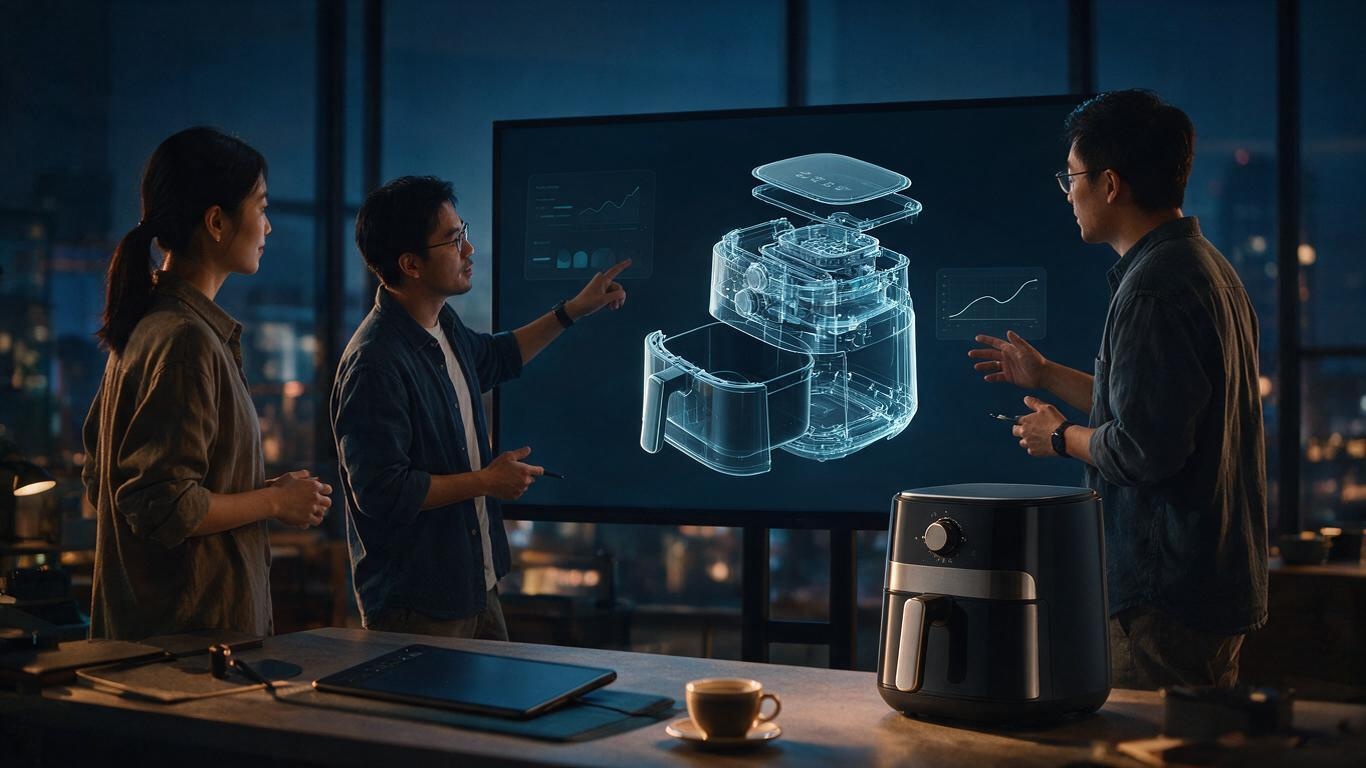
A couple of years ago many product animations chased flashy transitions and particle effects. They looked great, but users could not remember what made the product strong. In 2026, product animation trends are clearly turning toward “explanation power” — camera language serves functional breakdown. For an air fryer, instead of spinning it 360 degrees ten times, a cutaway animation showing hot air circulation followed by a 3-second comparison of oil residue against traditional frying is far more effective. This kind of technical visualization is becoming standard for home appliances, kitchenware and fitness equipment. At the same time, product animation trends are moving from “one final film” to a modular asset library. Brands no longer buy just one 60-second hero video; they buy a set of reusable 3D shot modules: an unboxing angle, a core structure exploded view, a usage-scenario loop and a set of data callouts. Marketing teams can assemble different versions for Amazon A+ pages, TikTok, independent sites and trade show screens. In our 2026 e-commerce visual trends report, we noted that brands with high content reuse can cut per-video production cost by over 40%, and this trend is even stronger this year.
Trends 3-4: Real-time rendering goes mainstream, AI-generated 3D models enter the workflow
Real-time engines used to be heavy weapons for game and film studios. Now more product animation teams include them in daily workflows. The benefit is direct: change a material, swap a color, adjust lighting, and it is almost what-you-see-is-what-you-get. When a client says “make this handle matte black” in a review, the next version can be ready the same day. The “real-time” shift in product animation trends not only compresses revision cycles but also makes personalization possible — the same product can generate different colors and scenes for different markets with very limited extra cost. AI-generated 3D models are another acceleration curve. Building a precise industrial equipment model by hand used to take 5 to 8 days. With AI-assisted topology and material generation, the first model can be compressed to 1 to 2 days, with human time spent optimizing key structures. This does not replace modelers; it frees them from repetitive labor for animation pacing and camera storytelling. We broke down this process in AI-generated 3D modeling workflow, and in 2026 it has moved from early adoption to standard practice.
Trends 5-6: Multi-platform adaptation and interactive product animation
The same product animation must be vertical and hook viewers in 3 seconds on TikTok, square and benefit-driven on Amazon, horizontal and silent-playable on an independent site, and 4K looping without black frames on a trade show screen. Product animation trends in 2026 are no longer “make one video and crop it later”. Multi-platform adaptation is designed at the script stage. More production companies now include “1 hero film + 3 platform adaptations” directly in their quotes. If brands do not ask clearly, cropping later often cuts out key frames. Interactive product animation is also moving from concept to reality. Through WebGL or lightweight 3D display, users can rotate products, click parts for explanations, and switch colors and configurations on a web page. For high-ticket, long-consideration categories such as industrial equipment, outdoor gear and smart home, interactive 3D display can significantly reduce drop-off caused by “I do not understand it”. The difference from traditional product animation trends is simple: video is linear storytelling, while interactive animation hands choice to the user.
Trends 7-8: Sound design upgrades, data-driven iteration
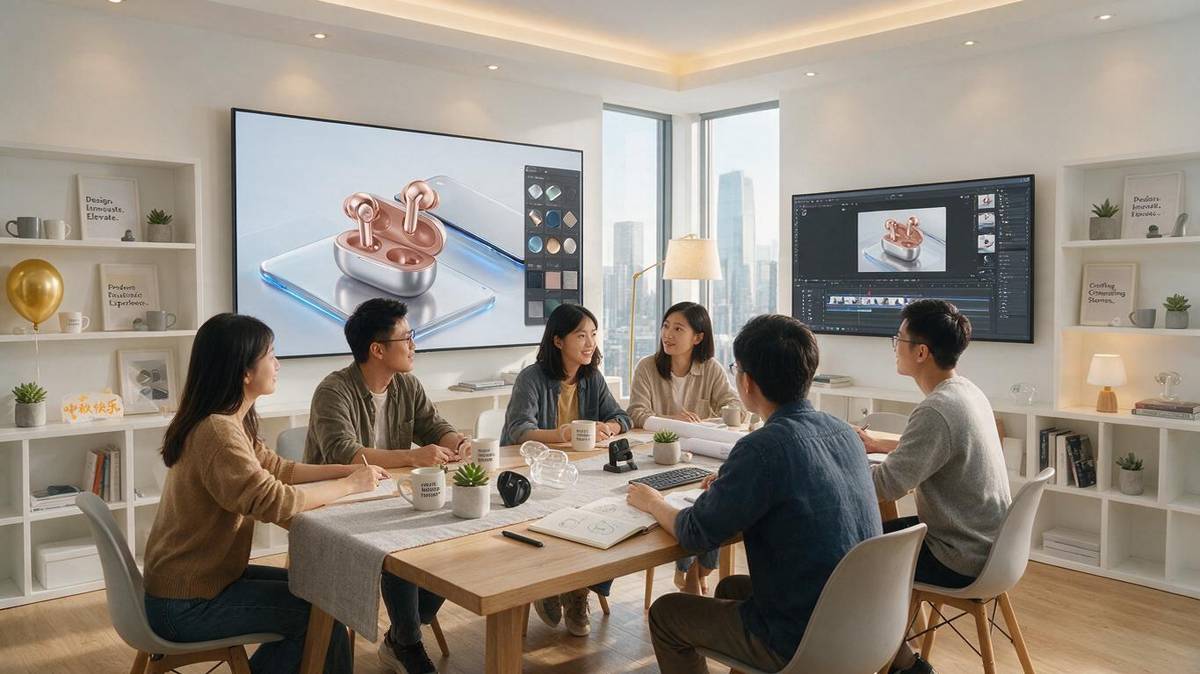
Sound in product animation is being taken seriously again. Many brands used free sound libraries to save budget in the past. But in 2026, custom sound design is becoming standard for mid-to-high-end projects. The crisp click of a metal buckle, the subtle friction of fabric, the low hum of a motor starting — these sounds give 3D visuals a sense of reality. In ASMR-style product showcases especially, the contribution of sound design to completion rate may be seriously underestimated. The final trend is data-driven iteration. After a product animation goes live, brands track 3-second retention, completion rate and click conversion across versions, then feed the insights back into the next production round. This means product animation is no longer a one-off creative project but an ongoing content asset. This year Artsky Studios ran A/B tests for several cross-border clients. For the same product, a “pain-point opening” had a completion rate 31% higher than a “result opening”. This testing mindset is becoming the most practical part of product animation trends.
Final thoughts
Product animation trends in 2026 can be summarized as: more practical, more modular, more real-time, more interactive and more data-driven. It is no longer visual magic only wealthy brands can afford. It is a basic tool for brands competing for attention in short video feeds and e-commerce shelves. If you are planning your product video budget for the second half of the year, ask yourself three questions first: What part of my product is hard to explain? Can my content be broken into reusable modules? Have I validated which version performs better with data? Answer these before talking to vendors, and the conversation will be much more efficient.