
At 1 a.m., a new consumer brand's operations group chat was still buzzing. The topic wasn't ad ROAS, but a 15-second product animation—marketing wanted to slice it into five different aspect ratios, product team suggested replacing the bottle color with a summer limited edition, and e-commerce added: “Can we get a logo-free version for creator remixes?”
Three years ago, that would have meant reshooting the entire video. In 2026, more brands realize they are holding not a video but a 3D digital asset that can keep growing.
Over the past year, nearly 40% of the 300+ AI+3D product animations delivered by our studio led to derivative requests—swapping backgrounds, changing color schemes, adjusting camera moves, outputting different aspect ratios. In the live-action era that was almost impossible: reshooting meant new sets, lighting, schedules, and budget. But with 3D assets, the model, materials, lights and camera paths live in the project file. A revision is just a few parameter changes. The “infinite content generation” trend mentioned in our 2026 E-commerce Visual Trends Report is becoming a real daily workflow.
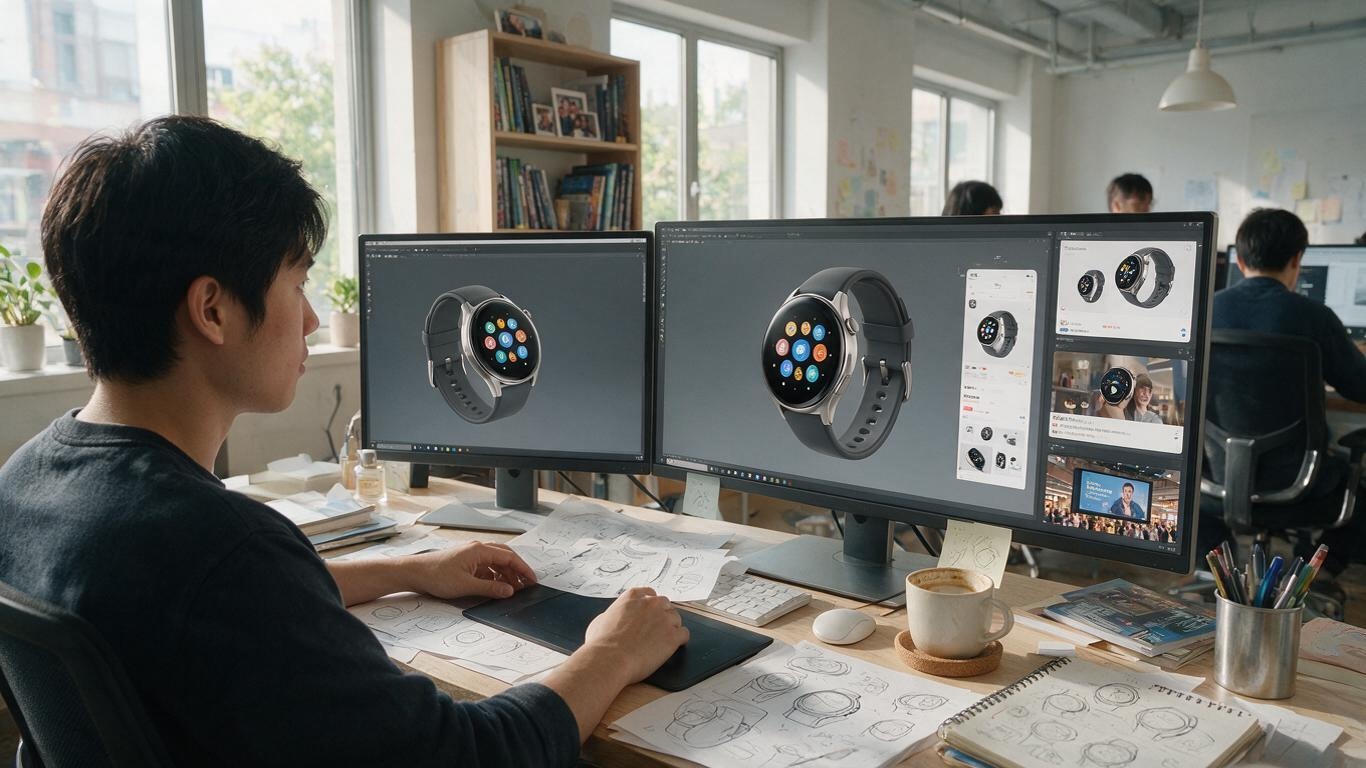
The subtler shift is how brands organize content. Before, video assets were managed “by video”—one piece, one archive. Now brands manage them “by component”: a product model is a component, a material setup is a component, a camera movement is a component. When a campaign needs new visuals, they pull from the library instead of starting over. A smartwatch brand came to us for one hero animation, then extended the same 3D model into a dozen assets for their website carousel, Douyin feeds, in-store screens and crowdfunding pages. The cost of the animation didn't change, but the total value of the asset multiplied.
Behind this is a clear business logic: as consumer attention fragments, brands need not “one viral video” but “a visual system that can adapt to every scenario quickly.” AI+3D product animation is the most convenient tool to build that system. Compared with live-action, its marginal cost is extremely low; compared with static renderings, it adds time and spatial dimensions—telling stories, revealing structures, simulating usage scenarios.
Treating video as an asset is a cognitive challenge for brands used to one-off purchases. We are often asked: how long can a 3D asset last? Honestly, as long as the product design stays unchanged, this asset can be reused for years. When a product iterates, you change materials and colors, not the whole model. What's more, the asset can empower multiple channels: the same product can use an American expository style on Amazon, fast-paced cuts on Douyin, and a restrained premium style on a domestic official website—each to its own audience.
Looked at differently, product animation is shifting from “marketing expense” to “brand investment.” It is not disappearing cost but ongoing content compound interest. In the second half of 2026, more brands will build 3D product asset libraries as core brand infrastructure like logos and VIs. Early movers are already enjoying the compounding effect.


