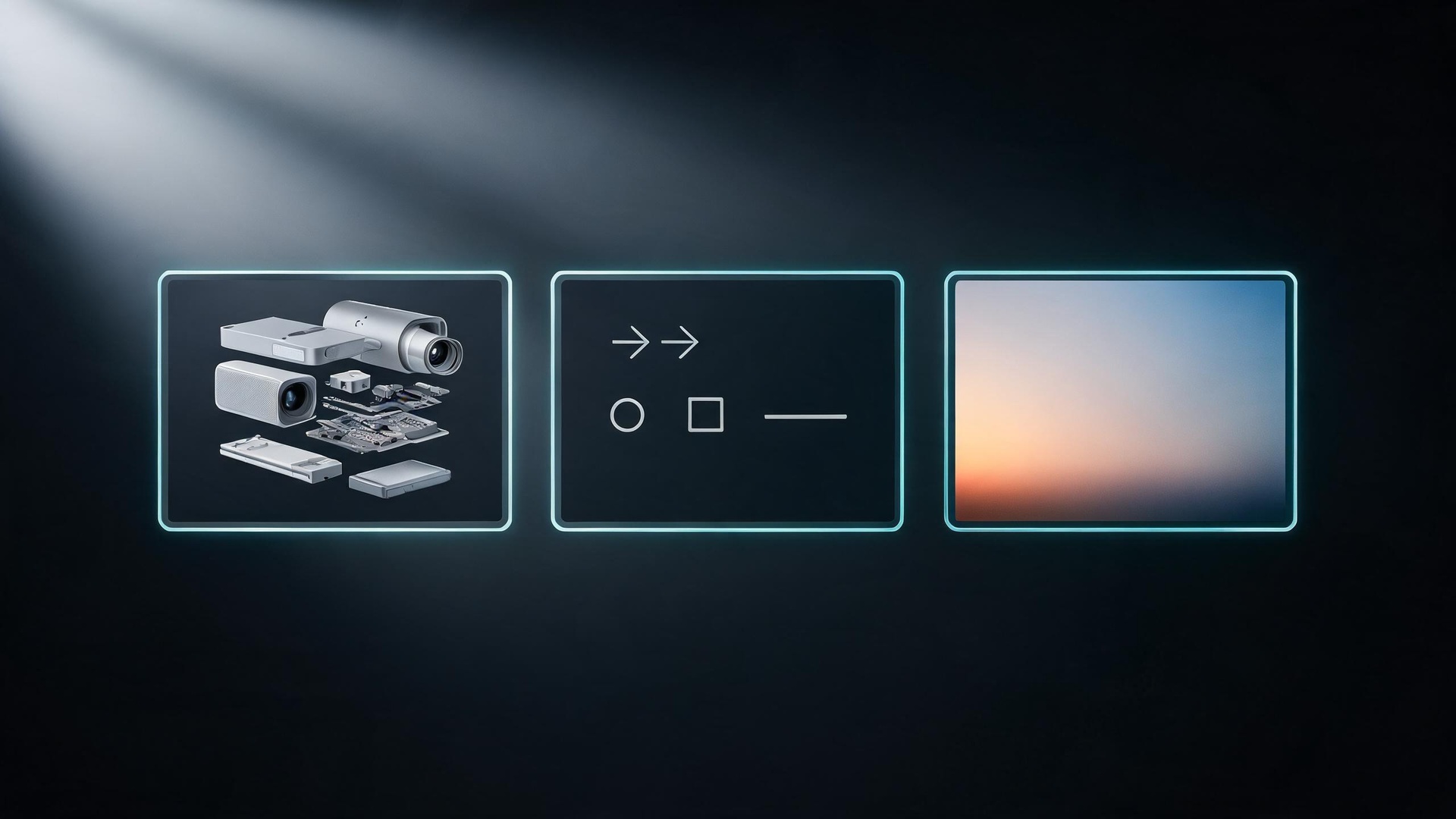

A 45-second product film. Two days of shooting, two weeks of post. That's not inefficiency — it's the nature of post-production, which is a production line of its own, with ordered steps, handoff points and risks that must be anticipated before the first frame is shot. Brands that pour all their budget and attention into the shoot, then treat post as an afterthought, usually end up with footage that looks fine and sells poorly.
What post-production actually means for e-commerce video
Post-production covers everything between "we finished shooting" and "this is ready to run." In the e-commerce context it's concrete: taking live-action footage, 3D renders, graphic assets and voice tracks, and unifying them into one deliverable that can carry a product link, run as paid media, and pass platform review — plus the multiple aspect ratios, durations and caption variants each channel demands.
The operative word is unify. Post isn't cosmetic. It's the process of dragging sources with different parameters, different lighting and different origins onto a single visual track, so that a light placed on set and a light placed in a 3D scene can coexist on one timeline without argument.
The six stages, and where the money goes
- Ingest and alignment — shot log checks, multicam sync, proxy generation, timecode matching between 3D and live action. The most tedious stage, and the one that creates the most downstream pain when skipped.
- Editing — a rough cut to fix narrative and pace, then a fine cut that trims to the frame. The first cut essentially decides whether the piece survives the first three seconds.
- Compositing and VFX — keying, tracking, screen replacement, integrating 3D product renders into live-action plates, plus graphic packaging such as lower thirds and motion labels.
- Color — primary correction to unify exposure and white balance, secondary work to establish brand tone. On hybrid CG/live-action projects, grading is the only stage that can genuinely sew the two together.
- Audio — dialogue cleanup and compression, sound design, music editing. Viewers forgive soft images; they don't forgive muddy sound.
- Multi-version delivery — vertical, horizontal, square; 15s, 30s, 60s; captioned and clean; each platform's resolution and bitrate spec.
Where the hours really go
Across our own e-commerce projects, editing accounts for roughly 30% of post hours. Compositing and VFX take about 35%. Color and audio sit near 10% each, and the remaining 15% disappears into ingest and multi-version exports. If you budget only for "editing time," the project will stall at compositing or audio, get squeezed, and ship something that plays but doesn't persuade.
Projects that build 3D assets into the post pipeline from day one fare far better. As we noted in from live-action to an AI+3D workflow, agreeing on frame rate, color space and camera parameters up front can cut integration time nearly in half.
In-house, outsourced, or hybrid
An in-house post team wins on communication overhead and asset security — sensible above roughly 20 deliverables a month. Outsourcing suits project-based work, sudden campaign spikes, and teams that need CG capability but have never hired a 3D artist. The most efficient setup is hybrid: keep one producer in-house who understands post, outsource the heavy stages (compositing, 3D, grading), and keep the light ones (rough cuts, captions, exports) internal.
The only real risk in a hybrid setup is the handoff. Naming conventions, timecode, proxy formats, separated audio stems — without a checklist, two rounds of back-and-forth erase the savings. When vetting partners, the criteria in how brands choose an AI+3D animation vendor are a better signal than any showreel, especially "does the vendor specify delivery standards before the project starts."
What different tiers actually cost
No invented numbers — just structure. Lightweight editing plus captions typically runs per-deliverable in the low hundreds to low thousands. A standard tier with grading, sound design and multi-version adaptation lands higher. Once you add 3D compositing, CG/live-action integration or complex motion packaging, budgets start at five figures per film and climb with shot count and asset reuse.
The gap is never really about vendor pricing. It's about how many stages of work exist. Two 60-second films can differ fivefold in labor: one needs pacing, the other needs an entire lighting relationship rebuilt. Compare scope before comparing numbers, or you're pricing apples against durians.
Five acceptance checks before you sign off
- Is there a visual hook in the first three seconds, with the product unmistakably legible?
- Do live-action and CG elements match in color temperature, shadow direction and grain?
- Is dialogue clean, is the music sitting under the voice, and do captions work with sound off?
- Does every platform version meet spec without cropping the product out of frame?
- Are project files, layered assets and audio stems archived and handed over for reuse?
That last one is the most overlooked and the most valuable. A reusable post project can cut the next campaign's turnaround by a third — a point we keep returning to in the short-video product showcase revolution: content efficiency ultimately comes down to asset efficiency.
Post-production isn't a trade that "stitches clips together." It's the translation layer between what was shot and what converts. Every stage costs money, and every stage can be optimized. The professional move isn't to negotiate the price down — it's to spend where the outcome is decided. If a film is stuck in post, or you'd rather design the pipeline before the next shoot, contact us — we'll start with your placement channels and asset structure, then talk about how to build it.