
What Is a Cross-Border Ecommerce Product Video, Really?
It's late at night in Shenzhen, and Alex, a cross-border e-commerce seller, is scrolling through his Amazon dashboard. He notices that competitors' listings get updated with new main image videos every few months, while his store still relies on static images. Traffic is getting more expensive, conversion rates are stuck, and he knows video is the answer — but he's not sure what a proper "cross-border ecommerce product video" should look like without blowing his budget. If that sounds familiar, you're in the right place.
Definition: Not Every Product Video Qualifies
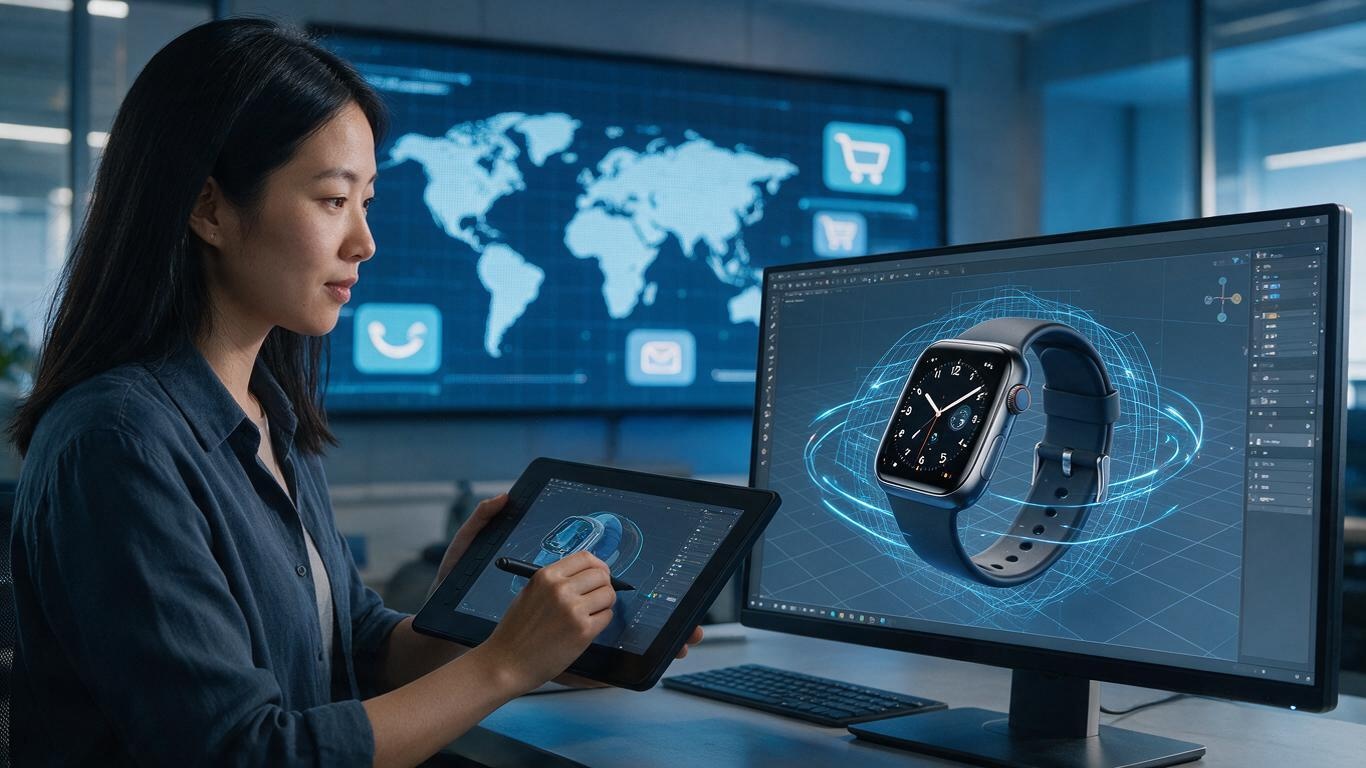
Simply put, a cross-border ecommerce product video is a product showcase video made for overseas e-commerce platforms such as Amazon, Shopify, TikTok Shop, or eBay. Its core purpose is to visually answer three questions in the shortest possible time: What is this product, what problem does it solve, and why should I buy it? The biggest difference from domestic e-commerce videos is audience and platform rules. Western consumers tend to be more rational, and platforms are stricter about exaggerated claims. The video needs to capture attention in 3 to 15 seconds while building enough trust. In the past, such videos relied heavily on live-action, which was costly and time-consuming. With the rise of AI+3D technology, brands can now generate complete visual demonstrations — from appearance to internal structure — through 3D modeling and animation rendering. We call this approach "AI+3D product animation," and it has become a powerful tool for cross-border brands to differentiate their visual identity. If you want to learn more about how this technology is transforming foreign trade marketing, check out our article How AI+3D Is Transforming Foreign Trade Marketing.
Why Cross-Border Sellers Need Product Videos
Numbers don't lie. According to Amazon's official statistics, listings with videos can increase conversion rates by 30% to 50% compared to image-only listings. On independent e-commerce sites, videos can extend average time on page by over 2 minutes, directly boosting average order value. Even more importantly, videos help solve the "can't touch it" trust problem. Through 3D cutaways, dynamic demonstrations, and scenario simulations, buyers can directly feel the craftsmanship, material quality, and usage of a product — far more convincing than any text description. But not just any video will work. Cross-border audiences span different cultures and aesthetics, so videos need to be adapted to local language, habits, and platform formats. For example, Amazon main image videos are usually under 60 seconds, while TikTok ad videos are best kept under 15 seconds. This is what makes cross-border ecommerce product videos a specialized craft rather than just another promo clip.
Common Types: Your Goal Defines the Video
Based on placement and marketing goals, cross-border ecommerce product videos generally fall into four categories: main image videos (Listing Video), social media ad videos, brand story videos for independent sites, and crowdfunding/launch videos. Each type has different content structure, production quality requirements, budget, and turnaround time. For example, Amazon main images are 30–60 seconds, focusing on core features in a loop, while TikTok ads need a visual hook in the first 3 seconds.
Live-Action or AI+3D? Do the Math First
Live-action works well for products that already exist and need to show real texture and detail, but it's limited by scene, props, and post-production. A high-quality live-action video often costs tens of thousands of RMB. AI+3D animation, on the other hand, offers incredible flexibility: you can render pre-production models before the product is even molded, modify colors and materials instantly, and even show "exploded views" or internal structures that are impossible to film. For example, a 3C client needed six color variants of a Bluetooth headset video within three weeks. With live-action, they would have needed six prototypes and a month of reshoots. With 3D animation, we simply changed material parameters and batch rendered everything in one week. Many brands now use a hybrid "live-action + 3D enhancement" approach to get the best of both worlds.
Five Keys to Producing a High-Quality Product Video
Whether you build an in-house team or outsource, pay attention to these five things:
- Selling point extraction: Don't cram every feature into one video. Focus on only 1-3 core selling points.
- Pacing control: The first 3 seconds must grab attention, and the overall rhythm should match the browsing habits of your target platform.
- Visual style: Keep brand colors, fonts, and lighting consistent with your brand identity.
- Localized copy: English voiceovers must sound natural, and subtitles should follow local reading conventions.
- Technical specs: Each platform has strict requirements for video size, duration, and audio format. Check everything before delivery.
Many sellers have fallen into these traps, which is why we put together a guide on 5 Common Pitfalls in Product Animation for Cross-Border E-Commerce. We recommend reading it before you start.
Your Next Step
A cross-border ecommerce product video is not a mystery — it's a measurable marketing tool. Define your target platform, audience, and core selling points, then choose the right production method. Whether you go with live-action or AI+3D animation, a professional team can help you avoid costly trial and error. If you're planning your 2026 overseas visual content, why not start with a 30-second 3D product animation to test the market at the lowest cost? If you have questions about the production process or pricing, feel free to contact us. We'll work out the best solution based on your product and budget.