
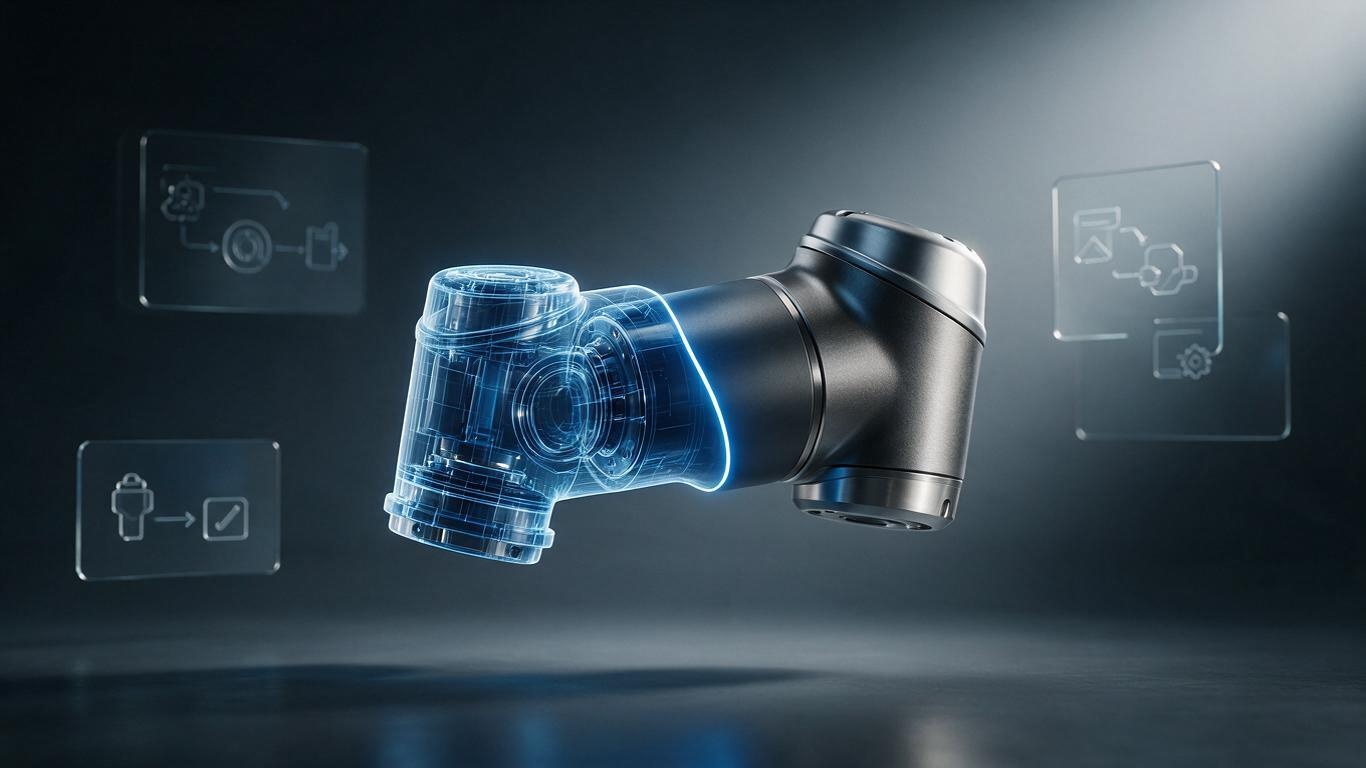
A 30-second product animation is, in the end, 30 seconds long. Behind it, our studio typically spends an average of 11 working days, six roles and more than 40 file versions.
The first question most brands ask is always the same: can you deliver in three days? The answer is not about attitude — it lives inside the product animation production process itself. Every stage exists for a reason, and if you reorder them, rework costs multiply.
As a rough benchmark: a 15-second showcase animation takes 7-10 working days; a 30-second piece with scenes and narrative takes 10-15; machinery or precision instruments that require internal structure cutaways start at 20-25 working days. If a vendor promises a three-day all-in package, they have almost certainly removed three or four stages of the process.
The product animation production process, stage by stage
Stage 1: Brief diagnosis and information architecture (0.5-1 day)
The first job is not opening software, it is taking the product apart on paper: where will this video live (marketplace listing, website, trade show loop, crowdfunding page?), who is watching, and which single selling point must be remembered?
Stage 2: Script and storyboard (1-2 days)
The script sets information order; the storyboard sets visual rhythm. We deliver a storyboard with a time axis: 0-3 seconds for the hook, 3-8 seconds for the problem, 8-20 seconds for structure and function, and the last three seconds for brand information. This is the first mandatory client sign-off. Changing a script costs roughly one tenth of changing a finished render.
Stage 3: 3D modeling and asset preparation (2-4 days)
CAD files convert quickly; physical products and photos require reverse modeling; concepts start from zero. AI now handles texture completion, topology cleanup and material matching, cutting modeling time by 30%-50%. We covered the mechanics in our guide to the AI-generated 3D modeling workflow.
Stage 4: Materials and environment (1-2 days)
Materials decide whether a product looks premium. Matte plastic, anodized aluminum, brushed steel, glass and coatings all need separate parameter work. Sets usually follow one of two routes: studio look (clean, floating, solid background) or contextual look (kitchen, gym, outdoors, factory).
Stage 5: Animation and camera work (2-4 days)
This is the most hands-on stage, and the one AI is rewriting fastest. Exploded views, turntable shots, liquid pours and mechanical linkage used to mean frame-by-frame curve work. Today, routine motion can be generated with AI as a base layer and refined by hand — see AI-driven motion generation for the details.
Stage 6: Lighting and rendering (1-3 days)
Rendering trades compute for quality. A 30-second 1080p sequence with global illumination can take a dozen hours on a single machine, so we render in parallel across multiple nodes with layered passes. Lighting decides metal feel, translucency and perceived value. Read more on lighting techniques in product animation.
Stage 7: Post-production, sound and color (1-2 days)
Editing rhythm, transitions, subtitles, SFX, music and voice-over. Sound is undervalued: the click of a metal latch or the hiss of a machine contributes more to credibility than most people expect.
Stage 8: Multi-format delivery (0.5-1 day)
One production, many formats: 16:9 for web and YouTube, 9:16 for TikTok and Reels, 1:1 for marketplace thumbnails, plus a six-second muted loop.
Where do projects actually go wrong?
Stages one and two. Roughly 60% of our rework hours trace back to an unaligned script, not to rendering or animation problems. Technical problems can be solved with overtime; direction problems can only be restarted.
Can the process be compressed?
Yes — modeling, routine motion, rendering and format adaptation can all be accelerated with AI and compute. What cannot be compressed is scripting, lighting direction and the final 10% of polish, which decides whether a video is merely usable or actually shareable.
If your product is ready to go into production, contact us and we will send back a time-lined process and quote breakdown within 48 hours.