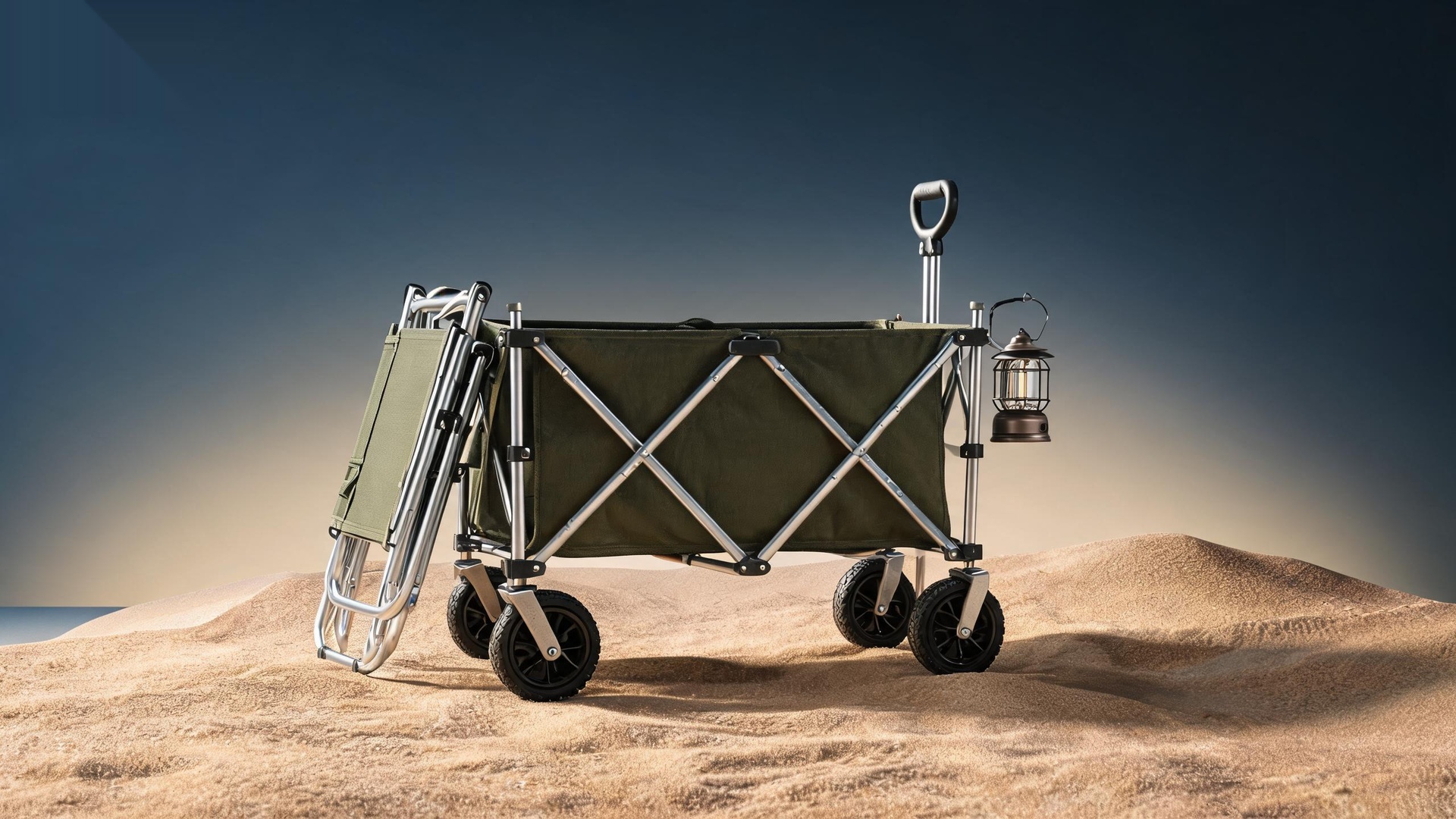
Late September, on a call, an outdoor-gear client said something blunt: “We can't film our cart.” The product was a folding camping wagon — 80 kg of payload when open, carry-on size when collapsed. That collapsing motion was exactly what they wanted to sell, and exactly what live-action kept failing to show.
What follows is a full 3D product animation case study: the brief, the shot design, the delivery, and an honest split of where AI 3D animation production genuinely helped and where a human still had to key every curve by hand.
The outcome first: four videos (one 45-second hero cut plus three 15-second cutdowns), delivered in nine working days. The crowdfunding page hit 3.6× its goal on day one, and average dwell time climbed from 38 seconds to 1 minute 34 seconds. Not a fairy tale — but enough for a two-person marketing team.
The problem wasn't beauty. It was clarity.
Three very ordinary obstacles.
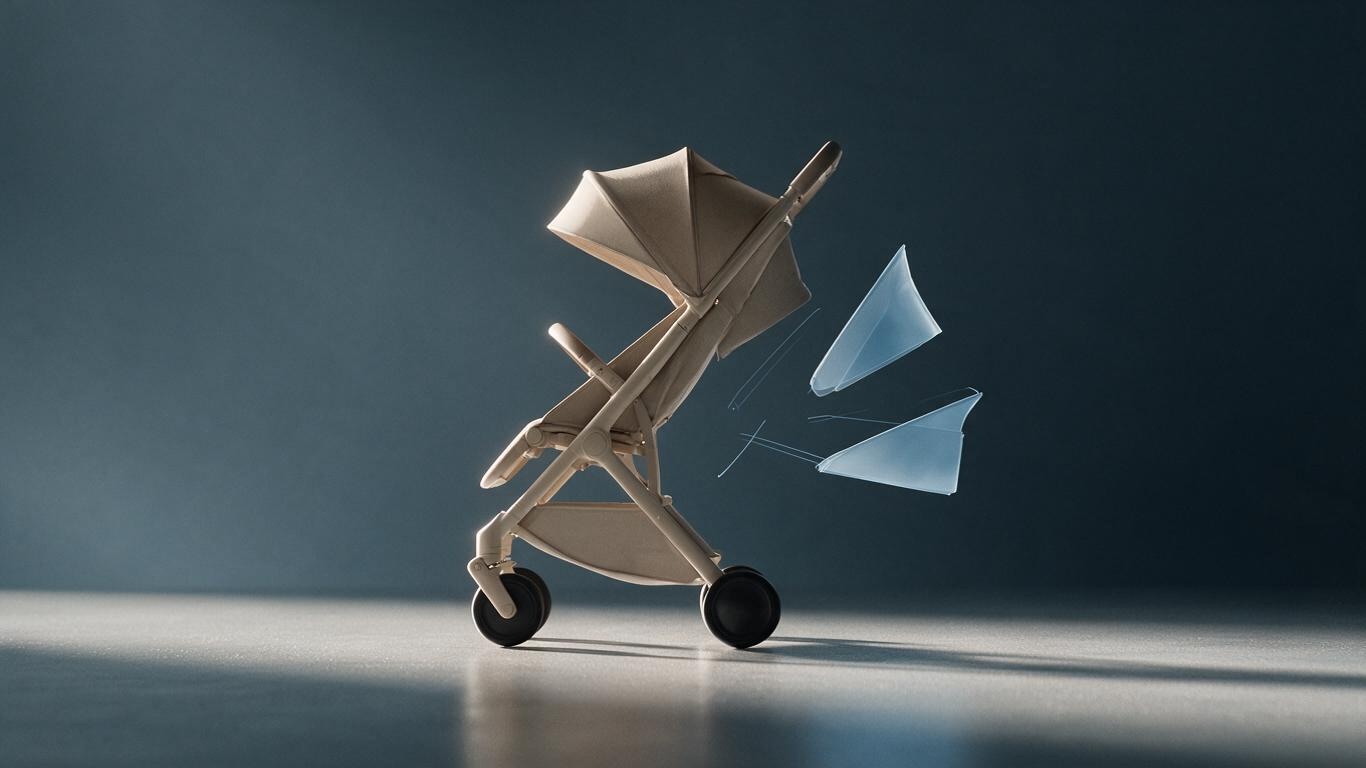
- Folding mechanisms don't survive a camera. Live action can show before and after, but not the six seconds in between — four linkages retracting, the base plate flipping, the wheels tucking in. Viewers were left to imagine it.
- Outdoor terrain is uncontrollable. Sand, gravel, wet forest floor. Every location means waiting on weather, light and permits. Three terrains for one cart doubles both schedule and budget.
- Crowdfunding doesn't wait. The final sample locked in early October; the page had to go live in November. Live action needed four to six weeks of scheduling.
Products whose core value is a mechanism belong in 3D. We covered the boundary between the two approaches in live action versus AI 3D: how the production workflow evolved, so I'll keep it to one line: anything the user cannot physically see is better told in 3D.
Translating selling points into motion
We didn't start modelling. We started by cutting 27 bullet points down to 6, then turning each one into a physical action. The shot list went through four revisions.
The turning point came in revision three, when the client asked: “Can we put the collapse first?” They had been saving it as a closing reveal. For crowdfunding backers, though, storage is the category's biggest pain point. So the hero cut opens with five seconds of pure satisfaction — snap, it's folded — and spends the remaining forty explaining why it still hauls 80 kg. Large-format products follow the same rule we learned on the furniture product animation project: show the result first, justify it second.
What AI did — and what it didn't
The term AI 3D animation production gets used loosely, so here is the actual division of labour on this job.
AI handled: sketch-to-mesh generation for 21 of the 32 parts, saving roughly two days; rapid environment build for the sand, gravel and forest floors, where generated surface detail beat hand-placing every rock; and low-fidelity previs, which let us judge pacing in half an hour instead of half a day.
Humans handled: the mechanism. Linkage relationships, axle clearance, the exact frame a latch bites — all keyed by an animator. AI-generated motion tends to look right while feeling soft at the joints. That work consumed about 40% of total hours, and it is the line between a clip that looks fine and one a backer actually trusts.
AI compresses preparation. People decide credibility.
The nine-day timeline
- Day 1–2: Selling-points workshop, locked shot list, engineering drawings and sample photos collected.
- Day 3–5: Modelling and assembly rigging. A white-model mechanism pass went to the client first, to confirm the fold logic before any surfacing.
- Day 6: Shading, lighting and all three terrains in a single pass.
- Day 7–8: Rendering and first edit — hero cut plus three vertical cutdowns.
- Day 9: Two small revision rounds, then 4K masters and social aspect ratios delivered.
Only two meetings: one on the shot list, one on the white model. The communication savings mattered more than the modelling savings.
Results, plus one counter-intuitive lesson
Day-one crowdfunding reached 3.6× goal; dwell time rose from 38 seconds to 1 minute 34 seconds; the 15-second cutdowns completed at 78%, well above the hero cut. Cutdowns acquire, the hero cut persuades — two different jobs, two different lengths.
The counter-intuitive part: not every product deserves 3D. If the core value only lands when something moves or opens, 3D pays for itself. If the selling point is surface and feel, live action is usually faster and cheaper. That's the same reasoning behind our guide on how brands should choose an AI 3D animation vendor — judge category fit before discussing production. For complex mechanical assemblies, the precision machine tool case is a useful reference point.
If you're sitting on a product that cameras can't explain, send over the engineering drawings or a phone video of the real thing. We'll tell you honestly whether it's worth producing before quoting anything. Contact us — you'll usually get a straight answer within 24 hours.