
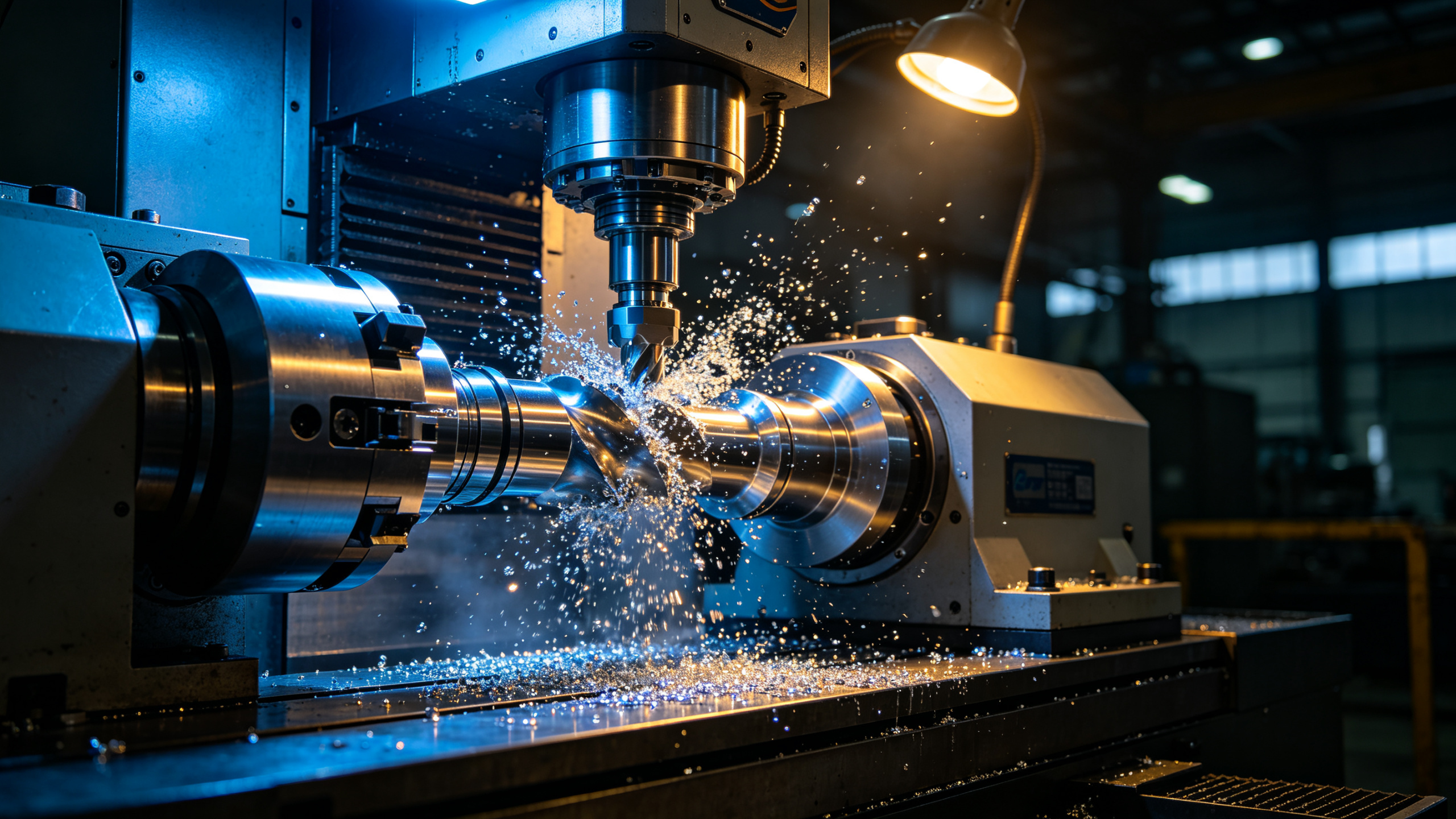
"Boss, can you make a video of this machine tool? One that shows its machining precision?"
The message popped up at 11 PM. The client exports high-end CNC machine tools, mainly to Germany and Japan, with each unit costing hundreds of thousands to millions. His request was simple: Make it so buyers scrolling on their phones can feel the machine's machining precision.
Honestly, in our years of product animation, we've handled 3C, beauty, food, and home goods—but industrial machinery? This is the toughest category. Not because we lack the tech, but because "precision" is incredibly hard to convey visually. You can't fool a German engineer with flashy transitions.
This article breaks down how we used AI+3D animation to create a product video for a high-end CNC machine tool that made clients "place orders on the spot."
The Challenge: Why Machinery is the "Nightmare Difficulty" of Product Animation
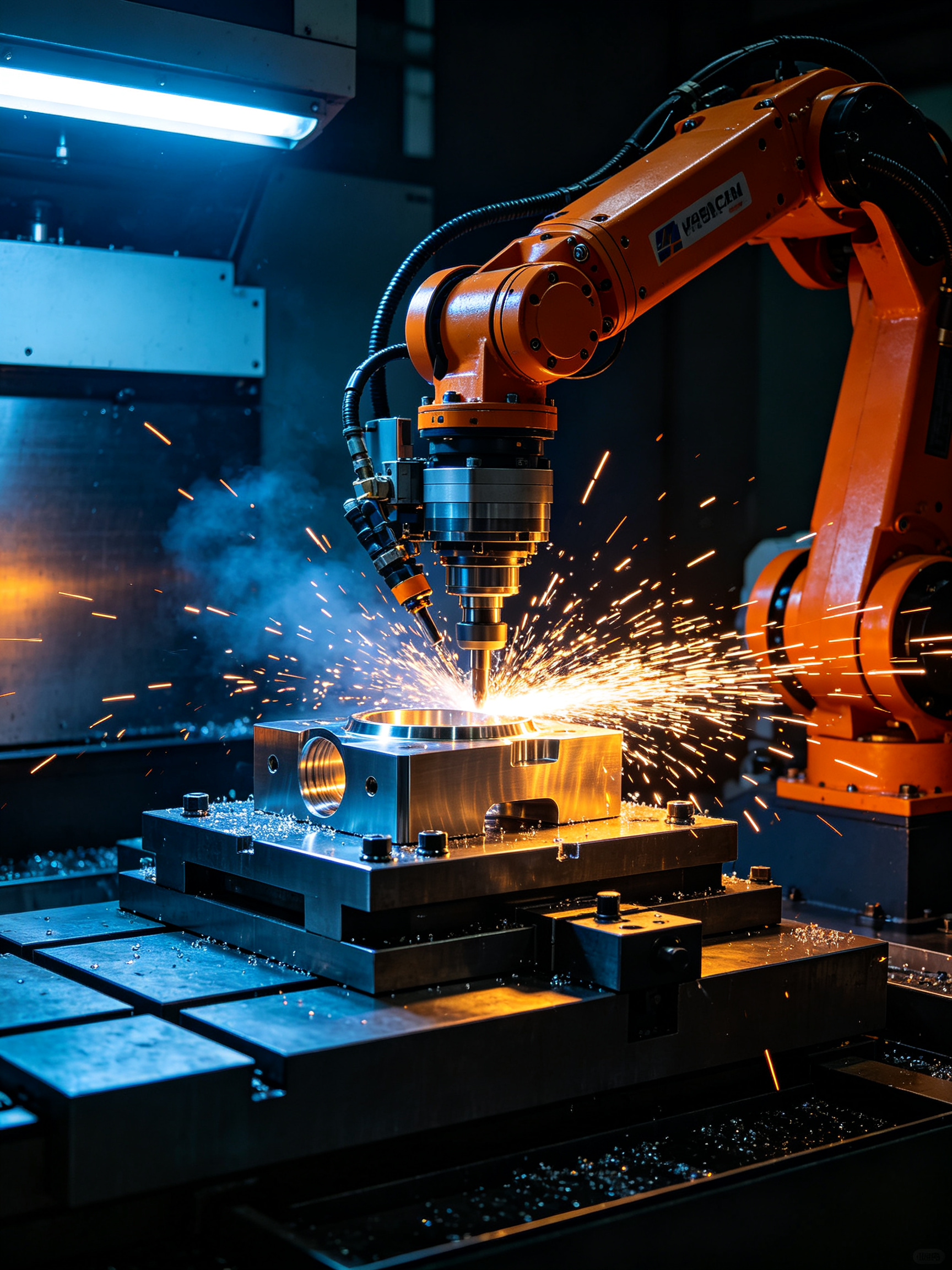
After landing the project, our team held an internal meeting to hash out the challenges:
- Massive size: The machine tool is 3 meters long and 2 meters high. Traditional 3D modeling workload is over 5 times that of consumer electronics.
- Complex materials: Cast iron body, stainless steel guide rails, aluminum alloy guards, acrylic observation windows—six or seven materials mixed, each with completely different optical properties.
- High motion precision: Tool paths, spindle rotation, coolant flow—every movement must be accurate to the millimeter, with zero visual misalignment in any frame.
- Knowledgeable clients: Machinery clients are often engineers. One look and they know if your model is real or if the motion is off.
In a nutshell: No faking, no shortcuts, no flaws.
The AI+3D Workflow: How We Solved It
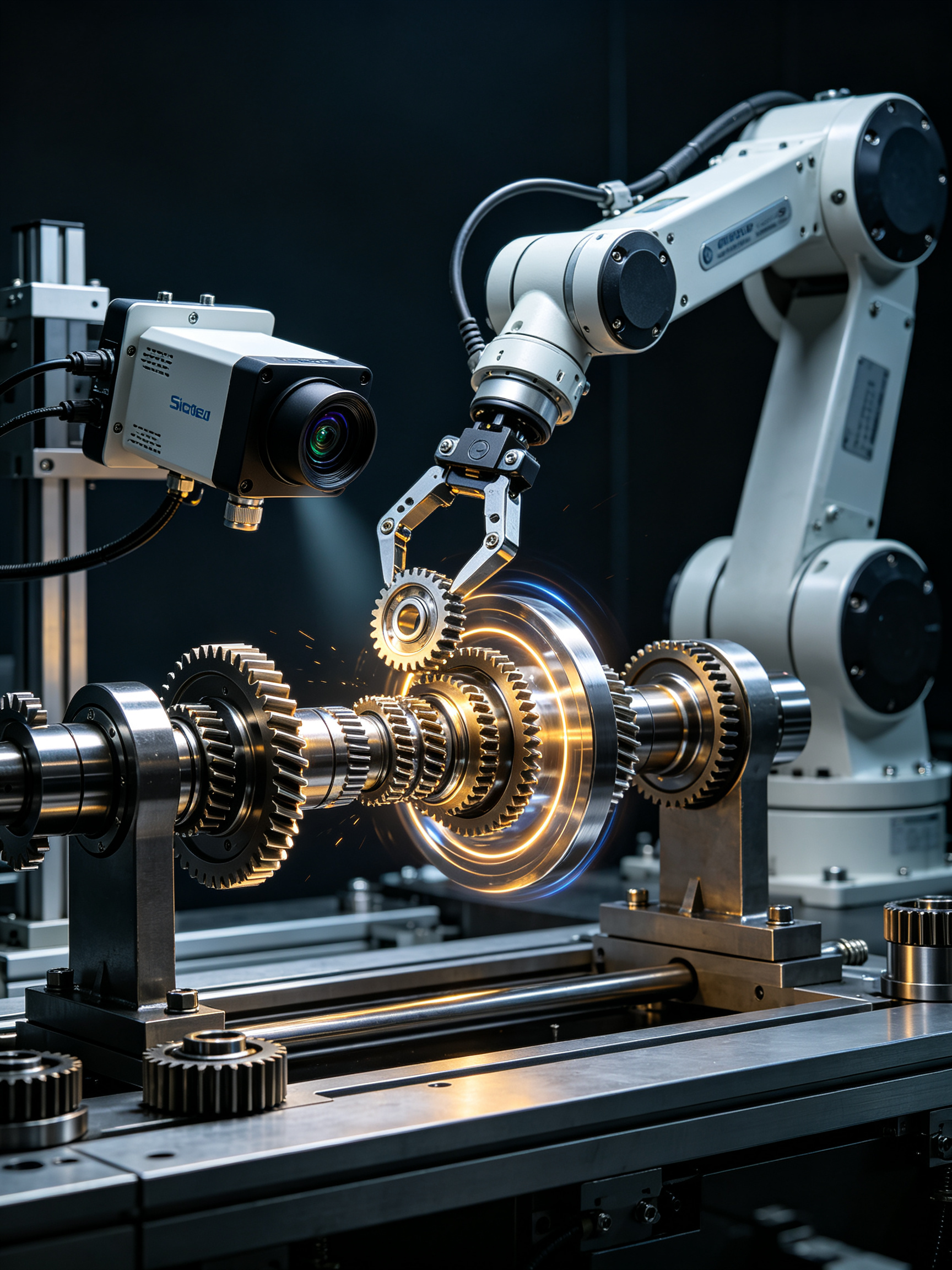
Step 1: AI Multi-View Reconstruction—Solving "Large-Scale Modeling"
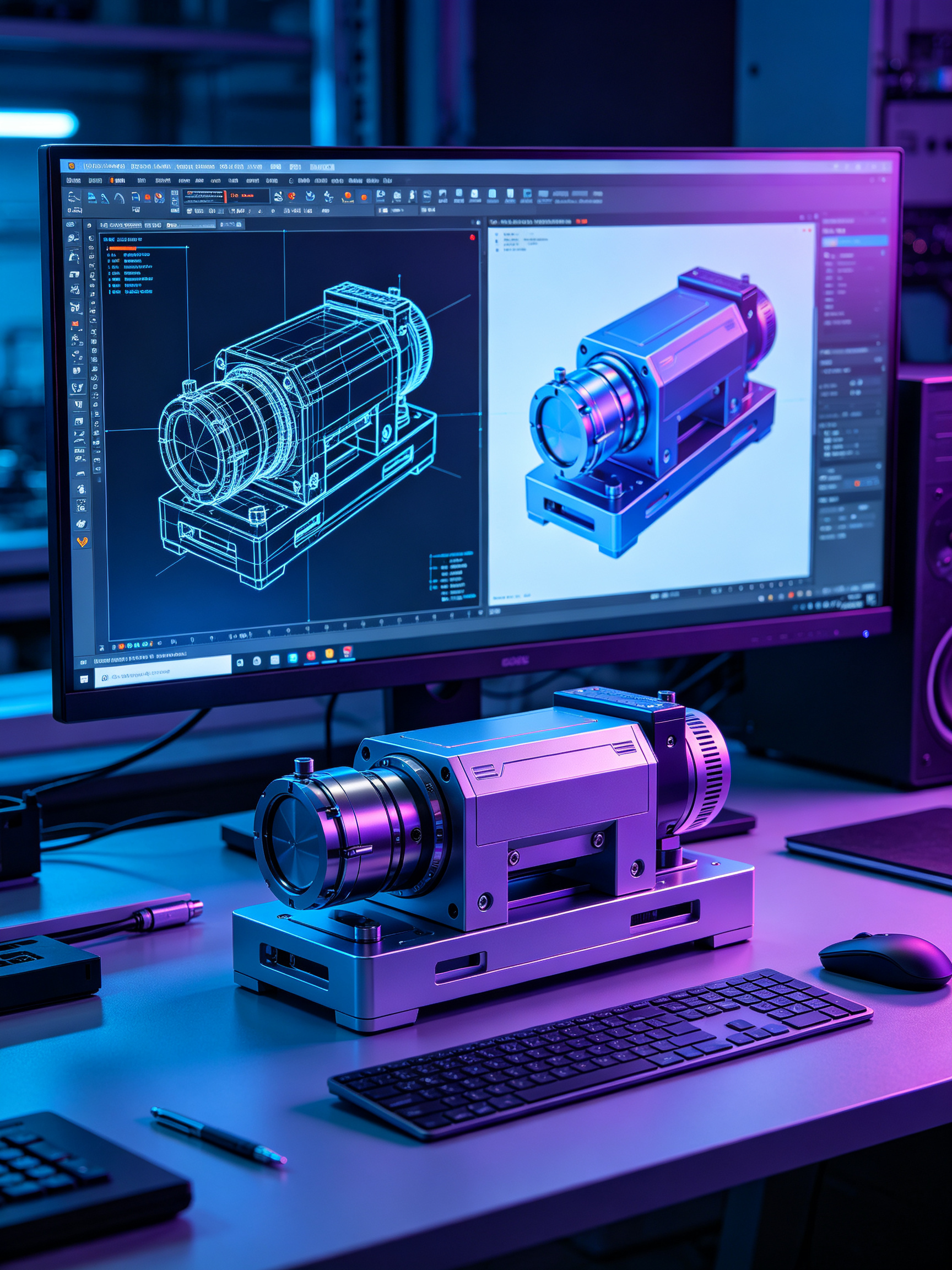
The client sent us the product's 3D drawings (STEP files). Converting STEP files into renderable high-precision models traditionally takes 3-5 days of manual topology work. We took a different approach: first, use AI tools to intelligently parse the STEP file, auto-generating a high-precision white model, then manually refine the details.
The AI identified the cast iron body's casting texture, the guide rails' grinding marks, and the bolts' chamfer features. The modeler only needed to make 20% adjustments on top of the AI output. The entire modeling phase was compressed to 1.5 days, 70% faster than traditional workflows.
Step 2: AI Material System—Making Metal "Real Enough to Touch"
The machine tool's cast iron body is a very special material: it has subtle casting pores on the surface, oil stains create varying shades of matte black, and under light, it shows soft diffuse reflections. Manually adjusting materials would take at least two days.
We used an AI PBR material generation system, based on optical sampling data from real cast iron, to generate a complete material ball with normal maps, roughness maps, and metalness maps in one click. Then, the artist fine-tuned parameters based on real-life reference photos, creating a stark contrast between the stainless steel guide rails' polished surface and the cast iron's matte texture.
Macro-level textures that live-action can't capture—AI+3D made it happen.
Step 3: AI-Driven Mechanical Motion—Making "Machining" Come Alive
Here's the toughest part: the dynamic display of the machine tool in operation. The spindle accelerates from standstill to 12,000 RPM, the tool moves along XYZ axes in a coordinated cut—every action must follow real physical motion laws.
Traditional methods involve manual keyframing, taking two hours just for a 3-second cutting shot. We switched to AI motion generation: input the tool path data, and the AI automatically generates smooth acceleration-constant-deceleration motion curves, while simulating chip-flying particle effects.
Coolant flow was also tricky. The AI particle system simulated the parabolic trajectory of cutting fluid spraying from the nozzle, along with the steam effect when it hits the hot workpiece. These details don't cost much, but it's this "invisible effort" that wins over knowledgeable clients.
Step 4: Scene-Based Rendering—Putting the Product "Right in Front of the Client"
Finally, we built a dark industrial-style virtual scene: dark gray concrete floor, subtle overhead lighting, and blue ambient light in key areas. The machine tool slowly rotates 360° to showcase its overall form, then cuts to close-ups of key parts—spindle, tool magazine, control panel, cooling system.
Rendering used Redshift with AI denoising at 4K resolution, compressing each frame's render time from 15 minutes to 4 minutes. The final output was a 2-minute-15-second video with industrial-style electronic music.
Results
- The client uploaded the video to YouTube and Alibaba International Station, garnering 23,000 views in two weeks
- Inquiry volume increased by 180% compared to the previous month
- A German client specifically mentioned in their inquiry: "I watched your machining video—the precision demonstration is very professional"
- The video was used at the client's booth at the Hannover Messe trade fair, resulting in on-site orders for 2 units
Honest Thoughts
AI+3D animation for industrial machinery is indeed harder than for consumer electronics. The bar is higher, the margin for error is lower, and clients are more knowledgeable. But on the flip side, once you pull it off, the competitive edge is stronger—not every animation studio can handle a simulation demo of a five-axis machining center.
Our core approach: AI handles efficiency, humans handle aesthetics, and we never compromise on craftsmanship standards. Use AI to boost efficiency in modeling, materials, and motion generation, then invest the saved time in detail polishing and artistic control.
If you're also in machinery exports and want your product to "speak for itself" to overseas buyers—feel free to reach out. We have a dedicated AI+3D animation workflow optimized for industrial products.