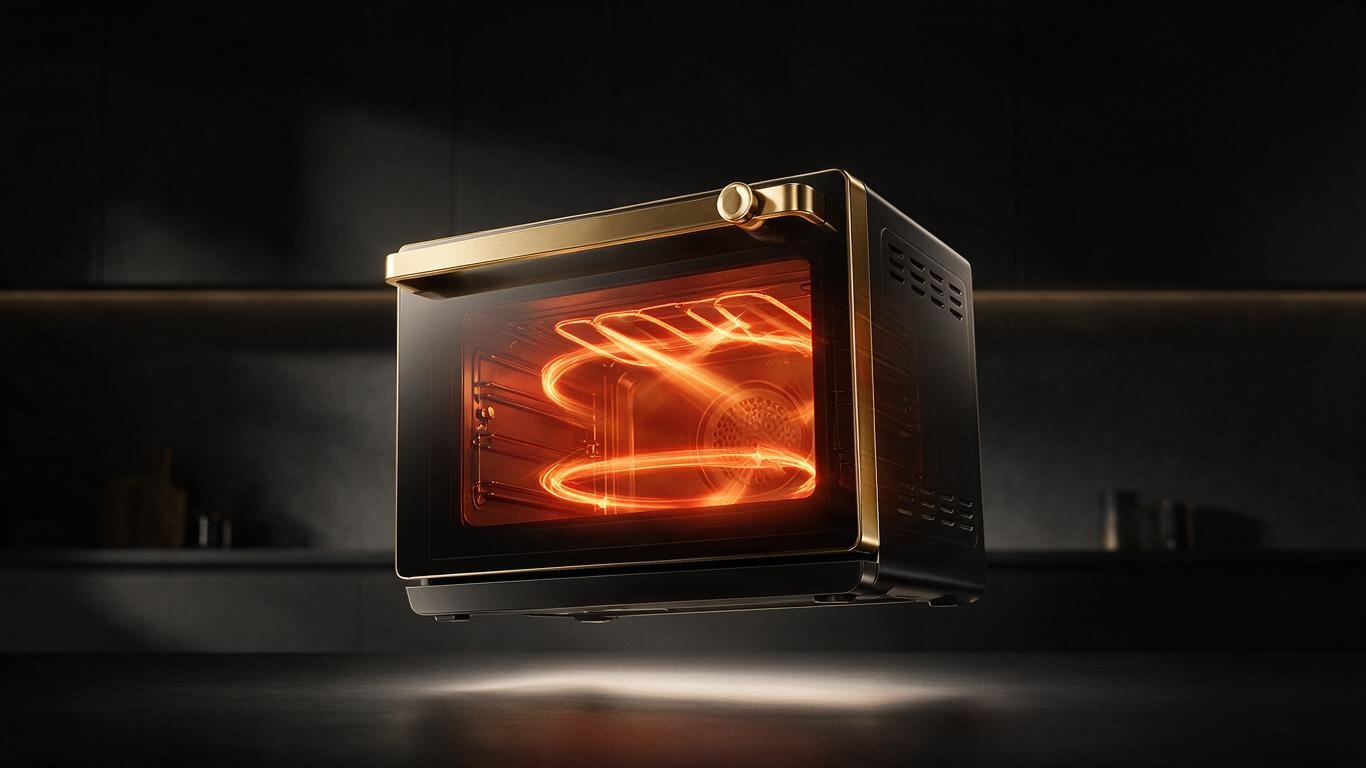
A 15-second product animation lifted time-on-page by 212% for a new product launch. That number came from a product animation outsourcing case we delivered last month. The client was a high-end kitchen appliance brand in East China, and the product was a smart oven with AI recipes. They already had a live-action video, but the footage stopped at "the exterior looks decent"—because you can't show the internal structure with a camera, and conversion kept stalling.
The most interesting thing about this outsourcing case? The client couldn't even define the brief clearly at first. The product manager just said: "I want users to see how hot air circulates inside the cavity." So instead of jumping into modeling, we spent the first day breaking down the product's selling points, use cases and target persona. We distilled three core visual directions: exterior material texture, internal hot-air circulation, and touchscreen interaction. Once we locked that visual storyboard, the 3D production went smoothly.
Why do brands choose product animation outsourcing anyway? This client gave a blunt answer: save money and save time. Previously a new-product showcase video meant booking a studio, shipping a physical sample, editing—typically 15 days and 30,000–50,000 RMB. We rebuilt the oven in 3D using AI-assisted modeling. After the first model was done, minor updates for the next generation only needed partial model revisions, cutting costs by 60%. We matched their launch rhythm and delivered in 7 days from brief to final render—the heavy lifting in product animation is modeling and rendering, and AI tools halved our early exploration phase.
How exactly did we pull it off? Roughly four steps: first, we created a white-box model from photos and CAD drawings to confirm proportions; second, we applied PBR materials—brushed stainless steel and black glass—and tested reflections repeatedly under HDR environment light; third, we visualized the interior, using particle streams and translucent volume fog to show hot-air circulation; that was the soul of the film; fourth, rendering and color grading. We've covered some of these techniques in our earlier article on live-action vs AI+3D workflows, but this project threw up extra challenges, like virtual camera reflections in the glass door, which we solved by rendering in separate layers.
After delivery, the client used the animation not only on their PDP, but also edited it into a 15-second performance ad. Since the product came in black and white, we rendered two color variants, and they ran A/B tests in just half a day. Even their offline sales team requested the footage, saying it looked better than the real product on large displays. This product animation outsourcing case proves that good 3D animation isn't just spinning the product around—it translates invisible value into visuals people grasp instantly.
Outsourcing, of course, doesn't mean hands-off. What made this collaboration smooth was their in-house point person who understood the 3D workflow and could give precise feedback. If your team lacks such a role, prioritize project management capability when choosing a vendor. Want more industry breakdowns? Check out our beauty and food animation cases. And if you're on the fence about outsourcing your product video, bring your product photos or CAD files for a chat—we can produce a 30-second preview first. That tells you more than a hundred promises.