
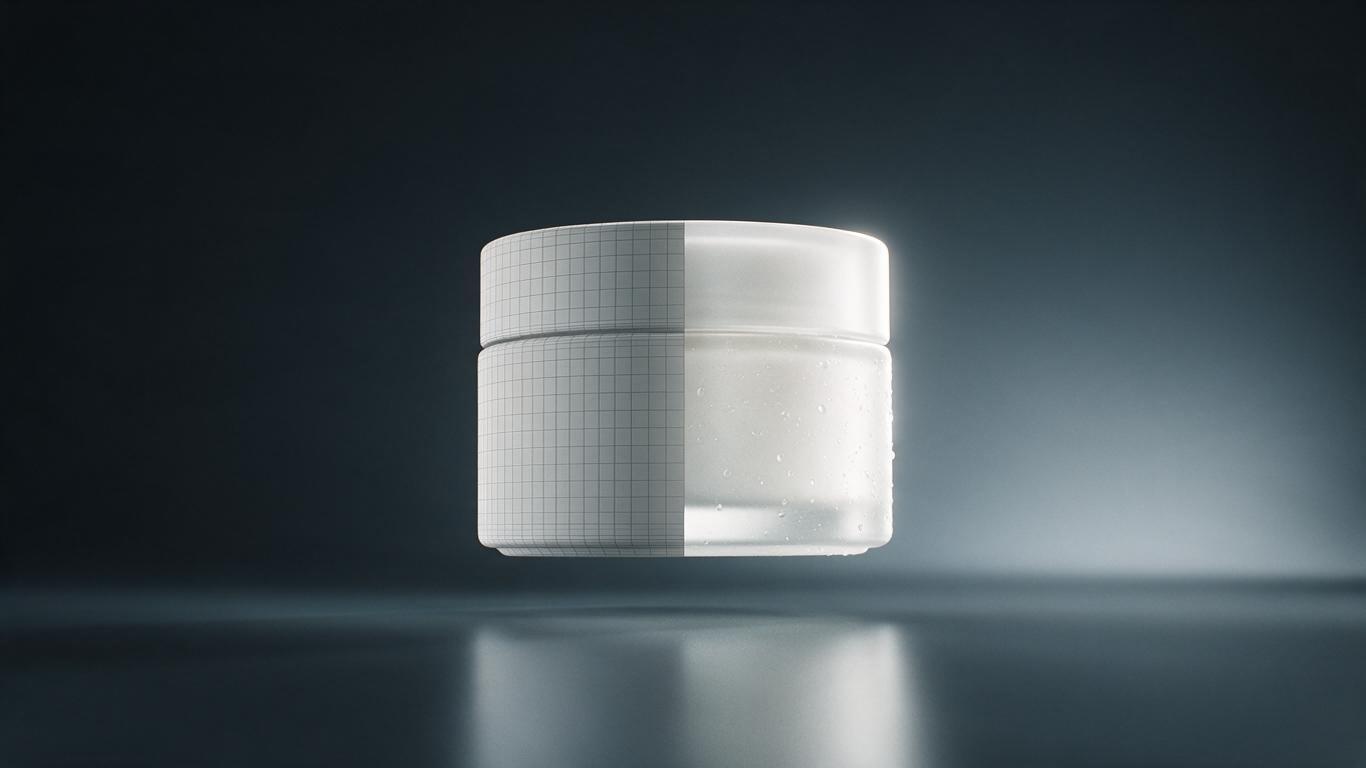
It's 8:20 a.m. in a plain office building in Nancheng, Dongguan. Our render farm has been humming for over an hour. On screen, a skincare bottle is slowly growing glass-like highlights out of a grey wireframe — job number 213 this year, client in Germany, 36 hours to deadline.
Three years ago, when we moved our studio here, the question I heard most was: why Dongguan? Isn't that where the factories are? My answer was short — because that's where the products are. Today, as a Dongguan 3D animation company, that answer has been validated more times than I can count.
If you're searching for a “3d animation company dongguan” online, you'll find plenty of listings. What you won't find in a directory is the one thing that actually matters: how close the team sits to the real object. That's the part we'd rather talk about.
Thirty minutes to the factory floor, zero distance to the product
Dongguan has an advantage nowhere else does: within a half-hour drive of our desks, you can put your hands on almost every product category. Consumer electronics, hardware tools, furniture, food and beverage, skincare, industrial machinery — clients don't need to ship us samples. We go see the real thing, measure it, shoot reference footage, and come back to build the first model.
Last year we produced a product animation for a precision CNC machine tool. The client sits in Chang'an Town. We spent 40 minutes in their workshop in the morning, photographing guide rails, the spindle, the seams between sheet-metal panels. By the afternoon, the first structural model was already in our software. That “see it in the morning, model it after lunch” rhythm is nearly impossible to reproduce remotely. And with machine tools, one wrong bend radius or a missing weld line is something any experienced buyer spots instantly.
From 3 people to 17: we didn't add headcount, we added division of labour
In the first half of this year we went through a fairly significant restructuring. The team grew from 3 to 17, split into modelling, animation, AI asset and post/colour groups. Previously one person carried a project from start to finish; now a single 30-second film passes through four pairs of hands. The upside is a much higher floor on quality and consistency. The cost is communication overhead — which is why we introduced a “three boards” rule: storyboard, material board, lighting reference. Nothing gets rendered until all three are locked.
That rule has saved us more than once. Last month, on a cream-jar animation, the client moved the key light from overhead to a rear-right rim light at storyboard stage. Without a locked lighting reference, discovering that after render would have cost us at least two extra days. Now the sequence is: confirm first, render second, leave no room for guessing in between.
AI ate the 60% of the work nobody enjoys
Here's something that may not win me friends among peers: AI didn't put animators out of work. It ate the most tedious part of the job. Modelling a subdivision-surface product used to take a skilled artist 6 to 8 hours; with an image-to-model workflow, a first pass appears in about 20 minutes. All the reclaimed time goes into chamfers, seams and material detail — the things that actually decide whether a render looks real. We documented that AI 3D modelling workflow as an internal standard, and a new hire can produce usable assets by day three.
One caveat, though: AI hands you a workable block-out, not a deliverable asset. Who closes the final 20%? Still a human. That's why our hiring criteria have shifted — we no longer care how elegant your surfaces are, we care how accurate your judgement of light and material is, whether you can glance at a render and say “that brushed-steel reflection is wrong.”
The client mix changed, and it pushed us to change too
Three years ago our clients were almost entirely cross-border e-commerce sellers. Today more than half are domestic brands and manufacturers. The channels expanded from Amazon detail pages to Douyin, WeChat Channels, Tmall hero images, trade-show screens and overseas websites. One model set now has to ship in five versions: vertical, horizontal, subtitle-free, English-voiced, and a looping booth cut. That's why we changed our delivery standard from “a video” to “an asset package.” For the bigger picture, our earlier piece on 2026 e-commerce visual trends called most of these shifts half a year in advance.
Two things we want to solve next year
First, push industrial structural animation further — fluid behaviour, assembly sequences, mechanical response, the things that used to require live shooting or simply got left out. We want 3D to cover them properly. Second, compress lead times again: the goal is to bring a standard e-commerce product animation down from 5–10 working days to 3–5. Not through overtime, but by making the front-end confirmation process genuinely standardised.
If you have a product that needs a visual upgrade, or you just want to talk through how a category should be presented, get in touch with us — we usually reply within two hours on weekdays. One last thought: this city taught us that good things are tightened one screw at a time. 3D animation is the same. Spectacle fades in three seconds; what holds up is always the detail nobody sees.