
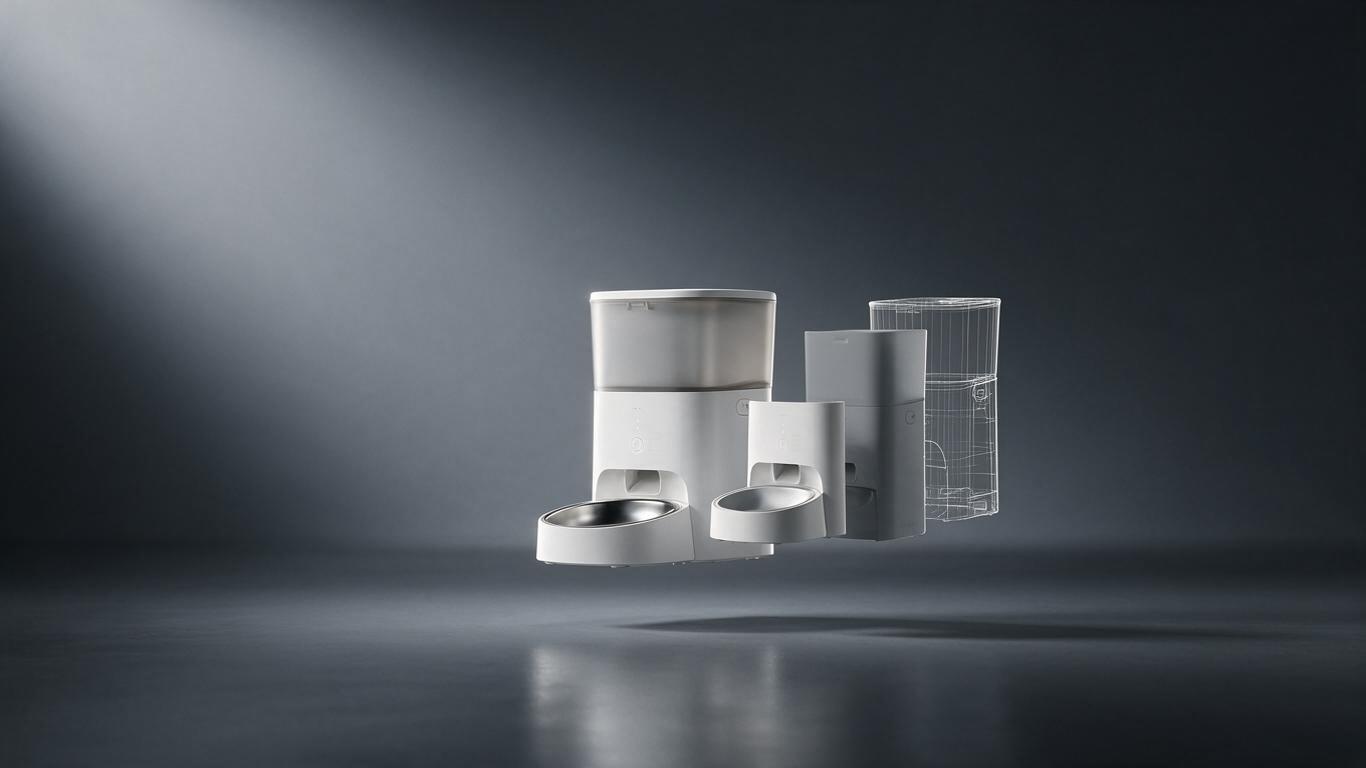
“How many people actually work on one animation?” That is one of the most common questions we get during project kickoff calls. The people asking are usually the ones who just got burned by a vendor who takes the order alone and subcontracts everything out. A real product animation team is not a handful of modelers sharing a screen — it is an ordered system with handoffs and backup. This post skips render settings and talks about people: how our 3D animation production Dongguan crew is organized.
Here is a counter-intuitive finding from years of 3D animation production Dongguan work: delivery reliability is not set by the strongest individual on the team, but by whether anyone covers the weakest step. A brilliant modeler still produces rework if nobody clarified the product's structure drawings, material list, and selling-point priority beforehand. A fast render artist is just lighting the wrong motion if the animation timing was never locked. So the first value of a product animation team is not headcount — it is correct sequence.
We split the work into seven stages, each with a defined input and output:
1) Client contact and project management. A translator, not a messenger. The PM converts “we want it to feel premium” into executable constraints: shot length, palette, selling-point order, forbidden elements.
2) Script and storyboard. Decides what the film says, in what order, in how many seconds. Product animation is information compression, not showboating.
3) 3D modeling. AI-assisted modeling absorbs a lot of base geometry work, but key proportions, chamfers, and seams are still calibrated by hand.
4) Materials and lighting. This stage decides whether the product looks expensive.
5) Animation and camera. Makes the product move and makes the viewer's eye follow.
6) Rendering and compositing. Assembles layered renders into one continuous film.
7) Editing, sound, and QA. The final gate — someone must watch it through a client's eyes before delivery.
We broke down the capability model behind these stages in how brands choose an AI 3D animation vendor, told from the client's side.
Three roles sound like overhead because they do not produce pretty frames: asset management, pre-flight, and review. Asset management maintains version consistency across material libraries, model libraries, and lighting presets, so a brand's second film matches the color of the first. Pre-flight runs the whole cut at low samples before final render, exposing clipping, flicker, and stretched textures early — one full high-precision render pass costs enough time and power to fund dozens of pre-flights. The review role logs where rework clustered after each project and feeds that into the next one. None of them draw frames, yet they decide whether film number ten is cheaper to make than film number one. For how the studio actually runs, see a look inside the Artsky studio.
Our 3D animation production Dongguan team currently sits at around 23 people across three groups, running six to eight projects in parallel. The ceiling on parallelism is not people — it is review bandwidth. The three client checkpoints (storyboard, gray model, final cut) each block the whole line if they stall. That is why we would rather spend an extra half day interrogating requirements up front than patch things during rendering. Going from a few films a month to 100 product animations in 187 days was not about hiring more people; it was about finer division of labor.
If you are evaluating a partner, three questions reveal whether a product animation team is genuinely professional. First, ask who is responsible for catching problems before rendering — if nobody can answer, they fix issues after they happen. Second, ask to see two films from the same brand and check whether tone and material feel stay consistent; that tests asset management, not improvisation. Third, watch how many people join the first call. If one person handles everything end to end, they are carrying seven stages alone. If the division of labor feels almost fussy, that is usually a good sign.
The team will keep growing, but the logic will not change: let specialists do only their specialty. Contact us to book a project assessment call — we will list which roles your film needs and roughly how much of each role's time it takes, before we discuss anything else.