
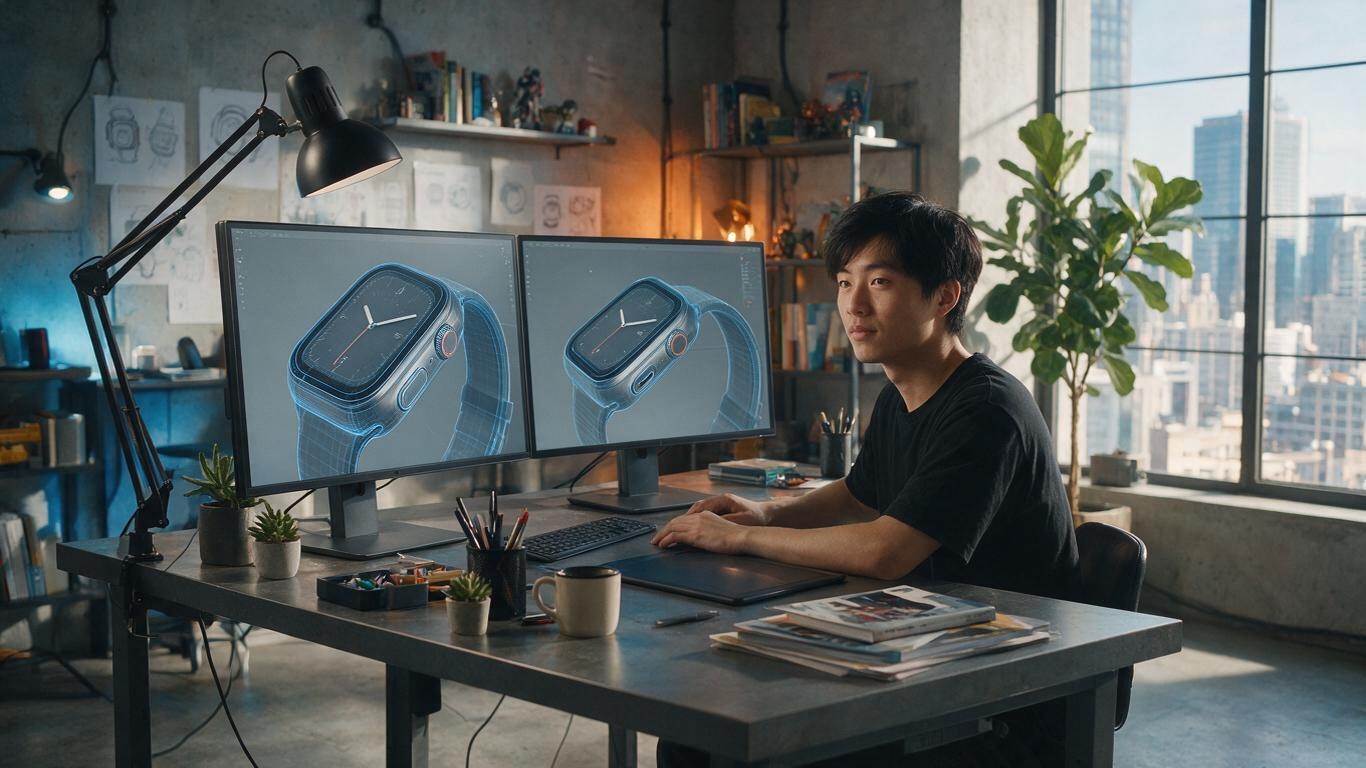
Here's a stat that gets attention: over 65% of consumers watch a product video before buying, and people who view 3D demonstrations are nearly 30% more likely to place an order. But in 2026, producing a high-quality product video still costs a fortune. Live-action shoots often run into tens of thousands of dollars, and every design change means a reshoot. That's why something called "AI+3D product animation" is quietly rewriting the rules.
So what exactly is AI+3D product animation? Let's break it down. It uses AI to assist with 3D modeling, material generation, rigging, and rendering, resulting in a video where the product is the hero. Unlike traditional 3D, AI speeds up the heavy lifting by 3–10x: a texture that used to take a day can now be generated in seconds; skeleton binding that required manual tweaking can be automated after the structure is recognized.
You might ask: how does this compare to live-action? Let's do the math. Shooting a glass bottle ad requires a studio, a photographer, stock footage, post-production, plus a physical product that may not even be in mass production yet. With AI+3D, all you need is product data or photos. AI rebuilds the model, and changes like a color swap, material update, or camera move take minutes. Combined with modern rendering engines, the output is often indistinguishable from a real shoot.
The production process can be broken into five steps: modeling, materials and lighting, animation, visual effects, and rendering. The first step is increasingly handled by AI-generated base models—we detailed this in our AI-Powered 3D Modeling Workflow guide. The later steps also get AI boosts, including auto-lighting, physics simulation, and AI denoising, cutting total time dramatically.
Which industries are already using it? Cross-border e-commerce is leading the pack—Amazon listings and independent stores with 3D showcase videos see conversion lifts of 20% or more. Then come 3C electronics, furniture, food & beverage, machinery, and more. If your product has structural or visual selling points, you can benefit. For instance, a CNC machine with complex internal parts—live-action can't capture the detail, but a 3D exploded view with dynamic annotations makes it crystal clear for B2B buyers.
Beyond speed and cost savings, the real superpower is infinite possibilities. You can explode a screw into 20 parts mid-air and reassemble it. You can make fruit pieces swirl inside a yogurt bottle like a tornado. You can place your product on Mount Everest—at near-zero extra cost. That level of visual impact is simply impossible on a live-action set.
But don't get carried away. There's a learning curve. A cinematic output still requires a team that understands lighting, camera movement, and direction. AI is an accelerator, not a magician. Some brands take the raw AI-generated mesh and publish it directly, with awful results. The professional approach is AI-generated drafts, human-artist refinement, and a solid pipeline—only then can you get premium-quality work.
At the end of the day, AI+3D product animation is not a question of if, but when. If you're launching on e-commerce, preparing a crowdfunding campaign, or building reusable brand assets, now is a good time. Start with a 30-second test film and let the numbers decide.


