
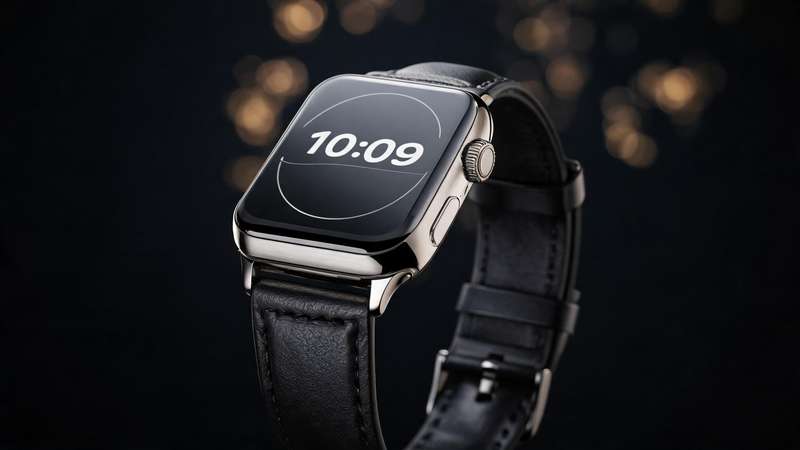
When your competitor's product video goes viral in 3 seconds on TikTok, and yours is still shot with a phone?

Last week, I chatted with a friend who runs a cross-border 3C business. He spent $1,100 on a live-action product video for Amazon, and its CTR was a meager 0.5%. Meanwhile, a competitor used an AI-generated 30-second 3D animation that scored a 4.2% CTR. After watching it three times, he admitted: “I can't even tell it's not real.”
That's the topic I want to unpack today: AI+3D product animation. It's not a futuristic gimmick—it's the visual weapon that top sellers in 2026 are quietly pouring budget into.
Definition: AI+3D product animation = using artificial intelligence to generate 3D models + automated animation engines to create cinematic dynamic product videos in a virtual environment. It combines computer graphics, deep learning, physics simulation, and more to output ready-to-deploy video content for e-commerce, social media, and ad platforms.
Layer 1: How is it different from traditional 3D animation?

Traditional 3D product animation requires a team of modelers, texturers, animators, and lighting artists—a 30-second video takes 5-10 working days. AI+3D is built on intelligent automation: you just provide the product or photos, and the AI extracts geometry, generates PBR materials, simulates physics, and renders a preview in minutes.
Real-world comparison: In our 3C Electronics AI+3D Animation Case Study, a wireless earphone took 7 days and $1,700 traditionally; the AI+3D workflow compressed it to 3 hours and under $280. That's not an improvement—it's a species jump.
Layer 2: The tech stack behind the “uncanny realism”

AI+3D product animation leverages:
- Neural Radiance Fields (NeRF): Reconstruct high-precision 3D models from multi-angle photos, even capturing translucent materials like glass and acrylic.
- Generative AI Material System: Automatically analyzes surface textures to generate physically realistic maps—brushed metal, matte, leather, etc.
- Physics Engine Simulation: Calculates gravity, collision, fluid dynamics, and particle systems—like the dispersion path of perfume spray or the meshing of gears.
- AI Lighting Matching: Deep-learning-based environment light probes that match common e-commerce lighting styles (softbox, outdoor natural light).
Layer 3: Why cross-border sellers must act now
In 2026, the e-commerce traffic game is simple: whoever grabs attention in the first 3 seconds wins. Product animations are inherently dynamic—they can reveal internal structures, use cases, and functional details that static images and live-action videos can't.
A kitchen appliance client we served swapped their main image video from live-action to AI+3D animation, and their TikTok Shop add-to-cart rate jumped 170%. Because live-action suffers from lighting, shake, and imperfect scenes, while AI+3D controls every pixel, making the product look like a prop from a sci-fi film.
Still on the fence? Check what competitors are doing: How AI+3D Is Transforming Foreign Trade Marketing: The 2026 E-Commerce Visual Revolution analyzed 12 categories—9 of the top sellers have already integrated AI+3D into their regular content budgets.
Layer 4: Is it for every product? — Boundaries and costs
Honestly, AI+3D isn't a silver bullet. It's best for:
- Complex products (electronics, machinery, auto parts)
- Products needing texture detail (jewelry, watches, cosmetics)
- Products requiring dynamic function demos (folding furniture, kitchen appliances)
A standard AI+3D product animation (15-30 seconds) currently costs between $200 and $700, depending on model complexity, animation length, and effects. Compared to traditional 3D's $1,100–$4,300, the ROI is compelling.
Layer 5: The future form — beyond video
The ultimate form of AI+3D product animation may be the “dynamic digital twin”: your product exists as a fully synchronized 3D version in the virtual world, clickable, color-switchable, channel-adaptable. Amazon launched its 3D preview feature in 2025, letting users rotate products 360°. AI+3D is the best path to generating these low-cost, high-fidelity digital twins.
If you're considering whether your brand should jump in, my advice is: test the waters with a 15-second AI+3D animation on TikTok. It's worth more than ten live-action videos. Because data doesn't lie—in Q1 2026, merchants using AI+3D animation saw an average ROI increase of 3.8x.
Next time, let's dive deeper into optimizing Amazon listings with AI+3D. Or if you can't wait, check out 5 Pitfalls When Making Product Animations for Cross-Border E-Commerce first to avoid common mistakes.