
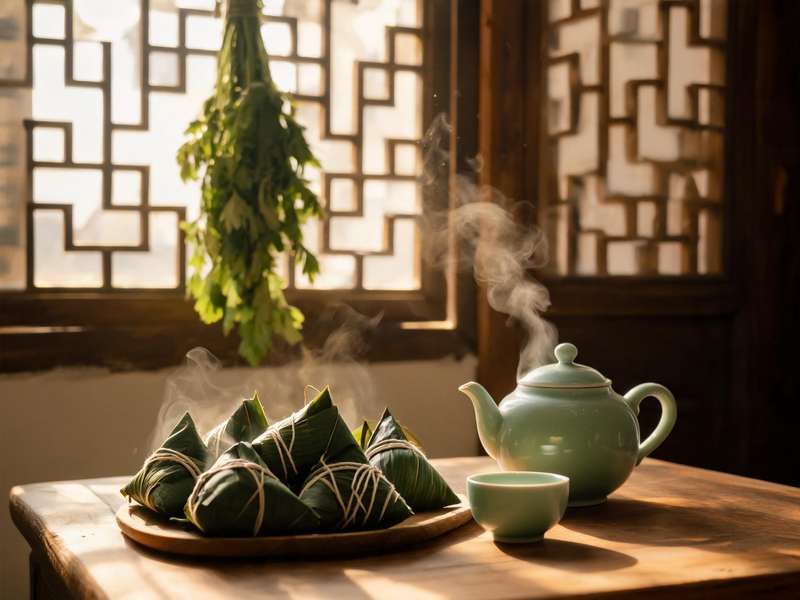
🏮 Dragon Boat Festival Special
Fifth Day of the Fifth Month · Fragrant Zongzi Leaves · Dragon Boat Races
June 19, 2026 — the fifth day of the fifth lunar month — another Dragon Boat Festival has arrived.
With a history spanning over two thousand years, this traditional festival carries the deepest cultural DNA of the Chinese nation: reverence for loyalty and righteousness, prayers for health, and a longing for reunion. Today, let us step into the Dragon Boat Festival together and feel the warmth of a thousand-year legacy.
I. Tracing the Origins · An Eternal Masterpiece
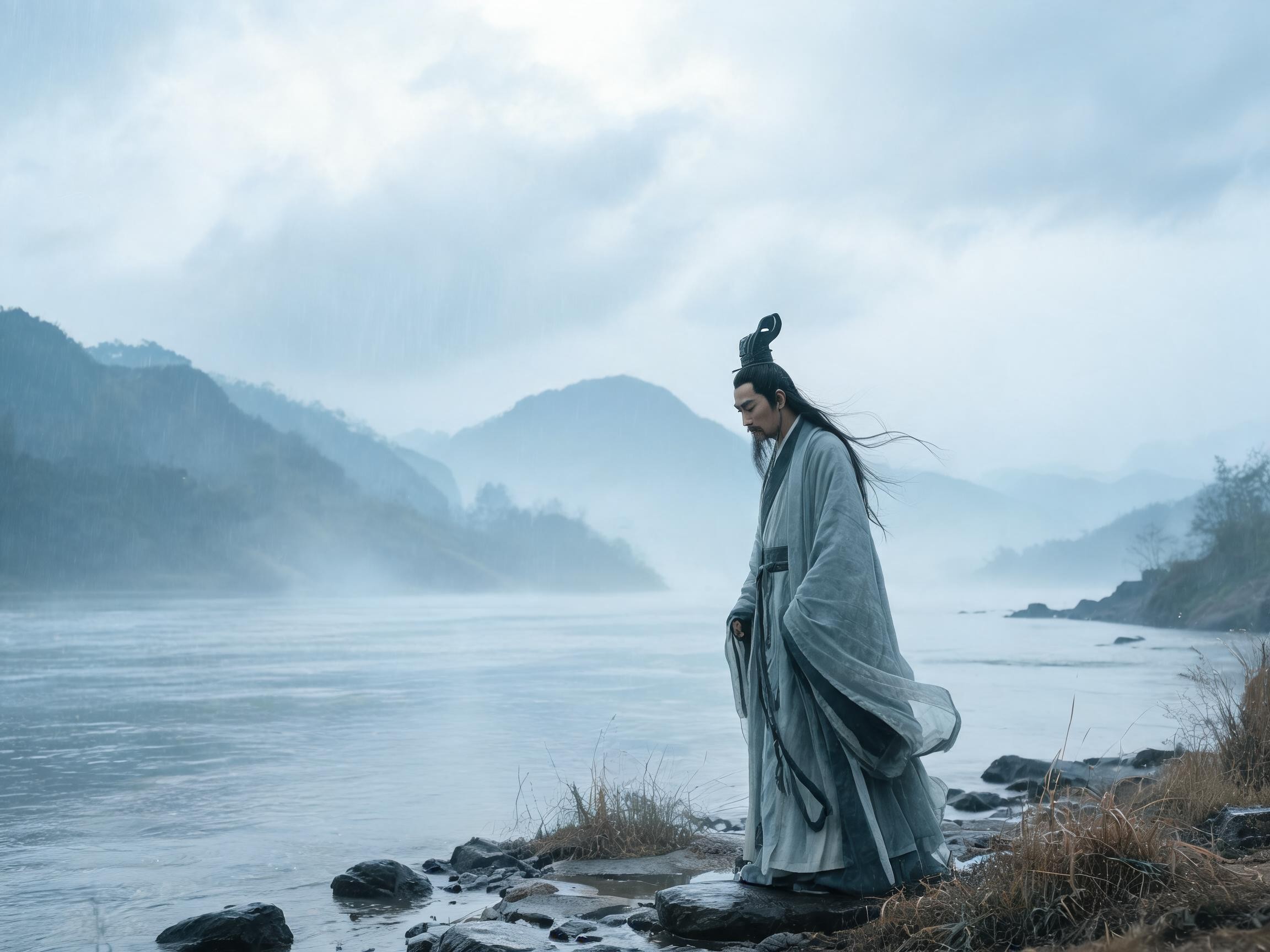
🖼 The vast mountains and endless river — Qu Yuan's hometown
The most widely circulated origin story of the Dragon Boat Festival commemorates the Warring States period poet Qu Yuan from the Chu State.
Qu Yuan served as a high-ranking minister of Chu — a man of extraordinary talent, loyal to his king and devoted to his country. He advocated for an alliance with Qi against Qin and pushed for political reform, but was framed by corrupt officials and exiled by King Huai of Chu. During his years of wandering, he transformed his grief and indignation into immortal poetry, composing Li Sao, Heavenly Questions, Nine Songs, and other masterpieces of Chinese literature.
In 278 BC, the Qin army breached the Chu capital, Yingdu. Unable to bear seeing his country conquered, Qu Yuan clasped a large stone to his chest and drowned himself in the Miluo River on the fifth day of the fifth lunar month, perishing for his nation.
—— Qu Yuan, Li Sao
When the local people heard of his death, they were overcome with grief. They rowed their boats to search for his body and threw rice balls into the river, hoping the fish and shrimp would not eat Qu Yuan's remains. This solemn act evolved into the traditions of dragon boat racing and eating zongzi (rice dumplings).
📖 Extended Lore: The Dragon Boat Festival is also associated with Wu Zixu of the Spring and Autumn period and the filial daughter Cao E of the Eastern Han Dynasty. In the Jiangsu-Zhejiang region, people commemorate Wu Zixu's loyalty and Cao E's filial devotion. Moreover, the fifth lunar month was traditionally considered a "poisonous month," and the fifth day a "poisonous day," so the festival also carries the theme of warding off pestilence and praying for health.
II. Festive Customs · A Vibrant Tapestry
🐉 Dragon Boat Racing: Thunderous Drums, Hundreds of Boats Competing
🏁 Dragon Boat Race · The Final Sprint
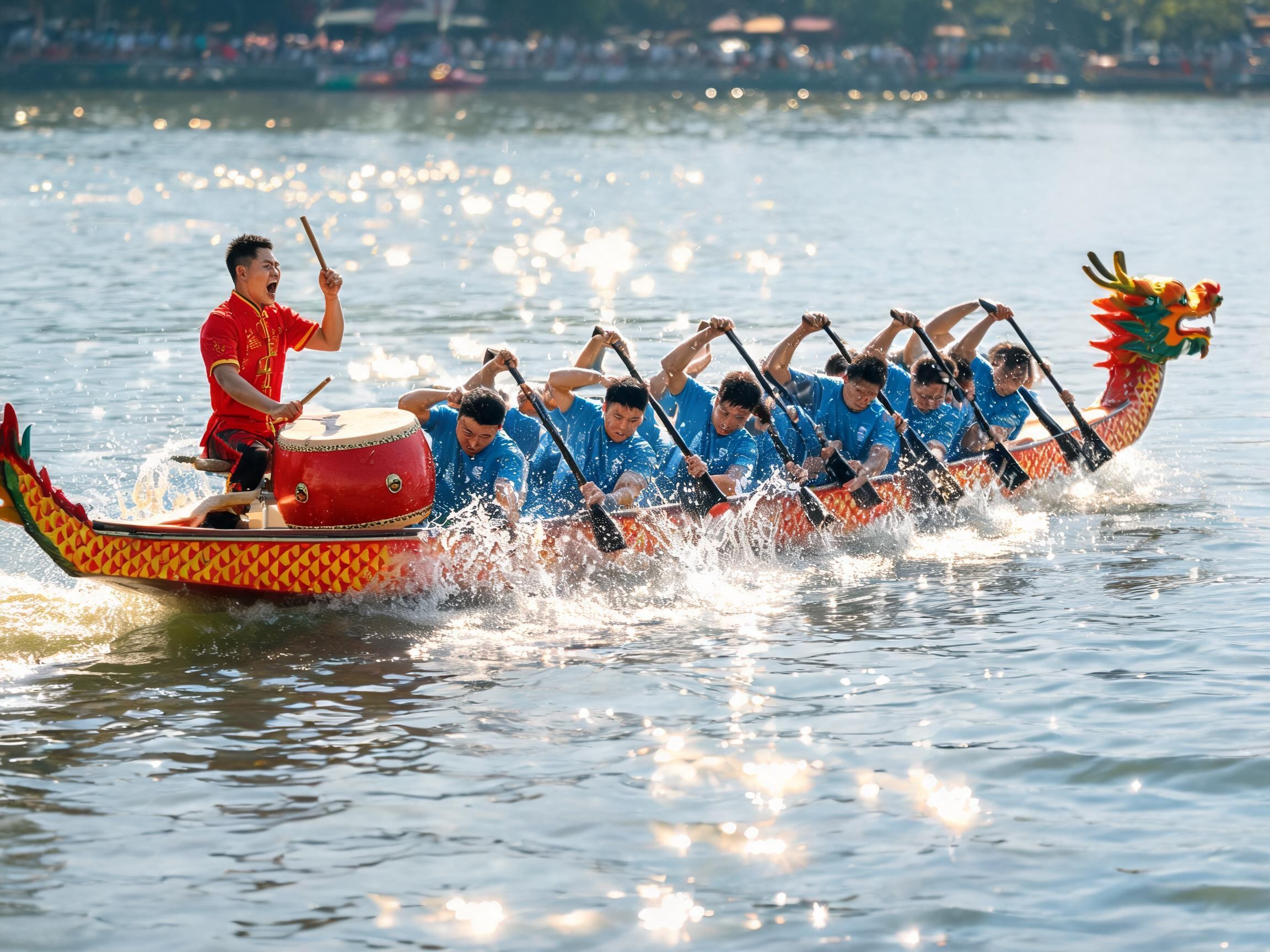
🖼 A fleet of dragons charging ahead, hundreds of boats competing — dragon boat racing
Dragon boat racing is the most iconic activity of the Dragon Boat Festival and one of the world's oldest team sports, with a history spanning 2,500 years.
Dragon boats are carved from a single log, with an ornate dragon head at the bow and a dragon tail at the stern. Each boat carries 20 to 50 paddlers rowing in unison, a drummer beating the rhythm, and a steersman controlling direction. When the drum sounds, the dragon boats streak across the water like arrows from a bowstring, while spectators on the shore roar with excitement — a scene that gets your blood pumping!
Today, dragon boat racing has grown into a global sport. The International Dragon Boat Federation (IDBF) organizes world championships, with approximately 50 million dragon boat enthusiasts across more than 60 countries.
🍙 Eating Zongzi: Northern vs. Southern Flavors, Each with Its Own Charm
Sweet · Savory · Fresh
🍙 North Meets South · The Aroma of Zongzi
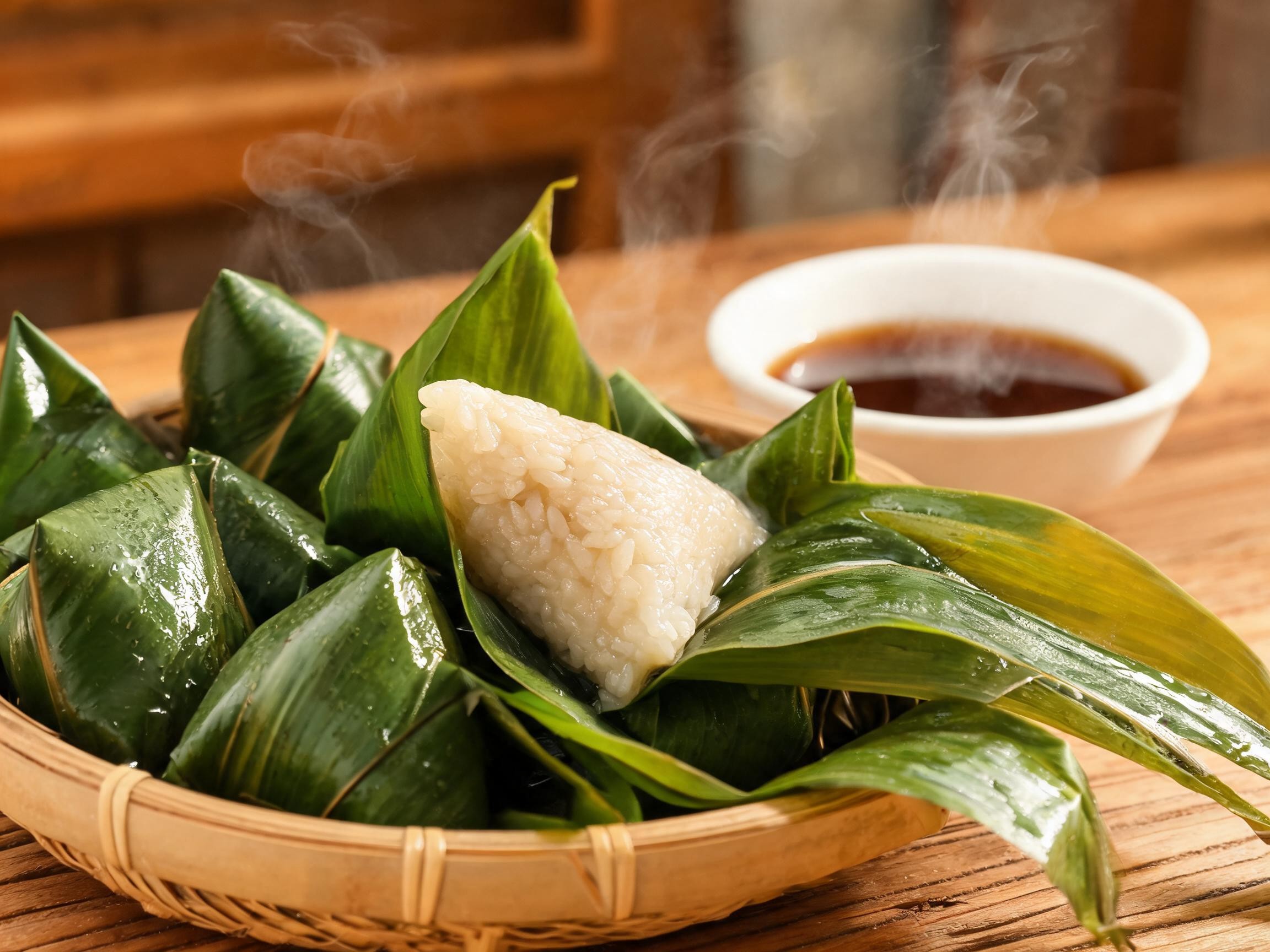
🖼 Bamboo leaves fragrant, hometown flavors lingering — handmade zongzi
The tradition of eating zongzi (sticky rice dumplings) during the Dragon Boat Festival has a long history. Ancient people wrapped glutinous rice in bamboo leaves and cast it into the river, calling it "tube zongzi." Today, zongzi has evolved into hundreds of regional varieties:
Northern Sweet Zongzi: Filled with red dates, sweet bean paste, or candied dates. Soft and sticky, dipped in white sugar — light, fragrant, and sweet.
Southern Savory Zongzi: Filled with fresh pork, salted duck egg yolks, dried shrimp, and mushrooms. Rich, fragrant, and savory. Guangdong's wrapped zongzi is the most famous.
Innovative Flavors: In recent years, new varieties such as ice zongzi, crystal zongzi, matcha zongzi, and chocolate zongzi have emerged in endless creativity.
Making zongzi is a craft passed down through generations. The fragrance of bamboo leaves, the soft chewiness of glutinous rice, the richness of the filling — one bite and it tastes like home.
🌿 Hanging Mugwort · Wearing Fragrant Sachets · Tying Five-Colored Silk Threads
Peace and Health at Dragon Boat · Blessings
🌿 Hanging Mugwort and Calamus at the Door · Warding Off Evil and Disease
🌸 Wearing a Fragrant Sachet · Aroma Protects the Body
🌈 Tying Five-Colored Threads · Praying for Good Fortune
Praying for Blessings · Traditional Dragon Boat Festival Customs
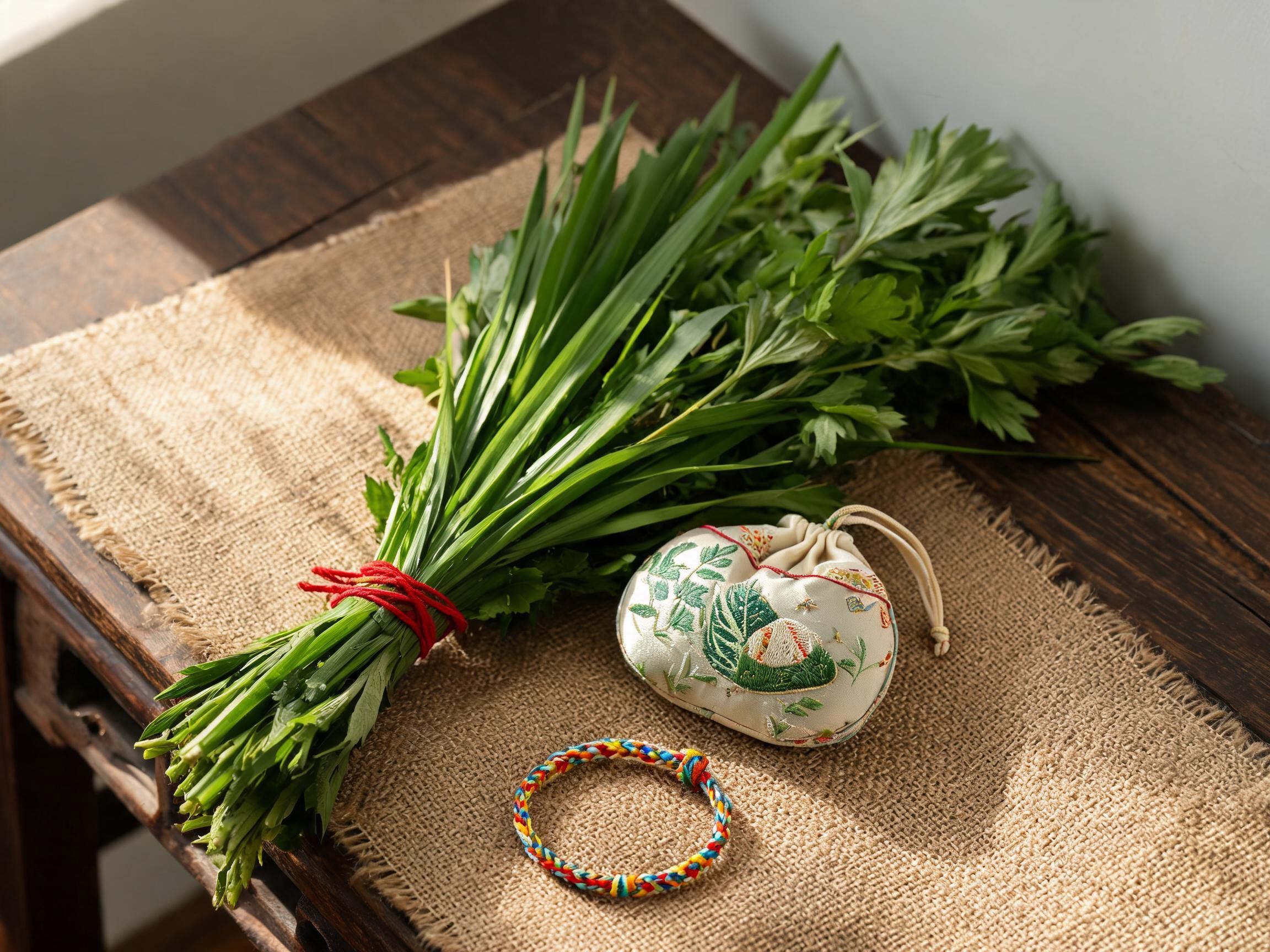
🖼 Mugwort at the door, sachet for protection — Dragon Boat customs
Hanging Mugwort and Calamus: Ancient people tied mugwort (wormwood) and calamus into bundles and hung them on their door lintels. The unique aroma of mugwort repels insects, while the sword-like shape of calamus symbolizes warding off evil. As the old saying goes: "Plant willows at Qingming, hang mugwort at Dragon Boat."
Wearing Fragrant Sachets: Sachets are filled with cinnabar, realgar, and aromatic herbs, wrapped in silk fabric, giving off a pleasant fragrance. Adults give them to children, symbolizing protection against evil and disease, and wishing for health and safety.
Tying Five-Colored Silk Threads: Braided threads in blue, red, white, black, and yellow are tied around wrists or ankles, representing the Five Elements, and are believed to ward off evil and bring blessings. After the Dragon Boat Festival, when the first rain falls, the threads are cut off and washed away, symbolizing the washing away of illness.
III. Celebrations Across China · A Spectacular Diversity
China is vast, and Dragon Boat Festival celebrations vary by region, each with its own unique character. As the saying goes, "Customs differ every ten miles, and traditions change every hundred."
🐲 Southern Water Towns: Dragon Boat Carnival — In Foshan, Guangdong, there is a "Dragon Boat Water" tradition where people believe the festival's rain brings good luck; in Miluo, Hunan, where Qu Yuan drowned himself, a solemn "Qu Yuan Memorial Ceremony" is held each year; in southern Fujian, there is a humorous tradition of "duck grabbing on water."
🌾 Northern Regions: Spring Outings and Blessings — In Beijing and Hebei, people go to the countryside at dawn for a "spring outing" to pick mugwort; in Northeast China, paper gourds are hung on every door, symbolizing "fortune and prosperity"; in Shanxi and Shaanxi, children wear bellybands embroidered with the "Five Poisons" pattern, fighting poison with poison.
🎭 Ethnic Minorities: A Cultural Fusion — The Miao people's dragon boats are narrower and longer, with paddlers in ethnic costumes; the Yi people celebrate the "Tiaocai Festival" around the Dragon Boat Festival, with singing and dancing.
🌏 Hong Kong, Macao, and Taiwan: Tradition Meets Modernity — Hong Kong's international dragon boat race on Victoria Harbour attracts competitors from around the world, and the Stanley Dragon Boat Festival has been held annually since 1976. Taiwan preserves the "egg-standing" game — attempting to stand an egg upright at noon, said to bring good luck.
IV. Chinese Worldwide · Celebrating Together Across the Seas
🏮 China · 🇭🇰 Hong Kong · 🇨🇳 Taiwan · 🇸🇬 Singapore · 🇺🇸 San Francisco · 🇦🇺 Sydney · 🇬🇧 London · 🇨🇦 Toronto
🌏 Dragon Boats Across Five Continents · Chinese Worldwide Share This Moment
60+ Countries Worldwide · 50 Million Dragon Boat Enthusiasts
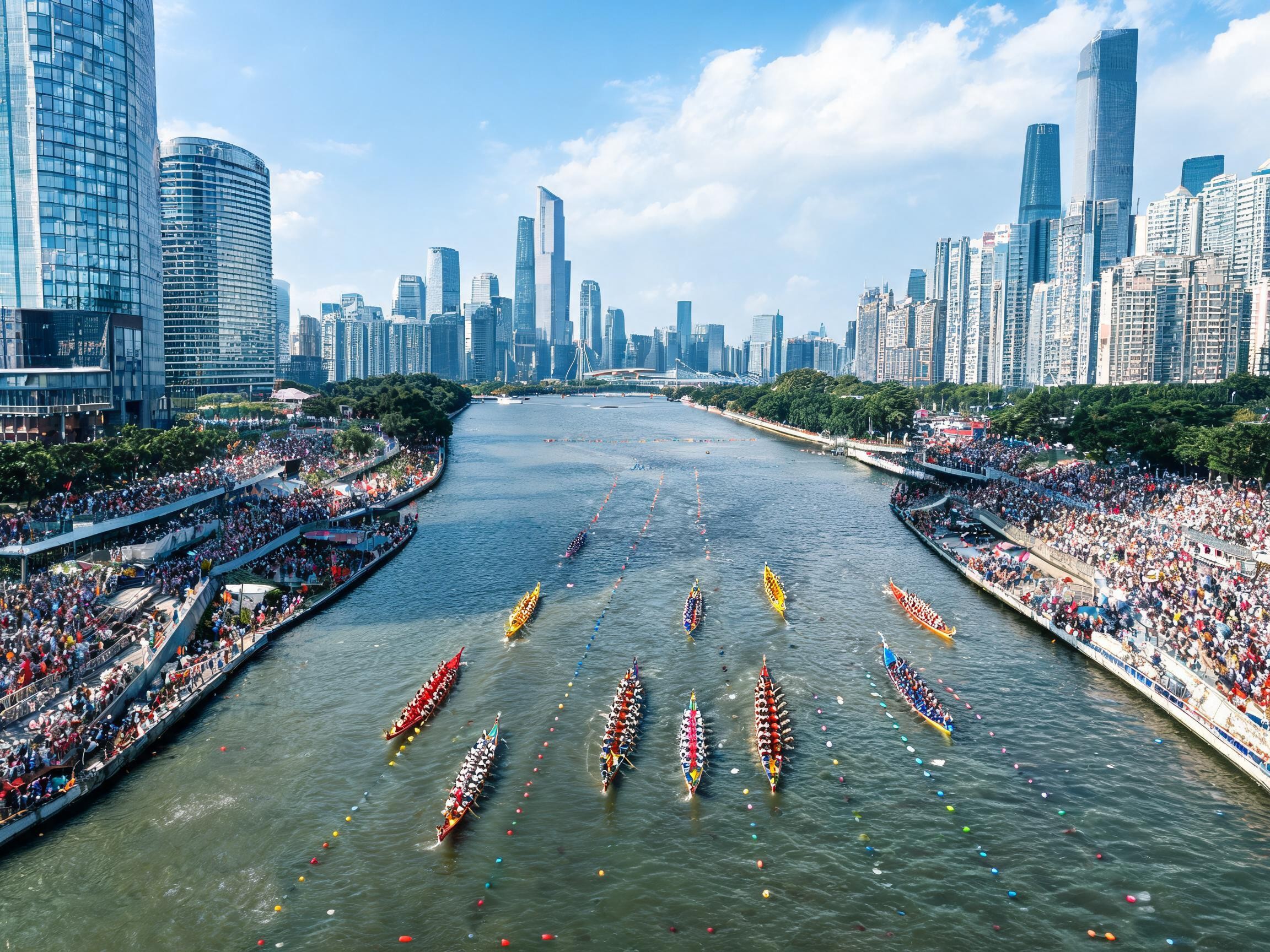
🖼 One family across the seas, celebrating together across five continents — global dragon boat races
The Dragon Boat Festival has long transcended national borders, becoming a cultural bond shared by Chinese people around the world. From San Francisco to London, from Sydney to Toronto — wherever Chinese communities gather, there is the fragrance of zongzi and the sound of drums.
🇺🇸 USA · San Francisco — The San Francisco Bay Area hosts a grand Dragon Boat Festival each year, one of the largest celebrations of its kind in North America. Hundreds of teams race across the blue waters, the scent of zongzi fills Chinatown, and dragon and lion dances bring the streets to life.
🇬🇧 UK · London — London's Dragon Boat Festival races are held on the River Thames and have become an important symbol of the city's multicultural identity. Local British friends also participate enthusiastically, experiencing the joy of dragon boating.
🇦🇺 Australia · Sydney — The Sydney Darling Harbour Dragon Boat Race is one of the largest Dragon Boat events in the Southern Hemisphere. Chinese community organizations host cultural performances, zongzi-making competitions, and calligraphy displays that attract people from all ethnic backgrounds.
🇨🇦 Canada · Toronto — The Toronto Centre Island Dragon Boat Festival has a history of over 30 years, drawing more than 200,000 spectators annually. The event blends athletic competition with cultural exhibitions, making it one of the most popular summer activities in Canada.
🇸🇬 Singapore — Singapore's Dragon Boat celebration takes place at Marina Bay, featuring dragon boat races, traditional markets, and cultural performances all in one grand event. Their zongzi incorporate Southeast Asian flavors — including laksa zongzi and curry zongzi, offering unique taste experiences.
🌐 UNESCO Recognition: In 2009, China's Dragon Boat Festival was inscribed on UNESCO's Representative List of the Intangible Cultural Heritage of Humanity. This is a high recognition of Chinese culture and a cultural treasure shared by all of humanity.
V. The Dragon Boat Festival · Cultural Heritage
Over more than two thousand years, the Dragon Boat Festival has continuously evolved in its transmission, but its core has never changed — reverence for loyalty and righteousness, prayers for health, and a longing for reunion.
The thunder of dragon boat drums still echoes across the waters, and the fragrance of zongzi still fills every street and alley. These customs, passed down through millennia, have not only survived modernization but have taken on new vitality — dragon boat racing has become a global sport, zongzi has become a viral food trend, and Dragon Boat culture is reaching the world in exciting new ways.
In this fast-paced era, the Dragon Boat Festival gives us a moment to pause: to put down our phones, make a few zongzi with our own hands, or head to the river to watch a dragon boat race. You'll find that these age-old traditions are still vivid and powerful, warming our lives.
An elder once said with feeling: "Zongzi isn't wrapped with rice — it's wrapped with longing." This saying captures the true essence of the festival — it makes us stop in our busy lives, remember where we came from, and cherish the present.
🎋 Peace and Health at Dragon Boat · May Every Year Bring Safety 🎋
Fifth day of the fifth month, zongzi leaves drifting fragrance;
Dragon boats racing, drums thundering across the waters;
Mugwort hung high, warding off all poisons;
Fragrant sachet worn, blessings always by your side.
ARTSKY
🎬 ARTSKY Team
Extending warm wishes to Chinese worldwide and friends from every nation
🏮 Wishing You a Peaceful Dragon Boat Festival 🏮
— ARTSKY · Telling Chinese Stories with AI+3D —
📧 ytys@99stv.com | 🌐 www.99stv.com