
At 10:40 p.m., thirty-seven red sticky notes were still stuck to the whiteboard in our meeting room. Each one was a shot a client had sent back.
That was the winter of 2024. We had just promoted 3D animation production from a side service to our main business line — nine projects in a single month, and a team that grew from four people to seven. The numbers looked good. The cost didn't. Five of those nine projects needed a second round of rework: a 23% rework rate.
Rework doesn't just burn hours. Clients don't remember the all-nighters; they remember that a ten-day delivery slipped to day twelve and was still on version three. We lost two deals that quarter, both with nearly identical feedback: we're not sure we can trust your schedule.
Over the next 1,000 days we rebuilt our process three times and pushed rework down to 4%. This post isn't a victory lap. It's a record of those three rebuilds — plus the three problems we still haven't solved.
Rebuild #1: Lock the storyboard before touching 3D
Our original flow was simple: client brief → storyboard → client feedback → straight into 3D. The failure lived between step three and step four. A storyboard is just a handful of stills, and when a client nods at those stills, what's in their head is rarely what we build in the scene.
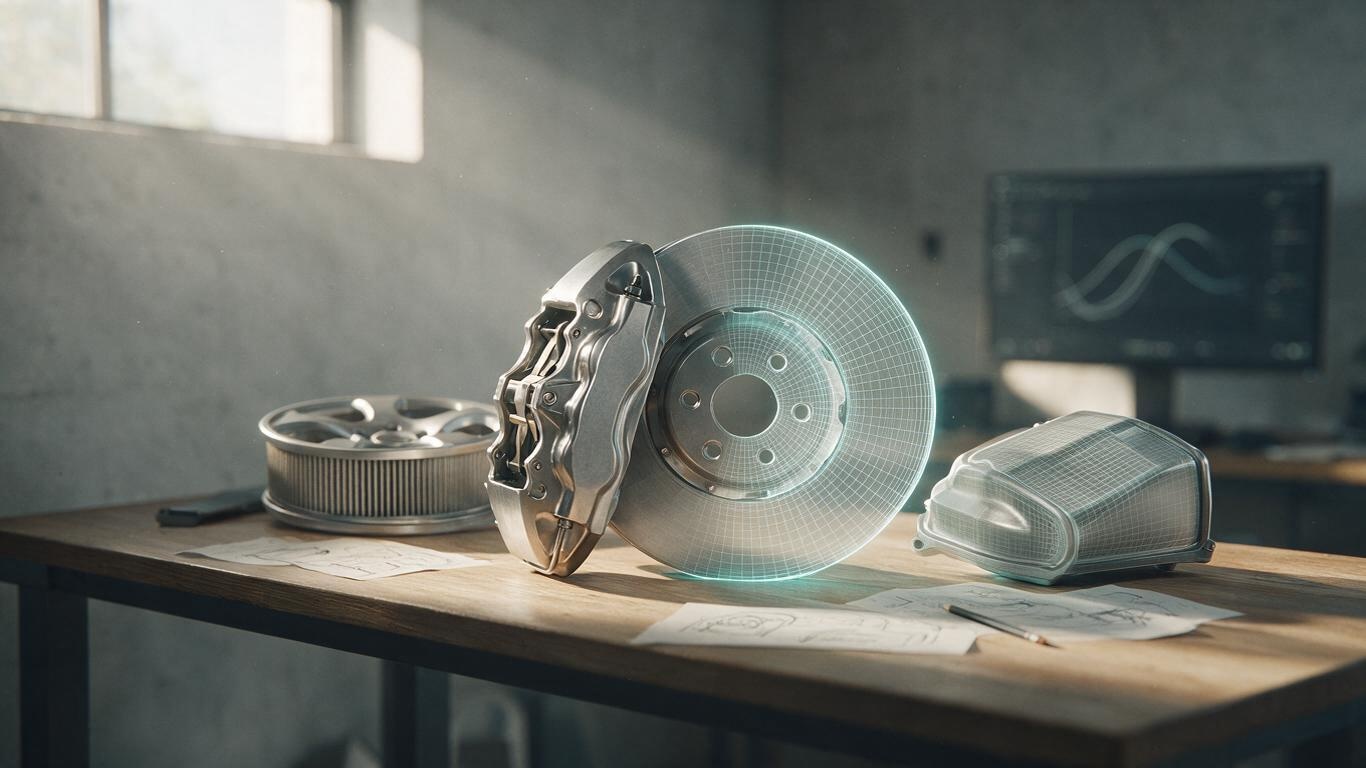
One auto-parts client asked for something that felt “aggressive.” We took that as fast cuts and gave the brake caliper teardown just 1.2 seconds of screen time. Their reply: “Not aggressive. Precise.”
Those two words cost us 60% of the shots.
Today our first step isn't drawing a storyboard — it's a 45-minute storyboard lock-in meeting. We write down the duration, camera position, material focus and the single thing each shot should make the viewer remember, line by line, and the client confirms every line. After lock-in, creative-stage changes are free and production-stage changes are priced per shot. Our sales team hated that rule at first. Three months later complaint rates had dropped, because everyone finally knew where the line was.
Rebuild #2: Reusable assets instead of starting from zero
The second rebuild came from a genuinely stupid waste. Two projects shipped in the same quarter — one power tool, one kitchen appliance — both used the same metal knob. Two teams modelled it separately, burned nearly nine hours between them, and delivered two slightly different versions.
Product animation has a hidden cost called the repetition tax. It never shows up on a quote, but it absolutely shows up in your delivery timeline.
So we did something deeply unglamorous: we built an asset library. Once our AI-generated 3D modelling workflow was in place, standard parts — screws, knobs, connectors, extrusions — and common materials — brushed aluminium, matte plastic, glass, fabric — all went in under one naming convention. New projects search first, model second. The library now holds 400+ reusable assets, and modelling time at project kickoff is down about 35% on average.
There's no shortcut here. The library was built the dumb way, and for the first six months it looked like a waste of time. Around month seven it started paying back.
Rebuild #3: Move QC from the finish line to every step
The first two rebuilds fixed speed. The third fixed consistency.
Our old structure was: production → render → client review. Rework almost always happened at that final review, because nobody upstream had looked at the work with a client's eyes. Now quality control is front-loaded into three internal gates.
Gate one, right after storyboard lock-in, checks completeness: does every selling point have a shot, does the runtime fit the platform it's going on? Gate two, at the playblast stage, reviews motion rhythm and shot-to-shot continuity — and it must be reviewed by someone who isn't on the project, because the person who built it cannot see what's wrong with it. Gate three, before final render, checks material, lighting and brand colour consistency.
Those three gates add four to six hours per film. They also moved our first-pass approval rate from 41% to 88%.
1,000 days later: 4% — and no complacency
Here's where we stand: rework down from 23% to 4%, average delivery time down from 18 days to 11, first-pass client approval at 88%. In July we shipped our 100th AI + 3D product animation, and the team grew from four people to nineteen.
But the more interesting change isn't in the numbers. It's in the room. We used to hear “the client changed it again.” Now we hear “I can't watch this version myself.” The first is a complaint. The second is a standard. If you want to see what that standard looks like day to day, our 3D animation production studio behind-the-scenes piece goes deeper.
Three problems we still have
Growth stories turn into self-congratulation very easily, so let's end with what we haven't fixed.
First, the asset library isn't smart enough. Search still depends on naming conventions and human memory, and new hires need about two weeks to get fluent. We're building semantic search now. Second, our material expertise is uneven across categories. We're confident with 3C electronics, auto parts and industrial equipment, but soft materials — fabric, leather, food — still aren't consistent enough. Third, our delivery elasticity is limited. Eleven days is our average, but if a client moves a launch date forward by three days, we still scramble.
Those three problems are our homework for the next 1,000 days.
If you're looking for a dependable 3D animation production partner, or you just want to talk through what's possible in your category, contact us. We won't take every project — but we'll always give you an honest read.