
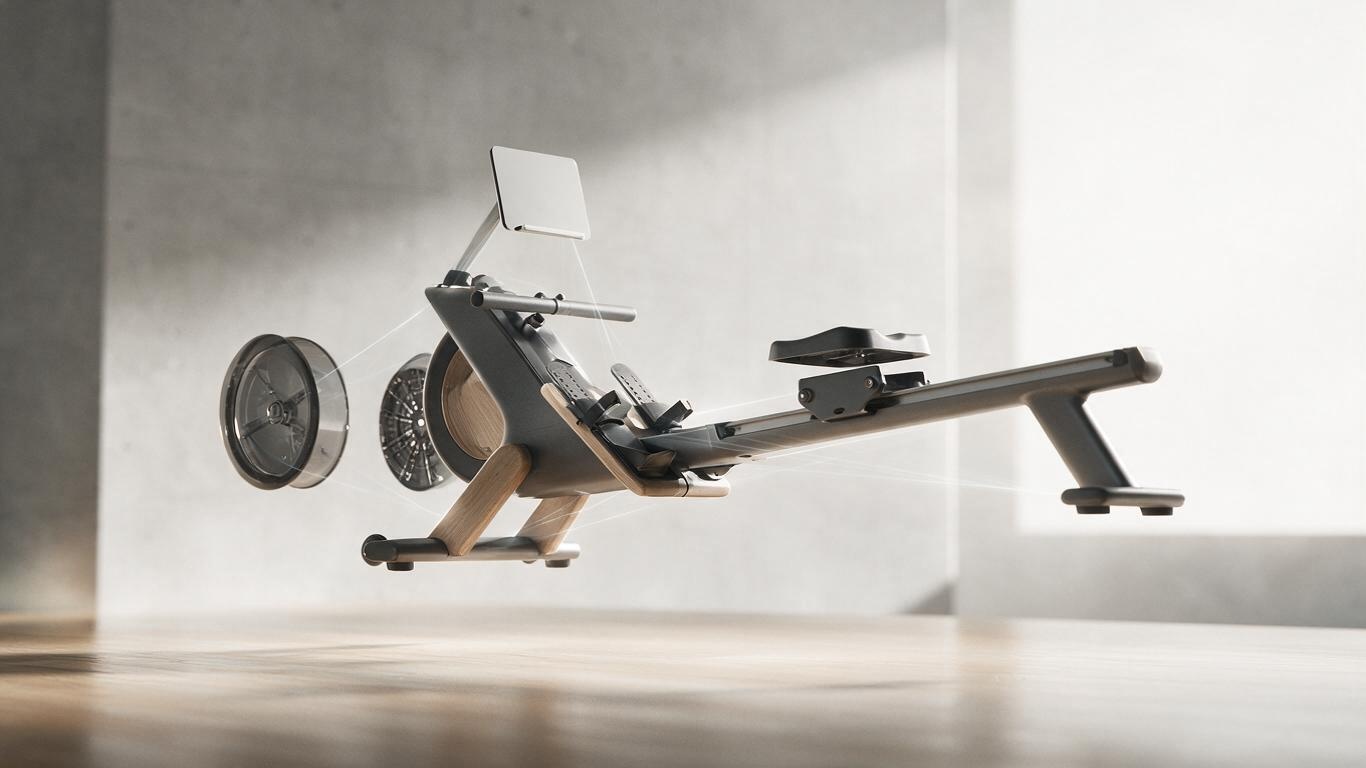
Last week a home fitness equipment brand asked me the question every brand eventually asks: “how much does product animation cost?” I gave three numbers — $1,200, $6,000, $18,000. Same rowing machine, same 30 seconds, a fifteen-fold spread. He went quiet.
That gap isn’t arbitrary pricing. It’s the honest answer: you are not buying seconds, you are buying the individual stages of 3d animation production — modeling, rigging, animation, lighting, rendering, editing, sound. When the precision of each stage changes, the price changes with it.
Below is the structure we use internally when quoting, including the three line items where budgets quietly inflate.
Three price tiers — find your row
For a 30–60 second 3D product film, the market splits roughly into three tiers:
$700–2,000: templated production. Models come from stock libraries, three to five shots, transitions do the heavy lifting. Fine for high-SKU sellers who need platform listing videos fast.
$3,000–8,500: custom 3d animation production. Built from real engineering drawings, six to twelve shots, with sets and a narrative spine. Right for launches, crowdfunding pages and homepage heroes.
$11,000+: cinematic. Macro detail, fabric and fluid simulation, original score, multi-layer compositing. For flagship launches, trade-show screens and broadcast spots.
You could always pick the cheapest tier. Just understand what it removes — not “extra money”, but product texture. On a fitness machine, the weld seams, the stitching direction on the seat, the inertia of the flywheel: those are exactly what buyers want to see before they pay.
The four variables that actually set the price
1. Where the model comes from. Hand over STEP, IGES or OBJ files and you remove 30–80% of the modeling hours. Hand over three phone photos and a vague spec sheet, and the animator has to guess — then you correct the guess. That correction is billable time.
2. Shot count, not runtime. The industry prices by the second, but seconds are a proxy. One 30-second continuous shot and a 30-second cut with twelve shots are three to four times apart in workload. Ask first: how many shots are in this film?
3. Visual layers. Matte plastic, brushed metal, woven fabric, glass, translucent liquid — every added layer multiplies render time. That’s not mystique, it’s compute.
4. Revision rounds. “Three rounds included” and “revise until you’re happy” are two completely different quotes. Most late-stage disputes start with that sentence being left vague.
The three line items that quietly inflate
Rework caused by incomplete inputs. We regularly see clients discover wrong colors or an extra port on the first cut, because all they supplied upfront was a brochure. Fixing that costs far more than two extra days of alignment would have.
One-off fees hidden inside a per-second rate. Modeling, set building, music licensing, font licensing — some studios itemize them, some roll them into the second rate. Both are legitimate, but you need to know who pays before you sign.
The “unlimited revisions” bill. It sounds generous and it stretches timelines indefinitely. Launch windows don’t wait; shipping a week late usually costs more than a couple of extra animation passes.
What a proper quote should contain
Whether the number is $3,000 or $30,000, the quote must state seven things: runtime and shot count, resolution and frame rate, delivery formats (how many 16:9, 9:16 and 1:1 cuts), revision rounds, whether music and sound design are included, whether source files are handed over, and the delivery date. Missing any of them is a fair reason to push back. For a broader framework on vetting partners, read how brands choose an AI + 3D animation vendor.
When to spend, and when not to
If your product is a commodity item with a low price point and fast decisions, live action or stills are enough. Don’t force 3D.
But if your product is structurally complex, hides its selling point inside, and carries a high ticket price, 3d animation production is usually the most cost-effective explainer available. How a magnetic resistance system actually works cannot be filmed — it can be animated.
One more variable worth tracking: AI is rewriting the cost curve. In our side-by-side tests, an AI + 3D pipeline cut production hours by 2–3x versus the traditional route; the detailed comparison lives in from live action to AI + 3D, and the modeling side is covered in the AI 3D modeling workflow explained.
One honest closing note
The best answer to “how much does product animation cost” isn’t a number — it’s a question back: what do you need it to achieve? For volume listings, $1,200 is plenty. For a flagship launch, $18,000 is not expensive. What’s genuinely expensive is a film nobody finishes watching.
If you have a product ready for animation, send us the drawings or photos and we’ll return a quote within 24 hours listing shot count, revision rounds and delivery formats: contact us.