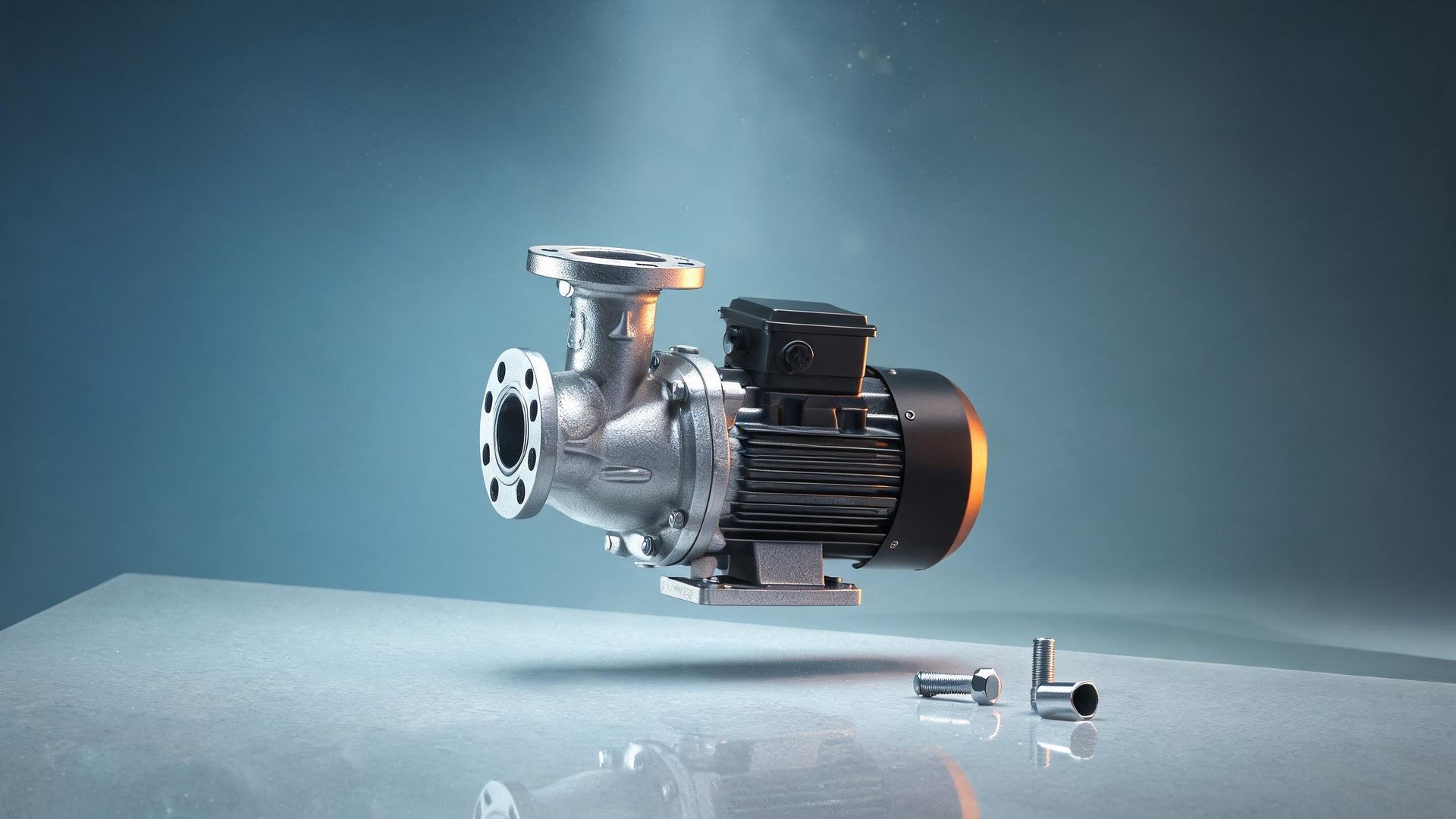
Monday, 9:30 a.m. A pump manufacturer in Ningbo drops three PDFs into our WeChat group with one line: "Same brief. One vendor says 80k, one says 32k, one says 15k. Who do I believe?"
We answer variations of this question dozens of times a year. Product animation cost is confusing not because it is high, but because it is almost never quoted in the same coordinate system. Some studios bill by the second, some by the shot, some sell you "one video", and some break modeling, shading, rendering, voiceover and revisions into eight separate lines. Comparing three documents like that means comparing three different products.
So this piece will not hand you an "industry average" — that number would be useless to you. Instead we unpack the variables that actually drive 3d animation production pricing, so the next time a quote lands in your inbox you know exactly what to interrogate.
Variable 1: Is the model built from scratch, or does it already exist?
This is the biggest swing factor and the easiest one to hide. For the same industrial pump, a client who can supply STEP files or accurate engineering drawings lets the studio skip straight to retopology, UVs and shading — modeling might be 20–30% of the total labor. A client who only has marketing photos and a website link forces a full build, down to flange faces and bolt threads. That alone can double the工时 — and the price.
We documented a full pipeline in our industrial machinery 3D animation case study, where layered internal-structure modeling alone ate 40% of the schedule. So the first question to ask about any low bid: how many models are included, are they new or reused, and who owns the source files?
If your catalogue shares a chassis or a housing across SKUs, modeling cost can be amortized across every video you produce. No quote sheet will do that math for you.
Variable 2: Are you buying seconds, shots, or revision rounds?
"A 30-second video" means four different things to four studios. Studio A reads it as three slow turntable shots. Studio B reads it as twelve fast cuts, each needing its own lighting setup. Studio C reads it as a hero cut plus three vertical cutdowns. Studio D reads it as one rough assembly. The workload differs by 3x, so the number differs by 3x.
Revision rounds are even sneakier. "Two rounds included" versus "unlimited revisions until you're happy" — the second sounds generous, but in practice it means unlimited small tweaks. Rebuild the storyboard and you have crossed from revision into remake, which is billed differently.
Our advice is blunt: get the shot count and the revision count written as explicit numbers in the contract. That is worth more than shaving 5% off the fee.
Variable 3: Delivery specs create invisible hours
Clients often assume delivery is "a bunch of MP4s". In reality the spec sheet can double the work. One animation may need a 16:9 hero cut for the website, a 9:16 vertical for short-form feeds, a 1:1 square for marketplace listings, plus 6-second and 15-second paid-media versions, each with and without burned-in captions. Re-framing, re-timing and re-rendering are all real money.
Resolution and frame rate hide there too. 4K at 60fps versus 1080p at 30fps is not a 4x render — it can be 10x. A cheap quote that never states resolution is almost certainly 1080p, which will look soft on a trade-show screen.
Variable 4: Who carries the rework risk?
Least technical, most expensive. Low bids usually compress pre-production to nothing: no script, no storyboard, no sample frame, straight into production. The film arrives, you say "this isn't what I meant", they say "we built what you asked for", and the project enters a slow-motion argument.
As we noted in our live-action versus AI+3D workflow comparison, a mature pipeline puts storyboards, key frames and low-poly previews in front of the client for sign-off. Those three gates feel like delays; they are actually the cheapest insurance on the project.
A comparable quote looks like this
- Model list: how many assets, new or reused, internal structure included, source files delivered?
- Shots and duration: total length, shot count, vertical and short-form versions included?
- Delivery spec: resolution, frame rate, aspect ratios, number of caption versions
- Revision terms: rounds included, scope, overage rate
- Approval gates: script, storyboard and sample frame sign-off, plus change-order rules
With all five on the table, three quotes finally sit in the same spreadsheet. You will usually find the 15k bid is missing three or four of them — it is not cheaper, it is smaller.
Judge unit cost, not the total
Here is a counterintuitive calculation: divide the total by the number of usable deliverables. An 80k project that yields a hero film, five paid-media cuts and a reusable 3D asset library lands under 13k per version. A 15k project that delivers one 1080p file — and forces a full rebuild when the packaging changes next year — costs more per usable asset.
That is the real economics of 3d animation production: model once, reuse for years. If your products iterate, export, or hop between platforms, the digital assets that can be re-lit and re-cut are the most valuable line item in the whole quote. For how to screen a studio on that capability, see the four dimensions brands should use to choose an AI+3D animation vendor.
The point of comparing quotes is not to find the cheapest sheet of paper. It is to find the one least likely to send you back to square one. If you have a stack of quotes you cannot decode, send us the brief and we will walk through them line by line — no consulting fee. We are as tired as you are of quotes designed to keep clients in the dark.