
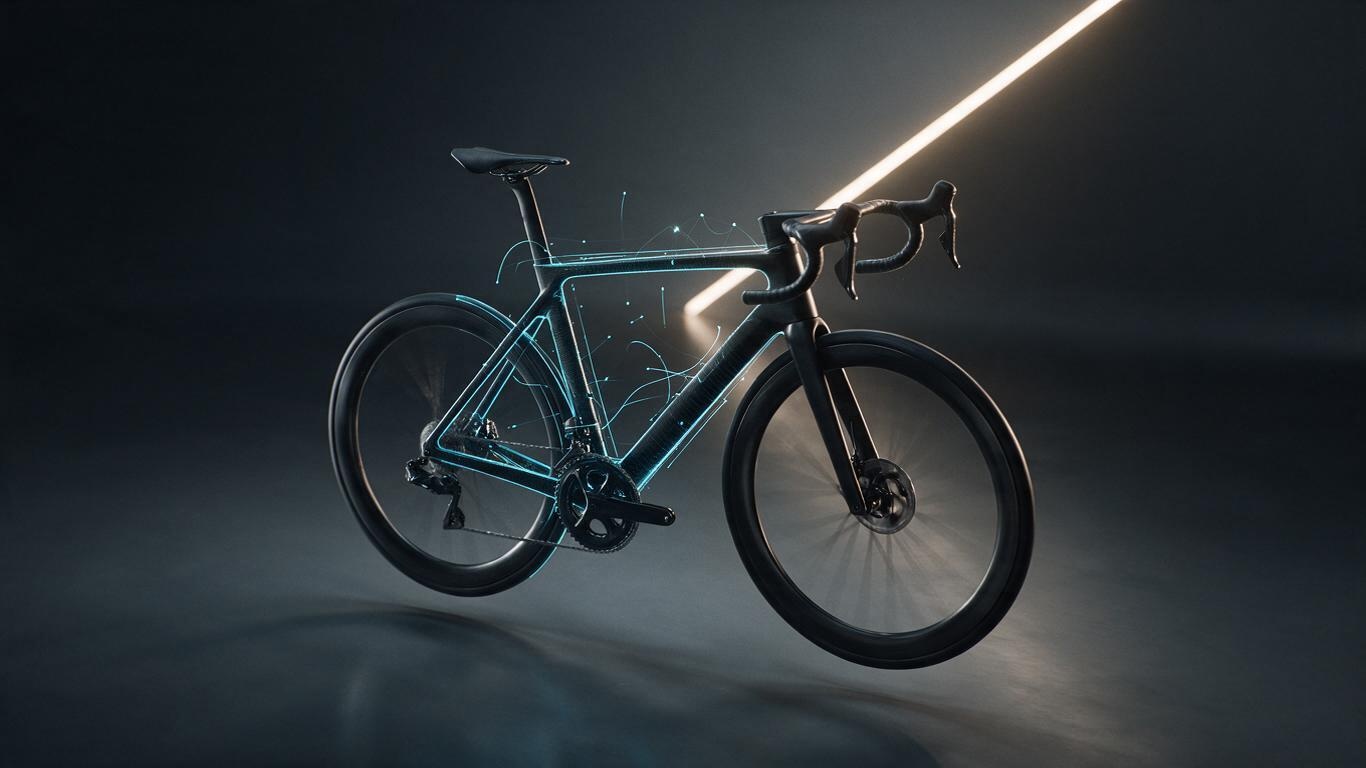
Last winter a client walked in and said, “The last studio delivered three versions. We paid in full, and the video is still sitting in a folder we're afraid to publish.” We opened it. Clean render, decent lighting. The problem was elsewhere: the handle on their portable power station was roughly 15% too wide, and the spacing on the side vents was completely off. Anyone who knows the product can tell in one second—that is not our product.
Six thousand dollars of production, and the only output was a sentence: “We can't use it.” That is a textbook product animation mistake to avoid—not because too little was spent, but because the decisions were made in the wrong order. Brands tend to treat product animation as procurement. It is closer to co-development: the quality of your input sets the ceiling on the output.
We've delivered more than 200 AI+3D product animations, and rescued a fair number of half-finished ones. Here are the eight product animation mistakes to avoid, in the rough order we've seen them kill budgets.
Mistake 1: Comparing unit price instead of effective seconds
Three quotes on the table: $1,200, $2,200, $4,500. Most people pick the middle one, or the cheapest. The problem is that quotes in this industry are almost never comparable at face value.
The right questions are: of these 15 seconds, how many actually show the product structure? How many shots are true 3D renders versus a box rotating with text overlays? At which revision does the price start climbing? Is the music licensed for commercial use?
We track a metric internally called “effective seconds”—the runtime during which a viewer actually receives product information. Of two 30-second cuts, one might have six effective seconds while the other has twenty. A three-times price gap can hide a ten-times gap in information density. Force every quote into three columns: shot list, render method, revision rules. If a quote can't fill all three, don't sign it yet.
Mistake 2: Skipping the animatic and going straight to render
An animatic is a low-fidelity motion board—grey models or wireframes that lock pacing, camera angles and timing before anything expensive happens. It's cheap and fast. It also prevents rework that is not cheap at all.
Skip it, and you discover during final render that “this shot runs too long,” “we needed the front view first because buyers check the port layout,” or “this transition doesn't land on the beat.” Rendering is one of the heaviest stages in the pipeline, and one redo typically costs more than ten animatic passes.
Our sequence is strict: storyboard sign-off → grey-model animatic → written client approval → only then materials and lighting. Nothing moves forward without a confirmation. That rigidity has saved clients more in rework than we charge for production. It's the same logic covered in our breakdown of live-action versus AI+3D workflows, just more critical on pure 3D projects.
Mistake 3: No gate on scope changes
“Can we tweak the color?” “Can we swap the backdrop?” “Can the hand gesture change?” Individually they're small. Stacked together, they blow up the schedule.
Rework in product animation cascades: a color change reruns materials and lighting, a scene change reruns ambient occlusion, a camera change can require re-keying entire animation curves. The answer isn't “no changes.” It's a gate: before animatic approval, change anything you like; after approval, log every change and bill beyond the agreed rounds. Put it in the contract.
Sounds cold? The opposite. Rules stated up front mean neither side is resentful at version seven. The projects that end badly almost always trace back to something nobody wanted to bring up in week one.
Mistake 4: Delivery specs that live only in a chat thread
Resolution, frame rate, aspect ratio, codec, alpha channel, source files—if these exist only in a messaging history, delivery day will produce an argument.
A concrete example: Amazon main-image video often needs both 1:1 and 16:9, TikTok needs 9:16 with a hook in the first three seconds, and a DTC product page may want a rotating sequence with a transparent background. Confirm all four before kickoff, or platform adaptation becomes a routine second invoice.
We attach a delivery spec sheet to every contract: platforms, ratios, durations, formats, all listed for the client to tick off. Tick first, start after. Nobody gets an unfair deal, and nobody gets stuck explaining what they meant.
Mistake 5: Believing AI means one-click output
AI genuinely lowered the barrier. Modeling that took two weeks can now produce a high-fidelity base mesh in two days. But AI replaces hands, not judgment.
It doesn't know which detail is your selling point. It doesn't know the camera needs to push in far enough to read the latch mechanism. It doesn't know what this material should look like under physically accurate light. All of that comes from human input.
Which is why the cheapest clients are often the most talkative ones: they send CAD drawings, multi-angle photos of the physical unit, and say things like “this button is patented, it needs a close-up.” We call them high-information clients. Their projects average about 40% fewer revision rounds.
Mistake 6: Judging reels by spectacle, not by category fit
Every studio has a few showstopper clips. What matters isn't the flashiest one—it's the one that looks most like your product.
Difficulties differ sharply by category. Industrial equipment demands cutaways and mechanical logic. Food and beverage demands liquid behavior and appetite appeal. Beauty demands texture and gloss. Consumer electronics demands layered metal and glass reflections. Outdoor gear demands believable soft goods—fabric, webbing, foam, the fold of a strap. A team that excels at cosmetics doing its first CNC machine is a tuition bill with an unclear payer.
Ask two questions: have you done this category, and can you show me a piece you're least happy with? The second answer tells you more than the first.
Mistake 7: Accepting work on vibe
“Something feels off, keep adjusting” is a disaster sentence because it isn't executable. Ten revisions won't necessarily find the “right” you have in mind.
Translate feeling into checkable items: does the proportion match the drawing, is the brand color inside the swatch tolerance, does each key claim appear at least once, how long is the mark on screen, are there typos in the captions, does the edit land on the beat, does the first frame carry information.
Every project of ours ships with a roughly 15-item acceptance checklist. The client ticks through it. Pass rate becomes visible, and the unwinnable argument about “overall feeling” disappears.
Mistake 8: Treating the final cut as the finish line
One 60-second hero film can yield five 15-second cuts, ten animated product stills, three page-level motion modules and a stack of rendered frames. If the shot plan wasn't built as an asset library, you'll be crop-and-stretch editing for the next six months.
We render extra alternate camera angles during production. The cost is modest; the payoff is roughly half a year of content. That lesson came from the comments on our five pitfalls of cross-border product animation article—one seller said a single shoot carried them for a full year.
Run this checklist before you start
- Split quotes into shot list, render method and revision rules before comparing;
- No render before storyboard and animatic sign-off;
- Change gate in the contract, billed beyond the agreed rounds;
- Delivery spec sheet as a contract attachment, platforms ticked off;
- Supply real input: drawings, multi-angle photos, ranked selling points;
- Ask for same-category work, and for the piece they're least proud of;
- Accept against a 15-item checklist, not a feeling;
- Plan shots as an asset library, not a single hero film.
Projects that clear all eight usually keep rework under 10%. Projects that clear half are usually working weekends by week four.
If you're still choosing a partner, start with the four dimensions brands use to pick an AI+3D animation vendor, then compress your brief to a single page. Bring that page when you contact us and we'll return a preliminary shot list within 24 hours—no charge, no pitch.