
Friday 5pm: “We need the video by Monday morning”

It was a Friday like any other. I was packing up when my phone buzzed — the head of a domestic sportswear brand. “We have a new sneaker launching on Douyin Monday and the main product video isn’t done yet. Can you do it in 48 hours?” I glanced at the calendar: Friday 5pm. Monday 9am was less than 64 hours away. Actual workable hours: maybe 48. I swallowed and replied, “Yes.”
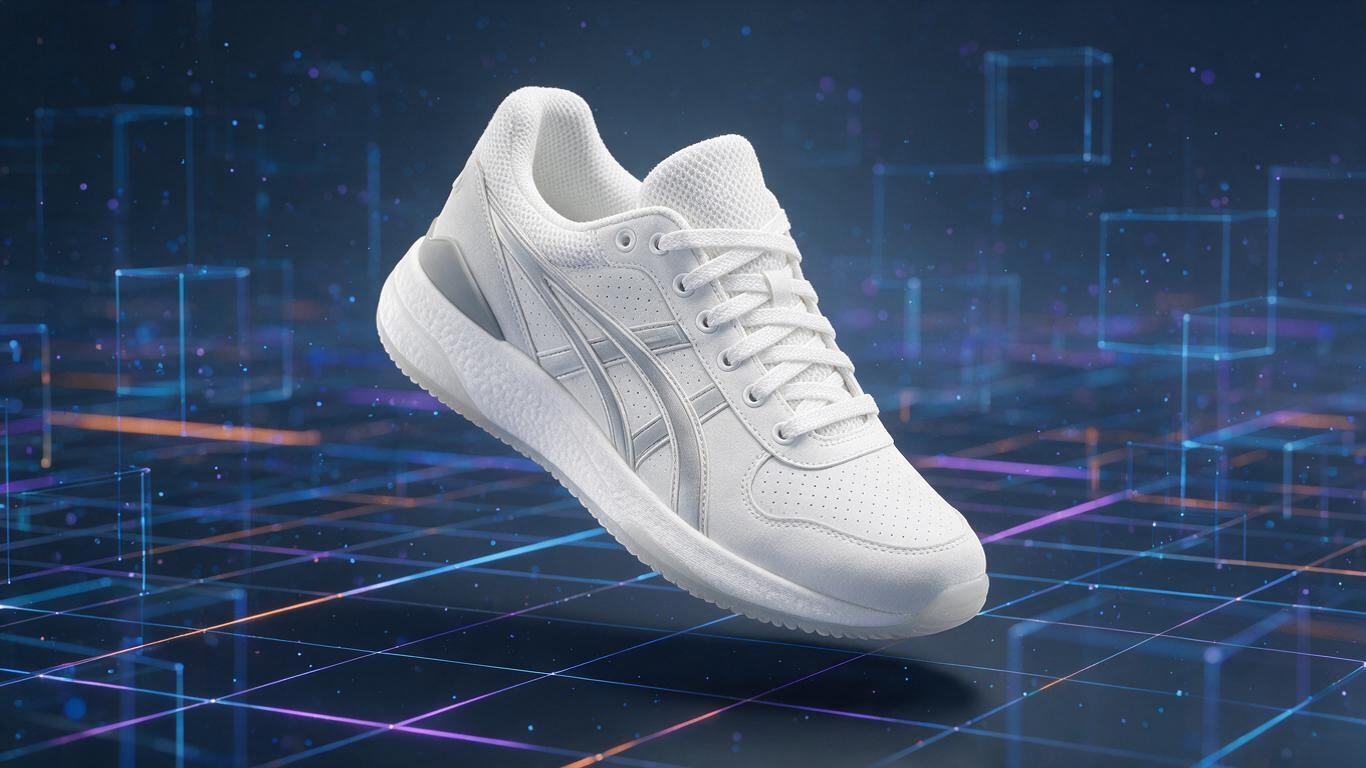
I regretted it immediately. The shoe was a completely new structure with a complex hollow cushioning midsole, woven upper with hot‑press detailing, and three colorways. The client had only sent a concept sketch and a STEP engineering file. Traditional pipeline: 3 days minimum for modeling and texturing, plus animation and rendering. But we are an AI+3D animation studio — we play by our own rules.
First crash: AI-generated model was almost unusable

Our team kicked off an AI-assisted modeling pipeline. We used an AI image generator to derive multi-angle references from the concept sketch, then employed AI point cloud reconstruction to quickly produce a base mesh. But the first output left everyone silent — the toe proportion was off, the heel counter missing, and the texture completely mismatched the client’s high-res requirements. It was 10pm Friday. If this approach failed, we’d have to do everything manually, and that meant missing the deadline.
I didn’t give up on AI. Instead, we refined the pipeline: import the client’s CAD data, extract key structural dimensions, then feed those data points back into the AI to generate a highly accurate model “skeleton.” Think of AI as a super‑assistant, not a replacement. The second iteration was dramatically better, with only minor topology issues left for manual cleanup. Our modeler worked through the night, and by 4am Saturday we had a usable model queued for rendering.
Second hurdle: material and lighting realism

To achieve photorealistic quality, materials and lighting were critical. We used a lightweight real‑time engine paired with an offline renderer — tweaking parameters (mesh transmittance, rubber roughness, TPU refractive index) in real‑time preview, then outputting high‑resolution frames. Three colorways × 15‑second rotation + 10‑second detail close‑ups: six segments total. Full‑resolution rendering of all six would take forever.
We took a calculated risk: render only one segment in 4K RGB, then use AI upscaling to blow up the other 1080p renders to 4K. Combined with AI denoising and frame‑interpolation, we compressed what normally takes 40 minutes per frame down to 12 minutes. By Saturday 8pm, all rendering was done.
Client’s reaction: “This is insane” at 2am
Sunday was all about compositing and client revisions. The client loved 90% of it but wanted a more matte finish on the outsole. We adjusted the roughness parameter, re‑rendered the outsole region, and composited it using an AI mask — 10 minutes to fix. Sunday evening, we submitted the final cut. At 2am, my phone buzzed again: “This is insane. Exceeds expectations. Going on the main screen tomorrow!”
The shoe’s Douyin launch video racked up 2 million+ views, and the main‑image conversion rate hit 3.2× the historical average. The client signed a contract for the entire running shoe line. This crazy rush validated our belief: AI+3D product animation can handle hardcore emergencies. Looking back, the success came from three pillars: AI‑assisted modeling for rapid iteration, a hybrid rendering strategy balancing speed and quality, and seamless teamwork. If you have an urgent product animation need, don’t panic. Think about which steps AI can accelerate and which demand human touch. Drop by our studio for a coffee — let’s talk about your project.