
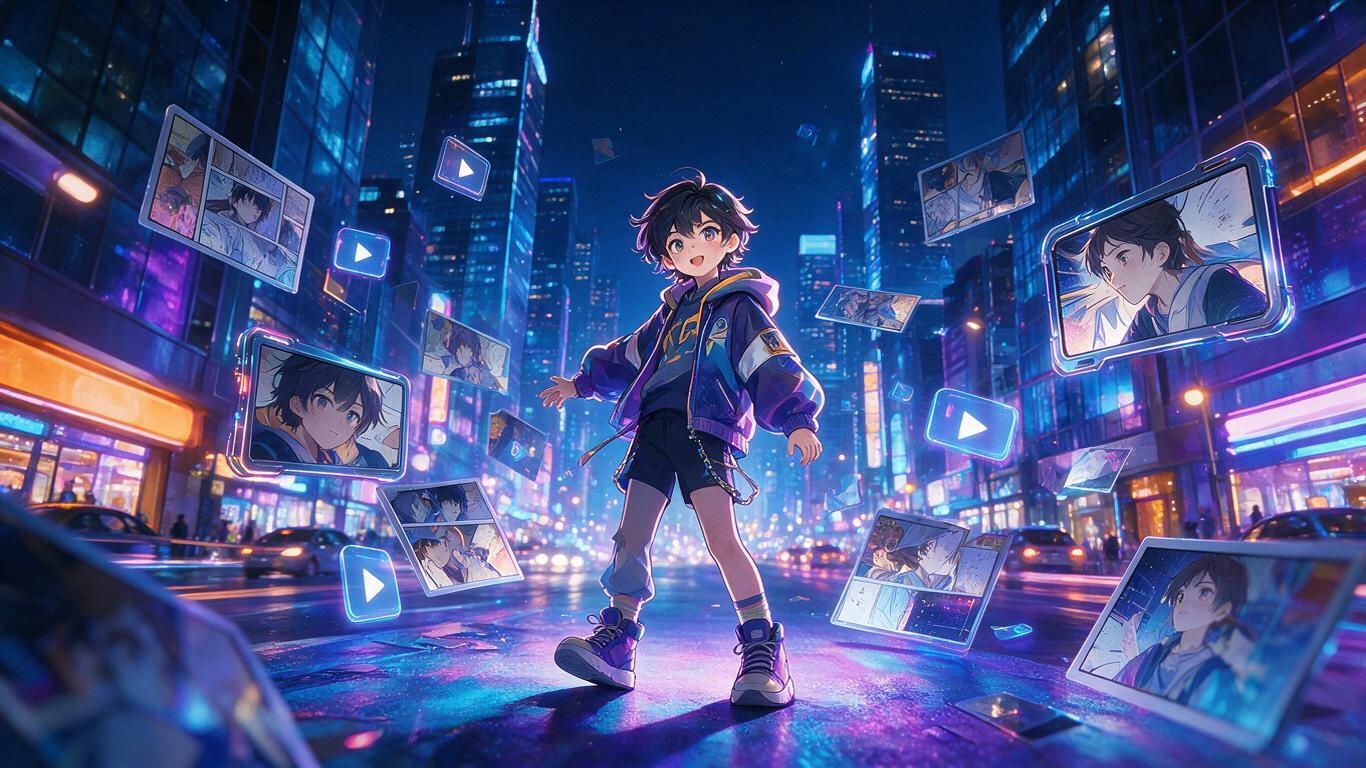
At 11 PM, you're lounging on the couch scrolling through short videos. A vertical episode titled "Reborn as a Villain in an AI Comic Drama" makes you swipe through 20 episodes in a row. The expressions are exaggerated, the scenes transition smoothly, and the plot is addictive. You comment: "Is this live-action or animation?" The answer: it's an AI-generated "comic drama."
AI comic drama, as the name suggests, uses artificial intelligence to generate comic/animation-style episodic content. It typically appears as vertical short dramas on platforms like Douyin, Kuaishou, and Xiaohongshu, with art styles that sit between comics and animation. Character designs are AI-generated, and voice, motion effects, and editing rely heavily on AI tools. Compared to traditional dynamic comics (hand-drawn) or feature animations, AI comic drama's biggest advantages are speed and cost—a 100-episode series that might take traditional teams months can be completed in weeks or even days by AI teams.
To understand AI comic drama, you first need to distinguish it from traditional dynamic comics and animation. Traditional dynamic comics (e.g., "Beauty of the Gods") are drawn frame by frame by artists, with limited animation effects—essentially "moving comics." Traditional animation (e.g., "Ne Zha") emphasizes fluid motion and performance, backed by large animation teams. AI comic drama is fundamentally different: you input a script, and AI generates character designs, storyboards, and even continuous dynamic scenes based on your descriptions. It doesn't chase the artistry of hand-drawing; it pursues extreme production speed and content density.
Currently, AI comic dramas come in three main forms. First, vertical short dramas—1 to 3 minutes per episode, fast-paced, designed for mobile viewing, and the most mainstream. Second, dynamic webtoons—static webtoons enhanced with micro-animations, voice-over, and sound effects, creating a "vocal comic" video experience, often seen on WeChat mini-programs. Third, interactive comic dramas—viewers make choices at key plot points to influence the story's direction, more common on overseas platforms and still experimental in China.
A complete AI comic drama production workflow roughly splits into five steps. First, scriptwriting—AI can help generate plots and dialogues, while human writers control pacing and character development. Second, storyboard design—AI generates storyboards based on the script, indicating camera movements. Third, AI character generation—the most critical step, using training or fine-tuning to maintain character consistency across scenes. Fourth, motion effects and voice acting—AI adds subtle movements like breathing, blinking, and hair swaying, then clones or synthesizes voices for dialogue. Fifth, editing and post-production—adding subtitles, sound effects, transitions, and outputting the final version. Throughout this process, humans shift from "executors" to "directors"—every step requires human review and adjustment.
Why 2026 specifically? Three signals are clear. First, AI painting and video generation technologies have reached a turning point this year, with pain points like character consistency and motion coherence largely solved; output quality is now broadcast-ready. Second, short-video platforms are heavily incentivizing AI content—Douyin and Kuaishou have launched AI creator support programs, and users are increasingly accepting of "AI-generated" content, a trend we noted in our earlier piece on the short-video product showcase revolution. Third, and most importantly, live-action short drama production costs keep rising, while AI comic drama costs can be as little as one-tenth. When cost-effectiveness destroys the old math, capital and creators naturally rush to the new species.
Traffic arrives—but where's the money? AI comic drama monetization mainly follows three paths. The first is platform revenue sharing, similar to short dramas, through ad splits and pay-to-unlock, with hit single titles earning millions. The second is ad placements, where brands embed products or logos into the storyline—flexible and great for IP collaborations. The third is brand custom commissions, where businesses pay for dedicated comic dramas to promote products or tell brand stories. Notably, demand for custom AI comic dramas is exploding, especially among brands targeting young consumers.
As a company long focused on AI-powered visual content production, ArtSky Studio has now run the full AI comic drama pipeline. Our proprietary AI workflow enables rapid production from script to final cut, compressing per-episode turnaround to 3-5 days while maintaining multi-episode character consistency—something many AI teams struggle with. We've already produced custom comic dramas for several brands and are developing original serialized IPs. If you have a story to tell through comic drama, feel free to reach out.
Is AI comic drama the next big thing? The data already answers. From Douyin view counts to advertiser budgets, this track is inflating at breakneck speed. But real opportunities don't come from "entry tickets"—they belong to those who truly understand content and master the tech. Whether you see it as a new entertainment format or a democratization wave of creativity, one thing is certain: in 2026's content landscape, AI comic drama has planted its flag.


