Last week a seller of portable blenders showed me a screenshot. He had asked Amazon's AI shopping assistant whether his product could be rinsed whole, and the answer cited a line from second 12 of his product video — a throwaway voiceover line he had almost forgotten recording.
The implication is bigger than it sounds. For a decade, cross-border ecommerce product video followed one logic: make it for humans. Hook in three seconds, list the benefits, end on the brand. Now there is a second reader — the platform's model. It does not care how smooth your transitions are. It cares whether the subject stays identifiable, whether the voiceover states parameters clearly, and whether the on-screen text says the same thing as the narrator.
A counterintuitive line is forming: machine-readable product video tends to get surfaced more than merely beautiful product video. And that land sits squarely inside 3d animation production, where every frame is authored rather than captured. In our recent projects, clients increasingly add one line at the bottom of the brief: send us a shot-structure sheet, we are feeding it into the platform asset console.
What a machine actually reads in a video
Break it down and the mystery goes away. Platform pipelines usually run four layers, each with different demands on footage:
- Subject recognition: is there one stable, clearly outlined product on screen for long enough? Constant cuts, occlusion and abstract b-roll all push confidence down.
- Speech transcription: voiceover becomes searchable text. Twelve hours of battery survives as a citable spec; long-lasting battery survives as nothing.
- On-screen text: captions, callouts and dimensions get extracted and cross-checked against listing attributes. When they conflict, the listing usually wins and your video is wasted.
- Spatial relations: who uses what, how parts relate, capacity and scale. This layer is the hardest, because the visuals have to genuinely explain it.
Only the first layer favors live-action by default. The other three are a contest of authorial control — exactly the thing live-action struggles to guarantee across SKUs, languages and shoot days.
Determinism is the real advantage
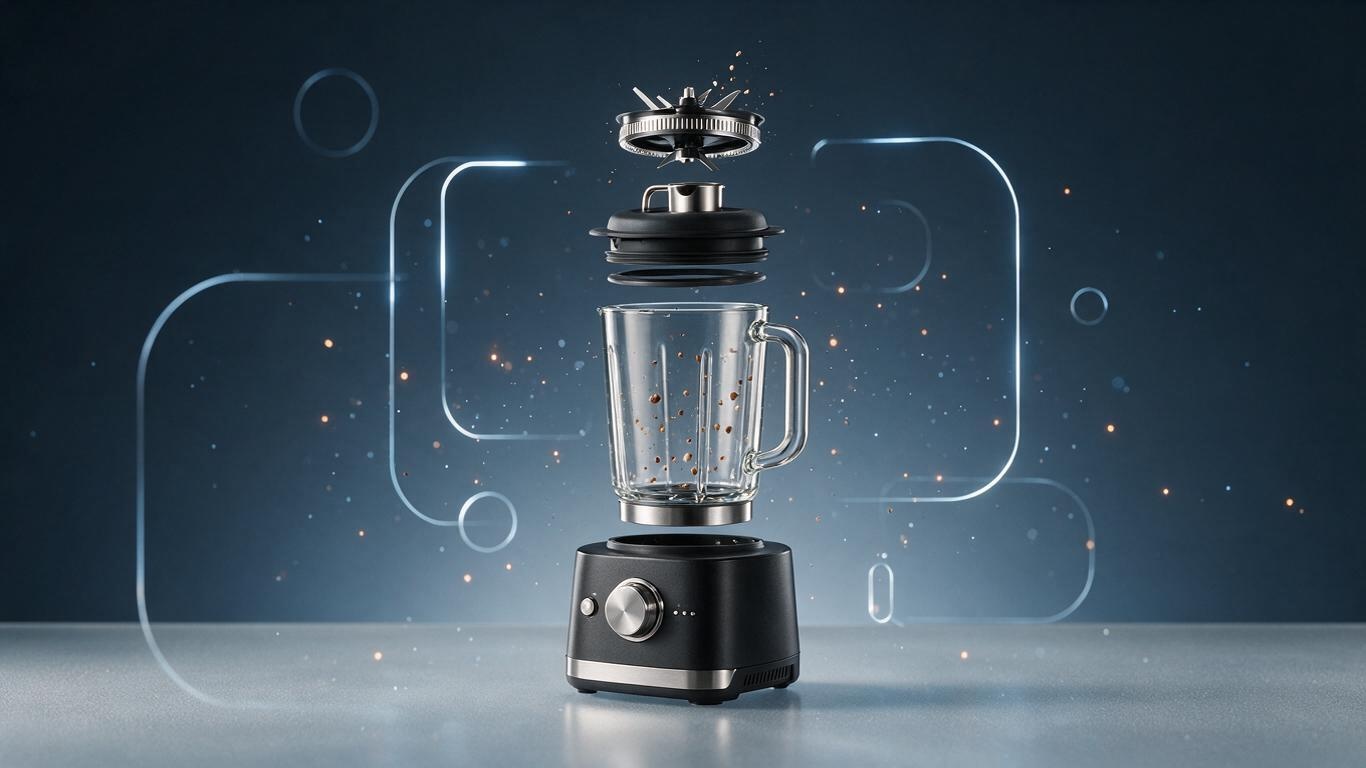
Put plainly, 3d animation production does not sell spectacle, it sells control. One blender model can deliver the full product turn, a cross-section of the blade assembly, a fill demonstration for capacity, and an exploded view of the washable parts — shots that are impossible or uneconomical to capture on set.
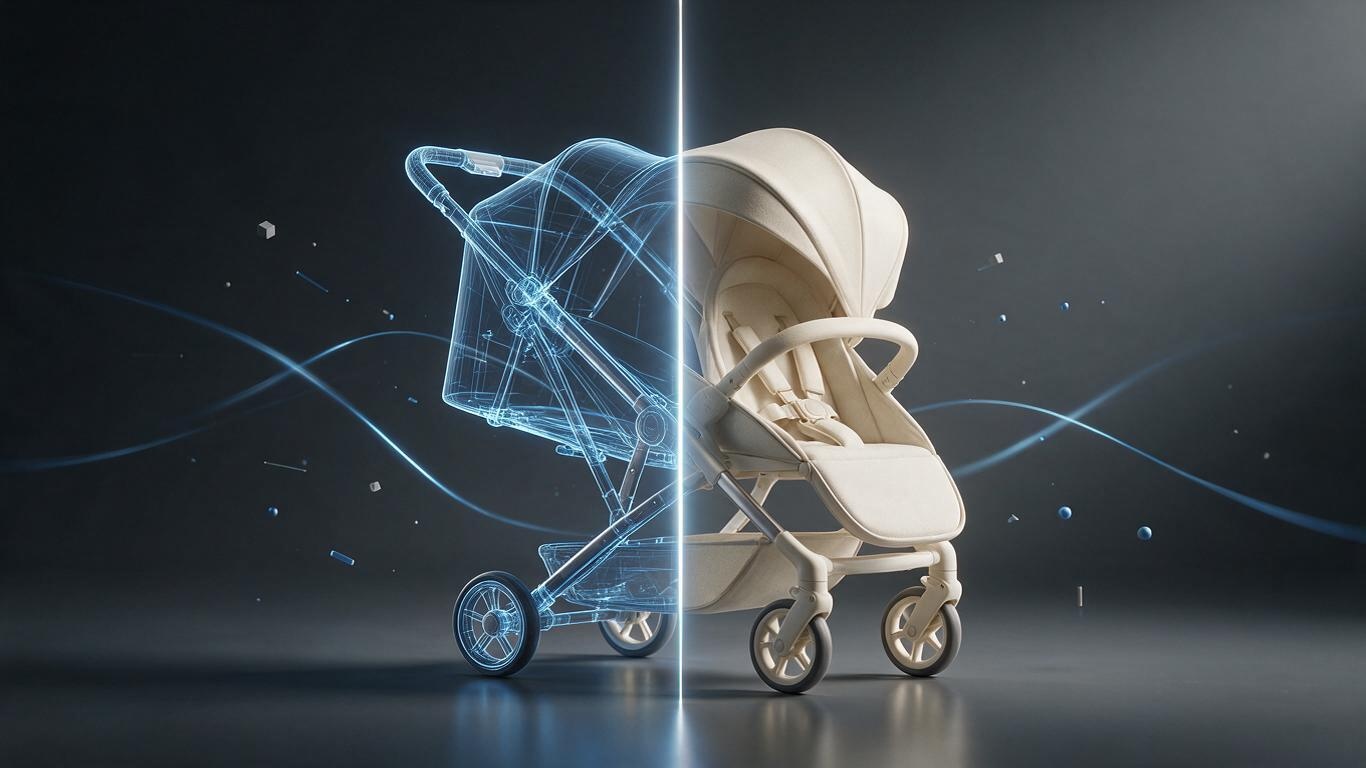
More important is repeatability. With twenty colors and four capacities, build the asset once and every variant is a parameter swap: identical geometry, identical proportions, identical camera angles. Recognition models love this, because they stop guessing what that cylinder is. It is why our comparison of live-action and AI 3D product pipelines keeps repeating one point: reusability is not a cost trick, it is an asset base.
There is also shipping samples — customs, damage, two to three weeks round trip. A 3D pipeline needs engineering drawings, product photos and a phone clip of the details. For categories that refresh by the week, that alone decides projects.
Readability is not an aesthetic compromise
The usual worry is that machine-friendly means boring. The opposite is true: the hard part is packing information density into thirty seconds people still finish.
Our approach is to separate information shots from emotion shots. Information shots do the explaining — single subject, slow push-in, key specs spoken and displayed at once, not a second wasted. Emotion shots keep viewers — wet material response, liquid flow, the damping of a lid. Alternate the two and both audiences stay served.
The failure mode is the all-high-energy cut: a transition every 0.8 seconds, the product never holding the frame for two seconds. Zero memorability for humans, low confidence for machines. Our 2026 ecommerce visual trends report argued that rhythm is not speed — rhythm is knowing where to stop.
Five things you can do tomorrow
- Write the script before the storyboard. Turn specs, scenes and pain points into complete transcribable sentences. Avoid words that transcribe to nothing.
- Give every benefit two seconds of stillness. Recognition needs frames; viewers need reaction time. Interests align here.
- Keep voiceover and on-screen text identical. Say it once, show it once, same numbers.
- Build masters, not duplicates. One asset set yields 16:9, 1:1 and 9:16 masters; split audio and caption layers per language.
- Archive the shot-structure sheet. What happens at each second and which attribute it maps to — that document becomes your shared language with platform consoles, agencies and the next vendor.
The barrier in cross-border ecommerce product video is shifting from can you shoot it to can you structure it. If you are evaluating partners, start with four criteria for choosing a 3D animation vendor, then do the math against your SKU count. The answer is usually clearer than expected.
Want to know whether your category fits? Contact us with two product photos and one core selling point.