
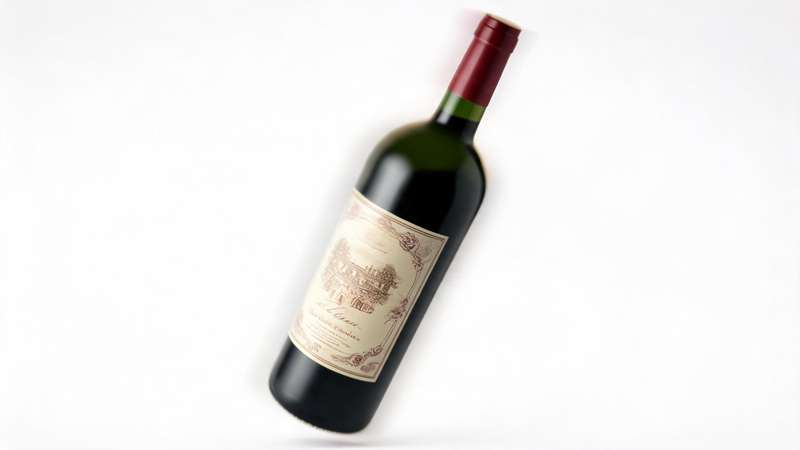
Last autumn, we received an email from Bordeaux. The sender was Étienne, the fifth-generation heir of a family winery. He said, “We want to enter Tmall, but our product photos always fall a bit short—the light on the bottle isn’t premium enough, and the wine in the video lacks the true soul of our vineyard.”
That sentence stuck with me. A small gap in visual quality can mean the difference between a sale and a scroll. Many brands spend thousands on TV commercials but overlook the 15-second product animation on the PDP—the very clip that decides if users click “Add to Cart” or swipe away.
Étienne’s pain point was classic: French wineries emphasize heritage, but Chinese consumers care more about “perceived value.” Traditional live-action videos are either prohibitively expensive (renting châteaux, hiring models, cross-border production) or mediocre, failing to capture the crystal clarity of wine in a glass. Worse, Parisian creative teams don’t get Chinese e-commerce rhythm—they default to 30-second stories, while Tmall’s golden window is 5 seconds.
Our solution was to redesign the entire visual system with AI+3D product animation. Step one: AI modeling—we generated 3D bottle models with 0.1mm precision from his three core wines, even reproducing the foil texture on the labels. Step two: AI material and lighting—we simulated the afternoon sunlight of Bordeaux so each bottle displayed a silky sheen as it rotated. Step three: AI motion generation—the swirling vortex and rising bubbles of wine being poured were computed by a physics engine, with every frame approaching photorealism.
But that wasn’t enough. We trained the AI on lens language from 30 best-selling wine videos on Tmall and automatically output a “medium-pace” animation: first 3 seconds for bottle close-up (grab attention), next 5 seconds for pouring and bubble details (build trust), last 2 seconds for scene integration (trigger imagination). The entire animation lasted 8 seconds, yet contained 120 render layers, each automatically optimized for mobile vertical or desktop horizontal screens.
Results? After Étienne’s Tmall flagship store launched, the PDP conversion rate jumped from 1.2% to 1.7%—a 40% lift. Even more surprising, the AI animation gained organic traction on TikTok, where a 15-second short video amassed over 800,000 views. He said, “For the first time, Chinese people really feel the quality of our wine through the animation.”
This project made me rethink something: visual translation is more important than language translation for brands going global. AI+3D animation isn’t just a substitute for shooting; it’s a cultural translation tool that helps brands bridge geographical and aesthetic gaps in the most direct way. As we discussed in “How AI+3D Is Changing Foreign Trade Marketing”—every cross-border brand in the future should have its own AI animation, because the user’s first look is the brand’s everything.
Now, Étienne’s second batch of wines is already being modeled. He said he’ll come to Dongguan for a drink. I’m looking forward to seeing AI’s reflection in a glass of Bordeaux.


