
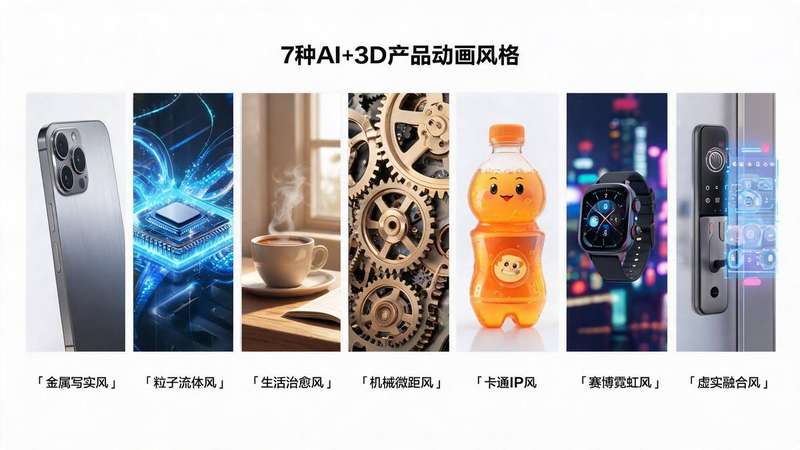
When you decide to use AI+3D animation for your product, the first question is often: What style should I go with?
Photorealistic? Cute cartoon? Cyberpunk? Or a hybrid reality magic show? This choice not only affects aesthetics but directly impacts conversion. Over the past two years, working with hundreds of brands, we’ve observed a pattern: projects with high style-category fit see an average 37% higher secondary conversion rate (internal data, 2025).
Today we break down these 7 styles—categories they fit, why, and real-world case studies. At the end, you’ll find a 3-minute self-check to quickly narrow down your options.
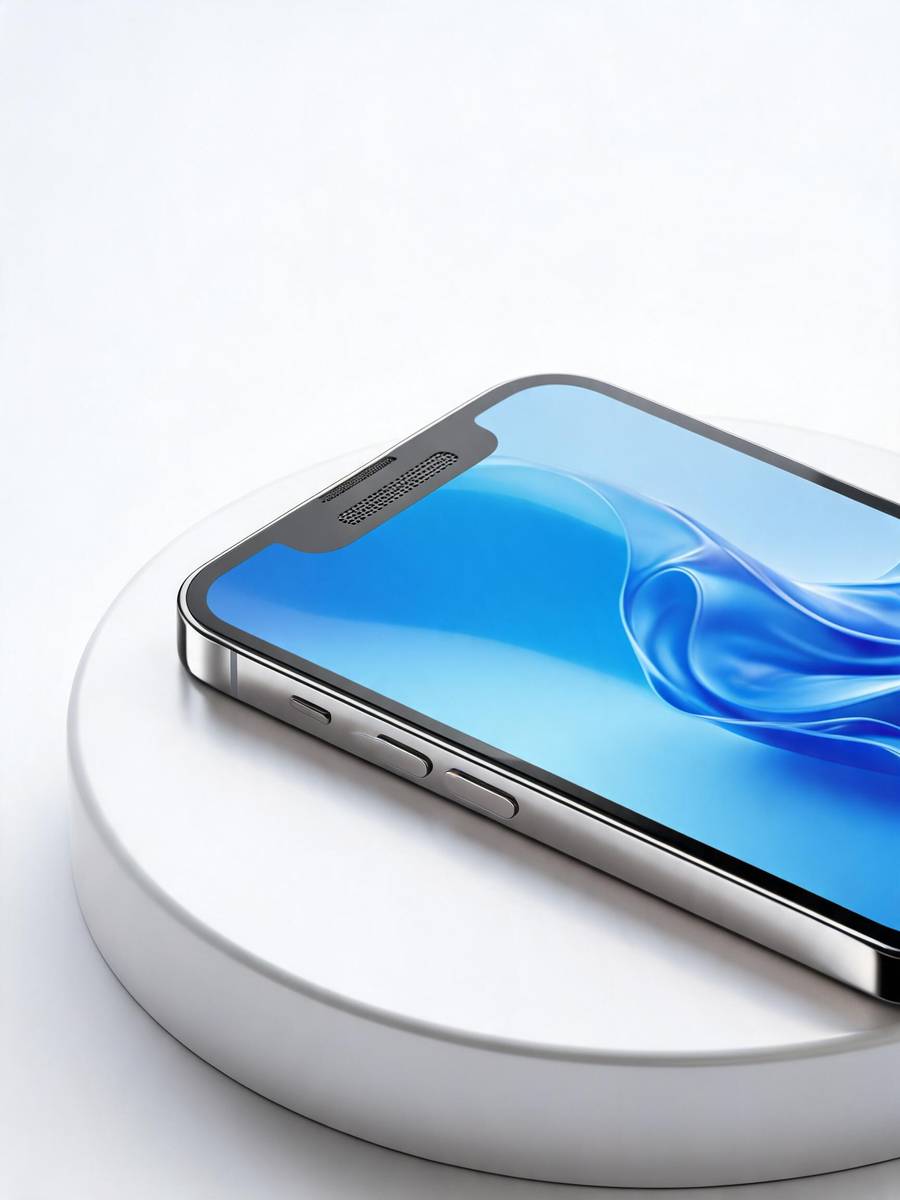
1. Photorealistic Product Showcase
Best for: 3C electronics, home appliances, auto parts, industrial equipment, jewelry, luxury goods.
Why: For these categories, buyers heavily rely on appearance, material, and functional details. Photorealism recreates real-world lighting, brushed metal, leather grain, and even fabric fibers to build trust.
Case: A flagship smartphone animation used macro shots with metal specular highlights. The screen-ignition flare and chamfered edge reflections made users feel "like holding it in hand." The video boosted add-to-cart rate by 28% on the brand's site.
2. Abstract Conceptual Visuals
Best for: Health supplements, skincare, functional food, software/APPs, financial products.
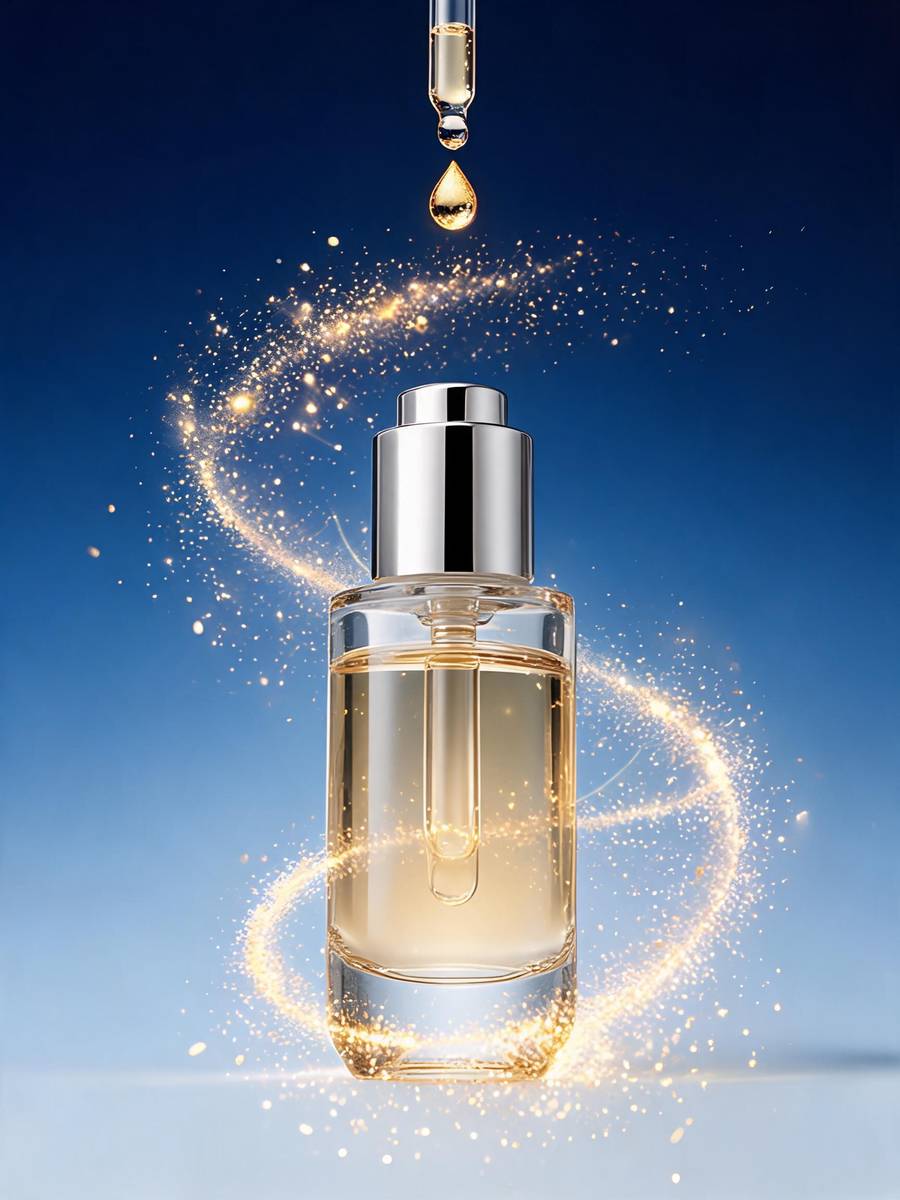
Why: Many product benefits are invisible—"antioxidant," "deep hydration," "productivity boost." Abstract visuals use particles, fluids, light effects, and geometric transformations to make abstract benefits tangible and instantly understandable.
Case: A serum animation depicted free radicals being neutralized via particle simulation—chaotic points evolving into orderly light. Soothing sound effects reinforced the concept. The video gained 52k likes on Xiaohongshu with comments like "I want to buy immediately."
3. Lifestyle Scene Integration
Best for: Home furnishings, furniture, kitchen appliances, apparel, outdoor gear.
Why: Consumers buy into the imagination of themselves in that scene. Placing the product in real-life contexts—morning sunlight on a sofa, a coffee machine steaming in a kitchen—evokes emotional resonance and reduces purchase hesitation.
Case: An ergonomic chair animation showed a young person working from home, transitioning from dawn to late night, with the chair auto-adjusting to posture changes. The final frame of relaxed comfort increased average site dwell time by 1.8x.
4. Macro Detail Close-up
Best for: Precision instruments, watches, jewelry, electronic components, cosmetic textures.
Why: For products where value lies in details—gear meshing precision, diamond cut fire, cream consistency—macro shots amplify these details for instant visual impact and premium perception.
Case: A mechanical watch animation slowly zoomed from the dial to the internal movement, revealing balance wheel and jewel bearings with metallic sound effects. It looked like a National Geographic documentary. The video was used as background music in over 200k TikTok posts within the watch category.
5. Cartoon/IP Style
Best for: Kid snacks, toys, pop toys, cultural creative goods, some FMCG.
Why: Cartoon style has innate friendliness, lowering attention thresholds. It works especially well for Gen Z or parent-child audiences. It simplifies shapes while highlighting product features, making the product "come alive" like an IP character.
Case: A popular sparkling water brand turned its bottle into a sunglasses-wearing character that "fights" other bottles in a cooler and smirks at winning. The series earned over 8 million views on Bilibili and sold out a limited edition in three days.
6. Tech Cyberpunk
Best for: Wearable tech, gaming peripherals, new-energy vehicles, vapes, streetwear fashion.
Why: Cyberpunk uses glitch effects, neon halos, holographic HUD overlays, and low-poly architecture to evoke a futuristic tech edge, hitting the sweet spot for hardcore tech enthusiasts.
Case: A smartwatch sports edition animation set in a rainy neon cityscape. The product floats between buildings with data streams and heart rate waveforms displayed on its surface, ending with "READY" text. It became a trending recommendation on Bilibili's tech section and drove 40% above forecast pre-orders.
7. Mixed Reality Hybrid (Virtual + Real)
Best for: AR/VR devices, smart home, medical instruments, custom furniture solutions.
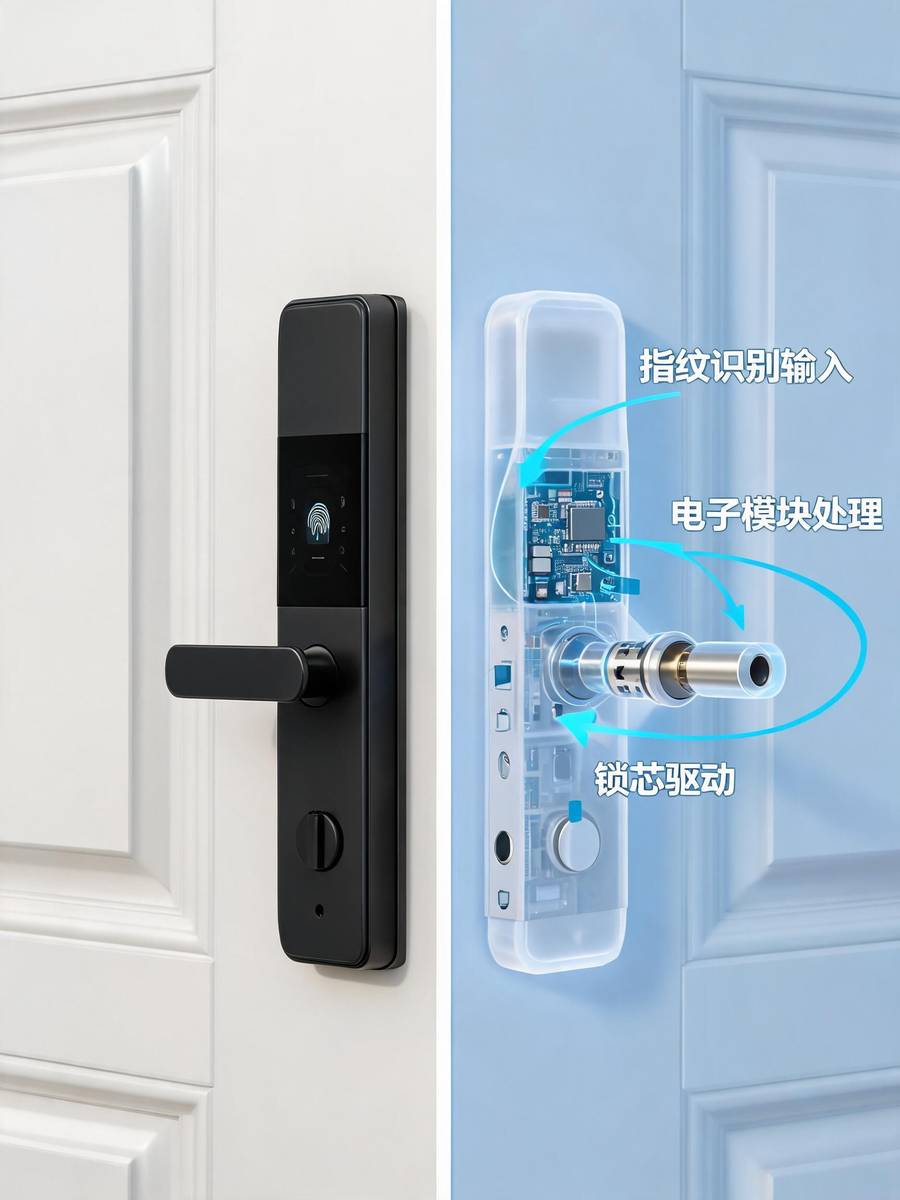
Why: Hybrid reality enables shots that are impossible to film physically—overlaying information in real scenes, dissecting internal structures, or interacting with humans. It makes complex functions instantly clear while maintaining visual authenticity.
Case: A smart lock animation started with a real-shot home entry scene, then transitioned to a semi-transparent lock where the inner locking mechanism floated out as a 3D model, demonstrating fingerprint recognition and locking, then restored. The campaign exceeded its crowdfunding goal by over 600%.
Style Selection Guide: 3-Minute Self-Check
When you’re torn between these 7 styles, ask yourself three questions:
- Is the main selling point “how it looks” or “how it works”?—Aesthetics first? Consider photorealism or macro. Function first? Consider conceptual or lifestyle.
- Are your target users rational decision-makers or emotional impulse buyers?—Rational types need photorealism + macro details; emotional types respond to lifestyle or cartoon styles.
- Is your brand tone professional/serious or young/lively?—Brand image dictates whether cyberpunk or abstract fits better.
Quick hack: Tell us your product category and budget, and we’ll run a free style-matching test—sometimes the style you think fits isn’t what the data says works best.
The 7 styles aren’t mutually exclusive; combinations often yield better results. For example, a 30-second video might open with 10 seconds of macro close-up to hook attention, followed by 12 seconds of lifestyle to build context, and finish with 8 seconds of photorealistic showcase. The key is to keep the core message clear and not let style overshadow the product.